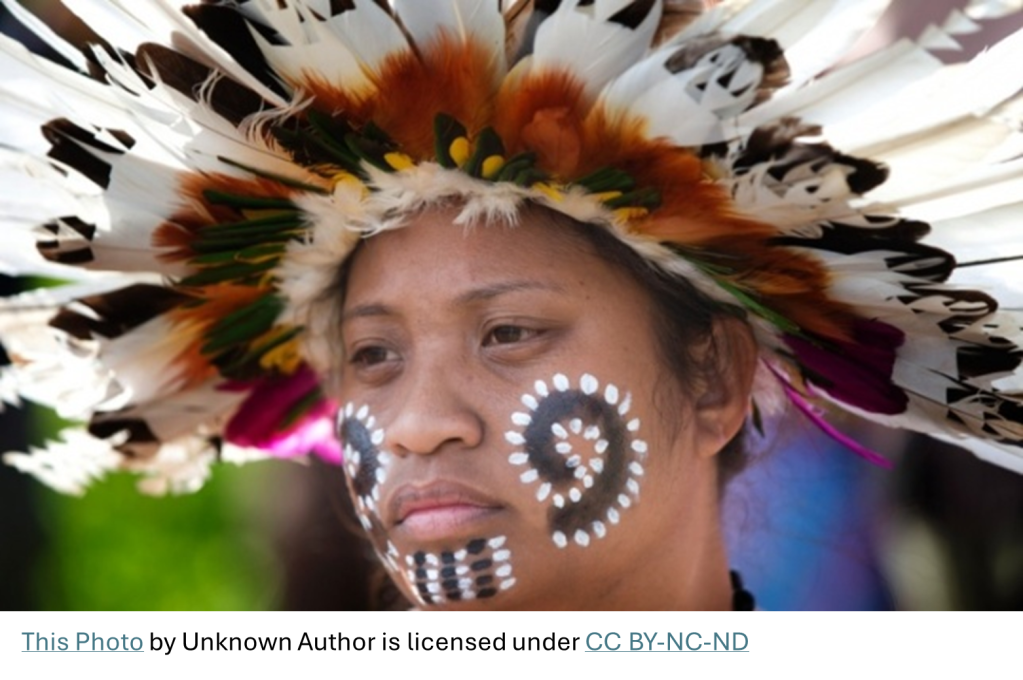
This week is the fiftieth anniversary of Independence in Papua New Guinea. Our family’s ten years in Port Moresby were extremely rewarding. We lived on the university campus from 1976 till 1986. The years after Independence were times of intense development. At the University, students told you they were proud of where they came from their [Ples] and their language [TokPles]. They were good enough to invite us to visit their region, no matter how far away they lived.
We met interesting people in town, and my best friend nicknamed me Mauswarra [the mouth that runs fast in Tok Pisin], in the same way as my family in France used to say I was Un moulin à paroles [a continuous word-windmill in French]. If I still lived in Port Moresby, I would now be called Bubu Mama [Grandma in Hiri Motu].
I am grateful for the warm welcome we received and how much we learned about a varied country with amazing landscapes of soaring mountains and seaside beaches. We had a Christmas lunch at a windy Ella Beach: lettuce leaves flew off, but we were able to eat the slices of cold turkey that remained on our plates. Two events at Idler’s Bay: a difficult one when our daughter was stung by a jelly fish; and a cheerful one when we attended David and Faith’s wedding. We also had a wonderful time at Gabba Gabba where the villagers gave us cool and large watermelons to eat, and their children played cricket with ours. We went to Yule Island on an outrigger canoe with eskis full of supermarket fruit and came back with fresh coconuts.
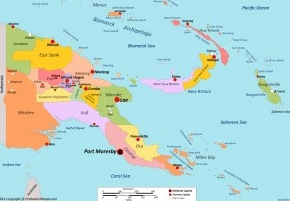
We were lucky to fly inland to Tapini and back safely in spite of the difficult airstrip; went to Bulolo and Wau to look at the remnants of gold mining and to the best market in the world at Goroka where I bought two of my favourite bilums [traditional string bags]. We also met with friendly people in stunning Madang and in the Island of Bougainville who always expressed the love of self-sufficiency. I cannot do justice to this country, and I regret not visiting other exciting places, like Milne Bay, the Sepik, the Western Highlands, East and West New Britain and Manus.
Papua New Guinea has in excess of 800 languages, Austronesian and Non-Austronesian which are able to do things that western linguists never thought possible. Through verb-stringing and other infixes languages focus on the manner of an action rather than on its timing, which is marked by adverbs. Besides liklik Tok Pisin and Hiri Motu bada (not really ‘much’!) I would have loved to learn languages from the Goilala people.
When we left UPNG students and staff organised a mumu, pig cooked in the ground with taro and vegetable wrapped in banana leaves as a farewell party.
On behalf of my family, it is my pleasure to wish all my friends and their wantoks [relatives], whom I cannot name here because I’d be sure to forget someone special, and in honour of those that have passed away, my absolute best for the 50th Independence Day Celebration on 16th September 2025.
LikeLoading...
Related
Published by Yayi-Australie
I am a French-born Australian linguist who loves writing about multicultural experiences. Taught English in Zambia and Papua New Guinea, gained a Doctorate with UPNG. In Western Australia I worked with migrants and Indigenous communities in Kalgoorlie and Roebourne. In charge of Amnesty International WA, then moved to Adelaide. Short-listed by The Human Rights Commission for the Literature NF Award for the anthology I edited with the Multicultural Writers Association of Australia, I later published my memoir. Volunteered with the Writers Centre, became active with PEN.
View all posts by Yayi-Australie
Published
2 thoughts on “Celebrating 50 Years of Papua New Guinea’s Independence”

 Yayi's Paroles
you have a wealth of experience ; amazing —
LikeLiked by 1 person
Thank you, and I read your blog regularly. Cheers for that!
LikeLike