Featured

L’Encantada’ de Nadau: Lyrics in Occitan, French and English

Lyrics below in Occitan, French and English
L’Encantada- a song by Nadau in Occitan

Occitan, lenga d'òc, is a Romance language spoken in a third of France across the
south also called Occitanie, Italy's Occitan Valleys, and Spain’s Val d'Aran. It is the
language of the people who used òc to say ‘yes’. (Northern France used to say 'oïl '.)

The language of medieval troubadours, it is distinct from French, sharing closer
ties to Catalan. It’s an endangered language, with six major dialects: Gascon-Béarn,
Provençal-Nice, Languedocien (often used as the basis for the standard form),
Limousin - North Dordogne, Auvergnat and Provençal Alpin.


It was my grandparents’ language. Both my parents spoke fluent Occitan-Limousin
with their parents in the North Dordogne region of France, also called the ‘Green
Périgord ’. I only spoke some phrases of it, but I understood instructions given to
me (and had to follow them!) I remember older Occitan songs especially Se Canto.
Thanks to Nadau’s compositions, concerts and revival (www.nadau.com) of the
Gascon-Béarn language, the tone and vitality of my grandparents and parents'
voices are revived. I am now re-learning Occitan online from Australia.

L’Encantada, The Enchanted, is the most famous Occitan (Béarn) song performed
by the Nadau Group [ https://nadau.com/ ], which although composed relatively
late by Nadau, as the journal Le Point tells us (02.06.2017) is now interpreted as
‘traditional’. Mike Bresson (fb) tells us that L’Encantada is 'a hymn to love, as in love
at first sight.’

Follow the Lyrics below:


L’Encantada- chanson de Nadau en Occitan

L'occitan est une langue romane (lenga d'òc) parlée dans le tiers sud de la France,
aussi appelée Occitanie, ainsi que dans certaines vallées d'Italie et le Val d'Aran en
Espagne. C’est la langue qui utilise òc pour dire 'oui'. Dans le Nord on disait 'oi'.

Connue comme la langue des troubadours du Moyen-Age, elle est différente du
Français et très proche du Catalan. C’est une langue en danger, elle se divise en six
dialectes définis (Gascon-Béarn, Provençal-Nice, Languedocien (souvent la base
d'un standard), Limousin - Nord Dordogne, Auvergnat et Provençal Alpin.


C'était la langue de mes grands-parents en Dordogne du Nord qui s'appelle aussi
le Périgord Vert . Mes parents parlaient couramment à leurs parents en Occitan.
Je n'en parlais que quelques phrases mais je comprenais bien les instructions qu’on
me donnait (et j’étais obligée de les suivre !) Je me souviens des chansons en Occitan
surtout Se Canto. Grâce aux compositions et concerts de Nadau (www.nadau.com) et
de son relancement du Gascon-Béarnais, je revis le ton et la vitalité de la voix de mes
grandparents et parents et je réapprends l’Occitan sur l’internet depuis l'Australie.

L’Encantada est une chanson en Occitan (Béarnais) la plus célèbre du groupe Nadau
https://nadau.com/ bien que composée relativement tard, comme nous dit la revue
Le Point (02.06.2017), elle est interprétée comme ‘traditionnelle’. Mike Bresson nous
dit (fb) « L’Encantada est un hymne à l’amour du genre ‘coup de foudre.»

Paroles ci-dessous :
https://www.nadau.com/paroles/1725#


L'ENCANTADA -Occitan

Patapim,Patapam,
Non sèi d’on ei sortida,
Non m’a pas briga espiat,
E m’èi pergut suu pic,
E la hami e la set.
Patapim, Patapam,


Non sèi çò qui m’arriba,
E shens nada pieitat,
Que’n va lo son camin,
Que camina tot dret.
Non sèi pas lo son nom,
Tà jo qu’ei l’Encantada,
Tà la véder passar,
Jo que’m hiqui ací,
Tot matin a l’argueit,


Non sèi pas lo son nom,
Tà jo qu’ei l’Encantada,
Non hèi pas qu’i pensar
E la nueit e lo dia
E lo dia e la nueit.
Jo tostemps qu’avi sabut
E díser non e díser adiu,


Jo jamei n’avi volut,
Jamei pregar òmi ni Diu,
Ara qu’ei plegat lo jolh,
Dehens la gleisa capbaishat,
Tà mendicar çò qui voi,
Aledar au son costat.


De la tèrra o deu cèu,
Tau com la periclada,

E tot a capvirat,
Arren non serà mei,

Non jamei com avans,
Ni lo hred de la nèu,
Ni lo verd de la prada,

Ni lo cant d’un mainat,
Ni l’anar deu sorelh

Qui hè córrer los ans.
Non sèi pas lo son nom,


Tà jo qu’ei l’Encantada,
E si n’ei pas tà uei,
Tà doman qu’ei segur,
Que l’anirèi parlar,
Non sèi pas lo son nom,
Tà jo qu’ei l’Encantada,
Doman que’u diserèi,
Dinca ací qu’èi viscut
Sonque tà v’encontrar.
https://www.nadau.com/paroles/1725#


L'ENCHANTĖE -Français

Patapim, Patapam,
Je ne sais d’où elle est sortie,
Elle ne m’a même pas regardé,
Et j’ai perdu tout de suite
Et la faim et la soif.
Patapim, Patapam,


Je ne sais ce qui m’arrive,
Et sans aucune pitié,
Elle va son chemin,
Elle chemine tout droit,
Je ne sais pas son nom,
Pour moi, c’est l’Enchantée,
Pour la voir passer,
Moi, je me mets ici,
Tous les matins à la guetter,


Je ne sais pas son nom,
Pour moi, c’est l’Enchantée,
Je ne fais qu’y penser
Et la nuit et le jour
Et le jour et la nuit.
Moi, toujours j’avais su,
Et dire non et dire adieu,


Moi, jamais je n’avais voulu,
Jamais prier homme ni Dieu,
Maintenant j’ai plié le genou,
Dans l’église, la tête baissée,
Pour mendier ce que je veux
Respirer à côté d’elle.


De la terre ou du ciel,
Comme la foudre,

Et tout a chaviré,
Rien ne sera plus,

Non, jamais comme avant,
Ni le froid de la neige
Ni le vert de la prairie

Ni le chant d'un enfant
Ni la marche du soleil

Qui fait courir les années.
Je ne sais pas son nom,


Pour moi, c’est l’Enchantée,
Et si ce n’est pas aujourd’hui,
Demain c’est sûr,
J’irai lui parler,
Je ne sais pas son nom,
Pour moi, c’est l’Enchantée,
Demain je lui dirai,
Je n’ai vécu jusqu’ici
Que pour vous rencontrer
https://lyricstranslate.com/en/lencantada-enchanted.html


THE ENCHANTED -Engl

Patapim, patapam
I don't know where she came from
She never took a glance at me
I lost her right away
Then came hunger & thirst
Patapim, Patapam,

I don't know what's happening to me
And without any mercy
She walked away
She went straight ahead
I don't know what's her name
For me, she's the Enchanted
To see her pass by,
I'd put myself there
Every morning I 'd watch

I don't know what's her name
For me, she's the Enchanted
I'd just think about her
And all night and all day
And all day and all night
I 'd always known about her
&she said no &said goodbye

I had never wanted to
I never prayed to any man or to God
Now I am on my knees
Inside the church, bowing down
To beg for what I want
Breathing right next to her


From the earth or the skies
It struck like lightning
And everything turned over
Nothing will be ever like this anymore
No never like this before
Not even the coldness of snow
Not even the greenness of the fields
Not even a song of a child
Not even the marching of the sun
That would run through the years
I don't know what's her name

For me, she is the Enchanted
And if it's not today
Then tomorrow, for sure
I'll soon talk to her
I don't know what's her name
For me, she's the Enchanted
Tomorrow, I'll tell her
That I have lived long enough
Just to meet you

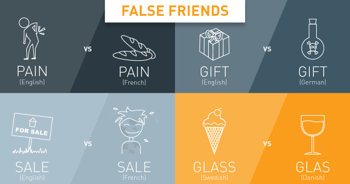
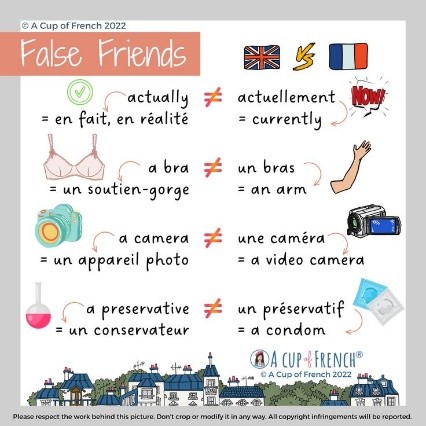
Language Ambiguities between English and French & Faux Amis

Featured


'False friends': words which although similar are not equivalent across two languages.

Faux amis' : mots dont la resemblance entre deux langues n'est pas équivalente.


1  Syntax / Word type

Ici c’était à la télévision,

and there it was seen on television.


2  Syntax  / Word type

Bienheureux est toujours le contraire de malheureux   

although content(e) [pleased] doesn’t mean the same as content.


Lexis /Word choice

On fait attention aux contradictions et aux ‘faux-amis’,           

which may (or not) have given birth to the phrase fake news'.


4 Lexis /Word choice 

Chez moi en France signifie à la maison

but in England a home is said to be one’s castle.


5 Lexis /Word choice 

J'ai mal au ventre,

but my stomach aches.


6  Lexis /Word choice                

En cinq mots le qu’ en dira - t- on fait survivre les journalistes,

but the media loves a one-letter gossip.


7 Semantics /Word meaning  Nerveuse (of a person) : [Restless]

On me dit toujours que je suis une personne nerveuse et agitée.

They always say I am a fidgety and restless person.


Semantics Word meaning  Nerveux (of an action) : [Nervous]

The woman’s nervous laugh betrayed her anxious state of mind.

Le rire nerveux de la femme trahissait son inquiétude.


8  Pragmatics/Word context

Ayant signalé le vol à la police, il me tardait de rentrer chez moi.

I reported the theft to the police and was desperate for a cup of tea.


9 Pragmatics / Word context

Merci peut indiquer le négatif (NEG)                    

Thank you always is a positive statement (POS)       

Examples:    (Fr) : Du sucre?(Eng) : Sugar?
(NEG): Merci (pas pour moi) /(POS)Thanks /Yes, please


10 Phonology /Word Sound 

Le bruit des ‘twitters’ commencent par le b de brouhaha,

although we may hear the h of hubbub made by the twitterers.


Any more similar examples welcome (English with any other language!)

Tout autre exemple similaire est le bienvenu (Français-Anglais ou autre langue)

Roebourne (Ieramugadu)-my favourite small town in Australia (Bilingual)

Featured
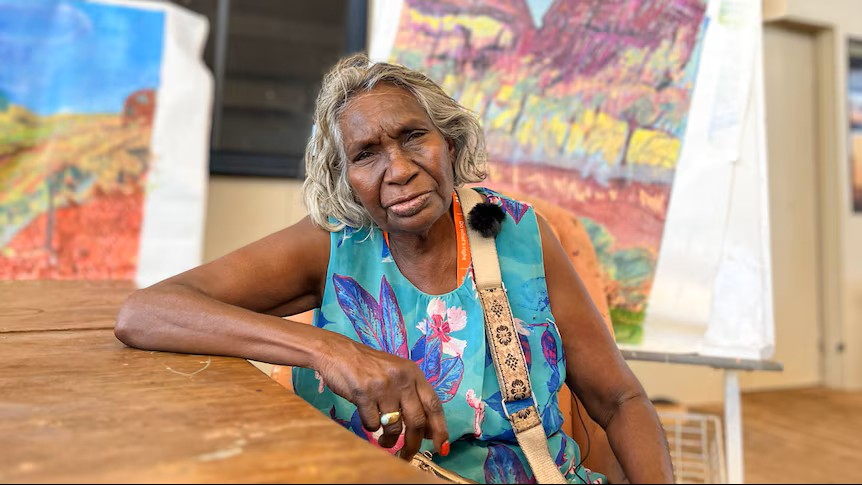
Wendy Hubert – courtesy ABC News

Why Roebourne is my favourite small town in Australia

In March 2026 Yindjibarndi Elder Wendy Hubert and Juluwarlu Art Cooperation 
travelled 5,000 km by road from Roebourne to Sydney as guests of the Sydney Biennale.
Links:
- Indigenous artworks taken on 5,000km road trip from the Pilbara to Biennale of Sydney - ABC News
- Wendy Hubert | 25th Biennale | Rememory | SBS On Demand


Roebourne [Ieramugadu, in Ngarluma; population 981-2016 census ],
is located within the City of Karratha at 1,563 from Perth (West Australia)
From 1930-1950 it was a non-Indigenous administrative centre.
The Yindjibarndi, Kuruma, Yaburrara, Marthudunera, Banjima, and
Kariyarra people were gathered to camps and reserves with controls and
curfews placed on Aboriginal people’s movements to, from, and within
the town. Later, iron-ore mining enterprises constructed company towns
and moved people from the crowded surrounds into Roebourne in the
1960s.

Exile and the Kingdom www.sbs.com.au/ondemand/tv-series/exile-and-the-kingdom
an award-winning documentary captured the spirit of the town, narrated by
a late elder with the Yindjibarndi, Ngarluma, Banyjima and Kurrama people
of Roebourne. It recounts the experiences of the Aboriginal community
from pre-colonial times to the 1990s.

Community centres in Roebourne include a Health Centre, an Aged
people’s home, a library, a primary and secondary school. It holds cultural
centres like the Ngarluma Yindjibarndi Foundation Ltd, and the media
station https://www.ngaardamedia.com.au/ngaarda-radio. Preserving the
Yindjibarndi history & culture Juluwarlu https://juluwarlu.com.au/ documents
the ngurra (the land) with the help of artist like Yindjibarndi Elder Wendy
Hubert while teacher, linguist and artist, Allery Sandy, runs the art centre
‘Yinjaa-Barni (Working Together)’ (www.yinjaa-barni.com.au)

Wanthiwa’ is the Yindjibarndi ‘Welcome’ word I heard when I walked
down the streets in Roebourne. I met the ‘strong’ women and men that
made the town real, similar to when I lived in France and people always
greeted each other. I enjoyed walking alongside families sitting on the
verandah. The town residents also walked from one house to the other
to consult with one another, as against those who walk for exercise,
which most of us do in Australia, without talking to anyone. I have fond
memories of families sitting on the verandah. This contrasted with life
in Karratha where I lived, driving from one spot to the next, usually in
large 4 x 4 vehicles and only seemed to speak to people in shops or
offices. I worked as the Roebourne Prison Education Officer for three
years where a majority of Indigenous people spent spells of months or
years as minimum priority prisoners, often for fine overloads or
breaching a driving licence. There I ran the Education Centre
where prisoners used their time catch up with their education which
had been interrupted.

Community gatherings I later worked for the local shire and organised
exchanges between the Indigenous community and the multicultural
residents of the local towns. We shared picnics with a taste of kangaroo
tails cooked in the ashes. A gathering is held in early July for all the older
Aboriginal people to celebrate their birthdays, given that their birthdates
were never registered.

In Australia’s massive country, this compact town will always have a place
in my heart.
Roebourne , ma petite ville préférée en Australie
En mars 2026, Wendy Hubert, aînée Yindjibarndi, et Juluwarlu Art
Coopération ont parcouru 5 000 km par la route, de Roebourne à
Sydney, en tant qu’invités de la Biennale de Sydney. Links below:
Indigenous artworks taken on 5,000km road trip from the Pilbara to Biennale of Sydney - ABC News
Wendy Hubert | 25th Biennale | Rememory | SBS On Demand

Roebourne, dont le nom est Ieramagadu dans la langue Ngalurma avait
une population de 981 habitants au recensement de 2016, est située dans
l’agglomération de Karratha à 1563 km de Perth (capitale de l’Australie
Occidentale). De 1930 à 1950 ce fut un centre administratif non-
Autochtone. Les peuples Yindjibarndi, Kuruma, Yaburrara,
Marthudunera, Banjima et Kariyarra furent regroupés dans des camps
et des réserves. Des contrôles et des couvre-feux furent imposés aux
Aborigènes quant à leurs déplacements à destination, en provenance et
à l'intérieur de la ville. Plus tard, dans les années 1960, des entreprises
minières de minerai de fer construisirent des villes ouvrières et
déplacèrent les populations d’un environnement surpeuplé vers
Roebourne.

Exile and the Kingdom www.sbs.com.au/ondemand/tv-series/exile-and-the-kingdom
un documentaire primé, a capturé l’esprit de la ville, narré par un ancien
aujourd’hui disparu des peuples Yindjibarndi, Ngarluma, Banyjima et
Kurrama de Roebourne. Il relate l’histoire d’une communauté aborigène,
des temps précoloniaux aux années 1990.

Les Centres de communauté de Roebourne consistent d’une clinique,
d’un centre pour personnes âgées, d’une bibliothèque et une école
primaire et secondaire. La ville contient la Fondation Ngarluma
Yindjibarndi Ltd et une media https://www.ngaardamedia.com.au/ngaarda-radio
Le groupe de Juluwarlu https://juluwarlu.com.au/ se concentre sur l’histoire
et la culture documente le ngurra (la terre natale) avec l’aide d’artistes
comme l’aînée Yindjibarndi Wendy Hubert. Un autre studio d’art le
Yinjaa-Barni (Le Travail Ensemble) www.yinjaa-barni.com.au est tenu
par l’aînée Yindjibarndi Allery Sandy, institutrice, linguiste et artiste.

Wanthiwa est le mot Yindjibarndi pour «Bienvenue» que j’entendais en
passant dans les rues de Roebourne. Je fis connaissance de femmes ‘fortes’
et de leurs partenaires qui rendent la ville vraiment réelle, me rappelant
ma vie en France quand les gens se saluaient toujours. J’aimais bien voir
toutes les familles assises sur leurs vérandas lorsque je passais dans la rue.
Là les résidents allaient d’une maison à l’autre pour discuter entre eux,
ce qui était le contraire de ceux qui se promènent pour faire de l’exercice,
comme nous le faisons tous en Australie, sans jamais parler à personne.
Ceci était un contraste avec la vie à Karratha où j’habitais, et où on
conduisait d’un endroit à l’autre, le plus souvent dans de gros véhicules
4x4 et où on ne parlait aux gens que dans les bureaux ou les magasins.
Je travaillais pendant trois ans dans le centre d’éducation de la Prison
Régionale de Roebourne où il y avait une majorité de prisonniers
Indigènes qui étaient condamnés à une peine minimale de quelques
mois ou années, soit pour des amendes accumulées ou pour infractions
au permis de conduite. Là j’organisais le Centre d’Education et les
prisonniers utilisaient ce temps-là pour se rattraper sur leurs études
qui avaient été interrompues.

Réunions entre groupes communautaires J’ai travaillé ensuite pour
la municipalité et facilité les échanges entre groupes Indigènes et
groupes multiculturels de la région. Nous avons fait des pique-niques
et gouté 'la queue de kangourou cuite dans les cendres'. Tous les ans,
début juillet, la communauté organise une journée pour célébrer
l’anniversaire des personnes Aborigènes âgées car leurs naissances
n’avaient pas été enregistrés.

Dans l'immense pays qu'est l'Australie, cette petite ville aura toujours
une place dans mon cœur.

Exploring thoughts and feelings/ Explorant ma vie intérieure

Featured
  Exploring thoughts and feelings


My inner life isn’t easy to find,
And it isn’t a topic that one studies,
It won’t be a comment somebody once voiced,
It has no easy theme to reveal to others.

My inner life is personal
It is lodged in my silent state of mind.
It may, or not, come to me at a time
When nothing happens around me
And I’ve allowed myself some ‘me time’.

My mind may take the focus on a thought
A vision, a sound, a tune, a rhythm.
It can occur associated to any one word.
This trend is not attributed to anyone,
No need for me to act on any of it.

It emerges as a sensation within me,
But doesn’t prompt any strong emotion.
It is just there for me to examine,
To consider and to treasure.


En explorant ma vie intérieure


Ma vie interne n’est pas facile à discerner
Ce n’est pas un objet de mes études,
Ni un commentaire que quelqu’un m’a fait
Ce n’est pas un sujet à révéler aux autres

Ma vie intérieure est personnelle
Elle séjourne dans un état d’esprit calme
Mon état intérieur pourra se dévoiler,
Ou peut-être pas, quand rien ne se passe,
Quand je prends un moment pour 'moi seule'.

L’âme peut se concentrer sur une pensée,
Un son, ou même une vision ou un rythme,
Ou pourrait aussi s’associer à un seul mot.
Je n’attribue telle évocation à personne
Je n’essaye donc pas à la mettre à l'œuvre.

Elle ne me vient que comme une sensation,
Mais ne réveille pas d’intense émotion en moi.
Il me reste à l’examiner, la considérer
Et à la chérir avec intérêt.

Jean-Marie Tjibaou: Legacy to Kanaky – New Caledonia

Featured
   JEAN-MARIE TJIBAOU: Legacy to Kanaky - New Caledonia 

When I was in Papua New Guinea at the University in the 1980s, I was given the opportunity to translate from French a speech at a Pacific forum for:

Jean-Marie Tjibaou (1936-1989) :

- Charismatic independence leader for New Caledonia
- Ex- priest, educated politician whose arguments used logic *
- Fought for awareness of Kanak identity and independence
- President of FLNKS, the party overseeing Kanak independence
- Designed the Kanak flag, recently seen jointly with the tricolore
- Devised and signed the tripartite Matignon Accords (Paris 1988)
- Independence announced for 1998. Independentists killed
- Was assassinated by an extremist of his own side in 1989.

Jean-Marie Tjibaou (son, Emmanuel, currently a member of the French National Assembly for New Caledonia) coined the phrase “PACIFIC MY NUHOM” [Pacific, My New Home], to show the links between his country and the Melanesian countries of the
Pacific (Papua New Guinea, Solomon Islands and Vanuatu). He
spoke with passion, persuasion of the similarities in their
histories, languages, and customs.

Further he was also able to resolve two demanding situations:

1. The PNG leadership was unable to support him because Bernard Narakobi who held a philosophy of Melanesia did not come to power in PNG. Yet thanks to the Non-Aligned Movement of newly independent Vanuatu, Tjibaou was supported at the United Nations Assembly in 1986 with a vote confirming: ‘the inalienable right of the people of New Caledonia to self-determination’

2. François Mitterand (of the Socialist Party) became President but was not able to support him early on. Yet Tjibaou succeeded
to negotiate with his Prime Minister Michel Rocard ‘Les Accords de Matignon’ in 1988 when he led the pro-independence delegation while Jacques Lafleur, a ‘Caldoche’ or New Caledonian of European origin led an anti-independence delegation. They shook hands. The photo of the ‘handshake’ shocked some of his younger extremists (this may have led to his assassination).

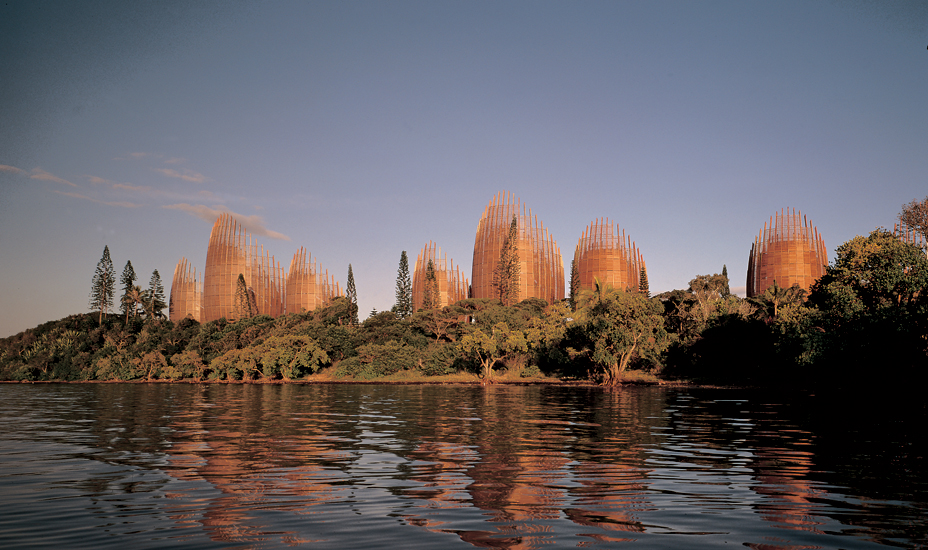
Jean-Marie Tjibaou’s name was given to a newly designed Cultural Centre (see above) inaugurated in Noumea (1998) to add value to the Kanak Culture, a project he had initiated at the time of the Matignon Accords. It is an Agency for the development of the Kanak Culture and is led by his widow Marie-Claude Tjibaou.

Further the two men involved with Rocard in the handshake were awarded in 2010 (this was posthumous for J M Tjibaou) ‘La Colombe de la Paix,’ an annual prize via Germany supported by UNESCO.

*Quote:
We want the right to Independence in our country. It is not more racist than to speak of having French citizenship.


JEAN-MARIE TJIBAOU: son héritage pour Kanaky-Nouvelle Calédonie

Lorsque j’étais en Papouasie Nouvelle Guinée, à l’université, dans les années 1980, j’ai eu l’occasion extraordinaire de traduire à un forum sur le Pacifique le discours de :

Jean-Marie Tjibaou (1936-1989)

- leader indépendantiste charismatique de la Nouvelle-Calédonie
- prêtre défroqué, politicien éduqué, de parole raisonnée*
- lutta pour faire reconnaitre : identité kanak et indépendance.
- président du FLNKS, parti pour l'Indépendance
- dessina le drapeau pour 'Kanaky', récemment joint au tricolore
- négocia (Paris) en tripartie, signa les Accords de Matignon 1988
- prévu l’Independence pour 1998, mais Indépendantistes tués
- a été assassiné par un extrémiste de son propre camp en 1989.

Jean-Marie Tjibaou (dont le fils, Emmanuel, représente 'Kanaky' en ce moment comme membre de l’Assemblée Nationale en France) a inventé une phrase inclusive: ‘PACIFIC MY NUHOM’ [Pacific My New Home]. Il a démontré les liens de son pays avec les pays Mélanésiens du Pacifique ( Papouasie Nouvelle Guinée, Les Iles Solomon et Vanuatu) et a parlé avec passion et logique des similitudes d’histoire, de langues et coutumes.

Plus tard il réussira à résoudre deux autres situations difficiles.

1 Les leaders de PNG ne pouvaient l’aider car Bernard Narakobi malgré une philosophie de Mélanésie n’a pas pris le pouvoir. Mais Tjibaou réussit à se joindre au ‘Mouvement Non-aligné’ de Vanuatu, nouvellement indépendant et de faire agréer et voter aux Nations Unies en 1986 : ‘le droit inaliénable des peuples de la Nouvelle Calédonie à l’auto-détermination’.

2 François Mitterand du parti Socialiste devint President en 1981 mais ne l’a pas soutenu dès le début. Tjibaou réussit néanmoins à négocier grâce au Premier Ministre Rocard les Accords de Matignon en 1988 : il mena une délégation indépendantiste jointe avec la délégation anti-indépendantiste du député NC Jacques Lafleur. Ils se sont serrés la main et la photo de cette ‘poignée de main’ a choqué des jeunes extrémistes de son mouvement (ce qui a pu être la cause de son assassinat).

Jean-Marie Tjibaou avait donné son nom au Centre Culturel (ci- dessus) inauguré en 1998 à Nouméa pour valoriser la culture
kanake qu'il ’avait projeté au moment des Accords de Matignon. Cette Agence pour le Développement de la Culture Kanak est
tenue par sa veuve Marie-Claude Tjibaou.

Plus récemment les deux hommes de la ‘poignée de main’ ont reçu en 2010 (à titre posthume pour J M Tjibaou) la ‘Colombe de la Paix’, prix annuel de l'Allemagne soutenue par l'UNESCO.

* Citation
Nous voulons le droit d’avoir l’Indépendance de notre pays. Ce n’est pas plus raciste que de parler d’une citoyenneté Française.

Memories of Home/ La Maison de mes souvenirs

Featured

Memories of Home.

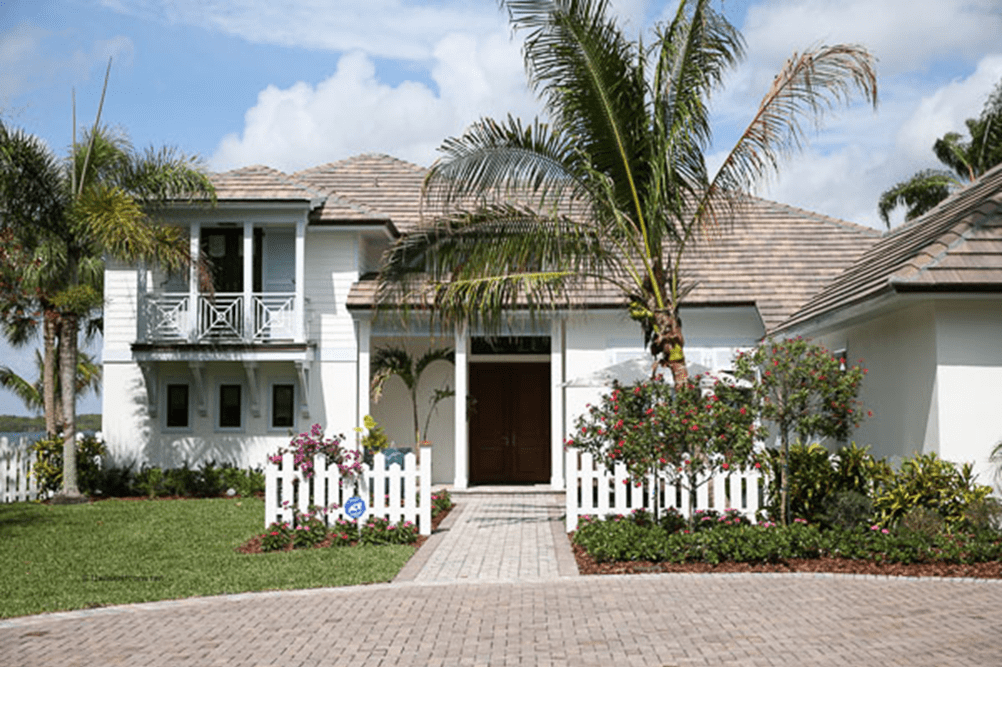
I would love to devise the ideal home based on some of my memories. My parents’ home in France had a cellar to keep wood, wine and canned vegetables. This was a very functional home for my mother who loved gardening and keeping preserves.

One of the houses where I lived for a very short time had an upper floor with a study which opened onto a balcony. I’d love this to have its windows protected by shutters, against cyclones, and the heat, as it was customary where I lived in for ten years in the cyclone belt of Western Australia.

I would like a home, like one I once lived in for a while in Papua New Guinea, to have an outdoor area that includes a long verandah enclosed for privacy where the children walked their bicycles through the gate. The surrounding breeze blocks also kept our dog safe from running away, as well as it allowed us to try and raise a pet turtle. Sad events can occur if ever the dog escaped onto the open and was run over on the road or if the turtle drowned in a pool of water.

More exciting times happened when I grew beautiful white frangipani flowers next to purple bougainvillea. A mango tree was often depleted by children on their way to school. I think pawpaw trees would do better, if the region was not subject to violent cyclonic winds.

Located in a in a friendly area, the premises allowed children to run in and out of the nearby houses, share meals and cold drinks or have sleepovers at one another’s.

When all was well, the children bouncing in and out of a home-made swing, climbing up and down the trees I’d recline and reflect in peace upstairs on the balcony which had a great view of distant hills.

This is the imagined compound of my dream which has features of some of the houses I lived in, with a lot of extra space for comfort.


La maison de mes souvenirs.

Je voudrais raconter ma maison idéale en m’inspirant de celles dans lesquelles j’ai vécu. La maison de mes parents en France avait une cave et ma mère qui jardinait y gardait ses conserves, mon père son vin et du bois.

J’ai une fois pendant peu de temps vécu en Australie dans une maison qui avait un petit bureau qui ouvrait sur un balcon. J’aimerais que les fenêtres aient, comme dans la zone cyclonique de l’Australie Occidentale ou j’ai habité pendant dix ans, des volets qui protègent des ouragans, des vents et de la chaleur.

Je serais heureuse de trouver une maison avec un grand jardin, comme ou j’ai vécu quelque temps en Papouasie Nouvelle Guinée, et sur le côté une longue verandah qui avait un portail par lequel les enfants rangeaient leur vélo et entourée de blocks qui permettaient d’élever un chien, et même si possible une tortue. Malheureusement le chien pourrait s’échapper et se faire écraser sur la route ou la tortue rentrer dans un bol d’eau et se noyer, et ce serait très triste.

La vie était beaucoup plus agréable quand je faisais pousser des frangipanes à fleurs blanches avec des bougainvillées mauves. Un manguier bien qu’il soit agréable se fait prendre tous ses fruits par les enfants. Je préfèrerais des papayers pourvu qu’il n’y ait pas de vents cycloniques pour les décimer.

La maison étant située dans un quartier agréable, les enfants pourraient se rendre visite les uns aux autres, et trouver à manger ou à se rafraichir chez leurs amis, à monter aux arbres ou sur les balançoires et passer la nuit les uns chez les autres. Quand tout va bien, je peux m’allonger sans souci sur mon balcon et contempler la vue de distantes collines.

C’est ainsi que j’imagine la composition d’une demeure de mes rêves, avec des éléments de mon passé mais aussi un supplément d’espace et de confort.

Finding a new horizon / Trouver un nouvel horizon

Featured
Finding a new horizon

They have advised not to stay quiet. My friend complained
about my neighbour’s laziness. I asked him,
‘Was she idle or was it that she couldn’t find work?’
If I stayed quiet, I allowed my position as a non-Indigenous
person to reinforce his views.

To deal with racism we must escape our comfort zone and
reflect on our biases, often based on lack of knowledge. Once
I thought all women from India were Hindus who wore saris.

I need to understand my neighbour’s cultural issues, often
hidden or unspoken. ‘Racism stops with me’ encouraged me
to speak. It’s helped me. Will it help others?


Trouver un nouvel horizon

On nous conseille de parler franchement. Un de mes amis a
critiqué ma voisine en disant qu’elle ne voulait pas travailler.
Je lui ai demandé,
‘Est-ce qu’elle ne voulait pas travailler ou serait-ce qu’elle
ne pouvait pas trouver du travail’.
Si je ne donnais pas de réplique à sa remarque je confirmerais
l’avantage que j’ai en tant que personne non-Indigène et je
renforcerais ce reproche.

Pour comprendre le racisme il faut renoncer à sa zone de
confort et réfléchir sur nos préjugés, qui sont souvent dus
à notre manque de connaissance. Il y a plusieurs années
je pensais qu’en Inde toutes les femmes étaient Hindou
et portaient des saris.

On a besoin de vérifier les conditions culturelles des personnes
autour de nous car la réalité peut rester cachée ou tacite. A la
suite du programme ‘Racism stops with me’, je n'ai eu plus peur
de m'exprimer, ce qui m’a aidé. Cela va-t-il aider d’autres ?

Freedom: Embracing change and identity

Featured

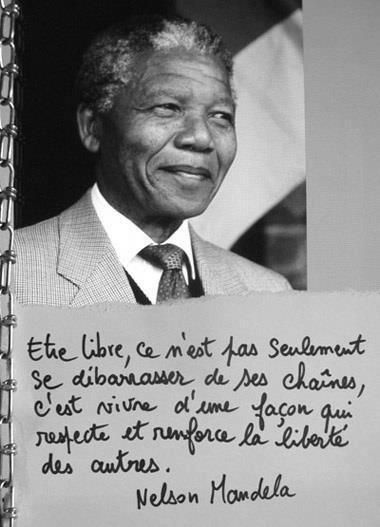
                    “For to be free is not merely to cast off one's chains, but to live 
in a way that respects and reinforces others' freedom.”

Nelson Mandela, Long Walk to Freedom, 1994.
[Pinterest Pic]
Looking for Freedom: Embracing change and identity


Freedom came to me
the day I moved from home,
my folk living in a gendarmerie.

I withdrew from France,
I left, and rejected
all my parents had intended for me.

Straight across to England I faced its frozen winds.
With luck I happened to bump into a young man
who wanted to travel, so we went overseas.

To Africa where Zambia became Independent.
Years of pleasure in the teaching
of the young and motivated learners!

Following old traditions that seemed new to me,
I adapted, out in the bush, used a hot water bottle
for my newborn who needed an incubator.

Then in the Pacific, Papua New Guinea
also gained its Independence. My family surrounded
by varied Indigenous folks who spoke multiple languages.

Travels and friendships were soon to end.
Integrated I’d thought, but we were to migrate.
Australia. How would it modernise our lifestyle?

There, ‘shock and awe’, we glared. Who’d fill the gap,
to bring in the Aborigines, who possessed less resources
than our friends in Africa or the Pacific?

I’d need to free myself again. I didn’t want to become
more French than before. Still I remained wondering
how long it’d take for Aboriginal culture
to become ‘respected and reinforced’, here.


Liberté : Accueillir un renouveau d’identité


La liberté, je l’ai cherchée.
Je décidai, un jour, de quitter la maison,
mon père gendarme, je partis sans les clés.

J’abandonnai la France, rejetai mon passé
tout ce que mes parents pour moi auraient voulu.
Je laissai ma famille et traversai la Manche.

Les vents Anglo-Saxons me refroidirent.
Enfin, je rencontrai un jeune homme qui voulait
rallumer sa vie en voyageant à l’étranger.

En Afrique, la Zambie prit son indépendance.
Des années de plaisir à enseigner
des étudiants jeunes et très motivés !

Des traditions anciennes, quoique nouvelles pour moi.
Je m’adaptai. Un jour en pleine brousse, mon bébé
n’eut pour couveuse qu’une simple bouillotte toute chaude.

Plus tard dans le Pacifique, La Papouasie Nouvelle Guinée
eut, elle aussi, son Indépendance. Ma famille fut alors entourée
de personnes Indigènes dont les langues offraient multiples variétés.

Soudain les voyages et les rencontres amicales se terminèrent,
je me croyais intégrée mais l’heure de notre rapatriement arriva.
Emigrants en Australie, aurons-nous une vie plus modernisée ?

‘Le choc et l’admiration’ deviennent ‘Rapide Dominance’.
Comment garnir accès pour les Aborigènes
qui avaient moins de ressources que nos amis
d’Afrique ou du Pacifique ?

Aurais-je donc le temps de me relibérer
Ou deviendrais-je plus Française qu’avant ?
Mais combien de temps pour que la culture
Aborigène soit ‘respectée et renforcée’, ici ?


Happy 2026 in 26 Languages to family & friends

Featured

                          HAPPY  ‘26  WISHES IN 26 LANGUAGES
from Anne-Marie
For practical reasons, I chose to use the Latin alphabet.
I send my warm wishes (shall I say, I hope) for everyone to enjoy a
peaceful life in 2026. As we all know, cultures and calendars show
differences from one another. In fact, my ‘western’ concept of wishing Happy New Year can be conveyed with different phrases around the
world. I’ve tried to transcribe the greetings’ literal translations, but
please let me know of any corrections or alternatives.

1 Arabic sanah jadīdah sa’ida [Happy New Year]
2 Basque Urte berri on [Happy New Year]
3 Chinese Cantonese gùng héi faat chōi[Wishing you prosperity, wealth] /Mandarin gōngxǐ fācái [Happiness and Prosperity] Chinese New Year17 Feb
4 Ci Lunda Shikenu mwani[Welcome, Are you good?]
5 Finnish Hyvää uutta vuotta [Good New Year]
6 French Bonne Année/Occitan: Bona annada [Good Year]
7 German Frohes neues Jahr [Happy New Year]
8 Greek Eftychisméno to néo étos [Happy New Year]
9 Hebrew Shana Tova u-Metukah [Good Sweet Year]
Jewish New Year 12 Sept
10 Hindi Nav Varsh Mangalmay Ho [May the New Year be Auspicious)]
11 Hiri Motu Tenkyu long bung tumora [Thank you for Tomorrow]
12 Irish Gaelic Athbhliain faoi mhaise duit [Prosperous New Year]
13 Italian Felice anno nuovo [Happy New Year]
14 Kaurna Niina Marni [Hello/Are you good]
15 Indonesian Selamat tahun baru [Greetings for the New Year]
16 Maori Ngā mihi o te tau hou [Greetings/Thanks for the New Year]
17 Ndebele Umnyaka omuhle [Beautiful Year]
18 Polish Szczęśliwego Nowego Roku [Happy New Year] Used for
Christmas and the New Year Season
19 Romanian Un An Nou Fericit [A New Year happy]
20 Scots Lang may yer lum reek [Long may your chimney smoke]
21 Spanish Feliz año nuevo [Happy New Year]
22 Swedish Gott nytt år [Good New Year]
23 Tok Pisin Hapi Niu Yia [Happy New Year]
24 Vietnamese Chúc mừng năm mới [Congratulations on the year new]
25 Wangkatja Palya [Hi, Good]/Ngaanyatjarra Pitjantjatjara Yankunytjatjara
Palya nyinama[Stay good, sitting down] Courtesy NPY Women's Council
26 Yindjibarndi: Wanthiwa [Welcome, Are you good?]

All errors are mine. Please feel free to correct them, write a comment, or like.

En Français
Pour des raisons de facilité, j’ai choisi d’utiliser l’alphabet Romain.

Je souhaite (ou plutôt j’espère) que chacun puisse vivre une année 2026 paisible. Nous savons que les cultures et les calendriers présentent des
différences. En effet, ma conception ‘occidentale’ des vœux de bonne
année peut être exprimée de différentes manières à travers le monde.
J’ai tenté de transcrire la traduction littérale des vœux, mais n'hésitez
pas à me faire part de toute correction ou suggestion.
Je me porte responsable de toute erreur. N’hésitez pas à me faire part de vos corrections et suggestions. Faites aussi un commentaire ou un "Like’.

Bilingual Adults: Benefits of language juggling (Bil.)

Featured

Bilingual Adults: benefits of language juggling

Adults (Part 2) [Children: see Part 1, 18Nov25]
Bilingual Adults: benefits of language juggling 

Introduction (from Part 1)
I discuss information I gathered from a book called The Bilingual Brain which highlighted many of my own experiences as a bilingual speaker (French and English). It also confirmed my observations as a parent of two bilingual children.

Feel free to read: Albert Costa. The Bilingual Brain. Penguin Books, 2017.

1 Bilingual people can be speakers of two languages regardless
- whether they learnt a language from birth
- how frequently they speak the language
- how proficient they are in that particular language

2 Bilingual Adults as Jugglers

A Juggling
- Costa says that bilingual adults are like jugglers. But I suggest their
juggling remains invisible.
- When bilingual persons (Spanish speakers) talk with English adults,
for whom English is the First language, it is rare that they slip into the
bilingual’s own language (Spanish) although the bilingual person's
brain has not turned off their own language. It is there, though they
don’t use it. It remains invisible.
- However, it is well known that monolinguals as well as bilinguals can
introduce words of another language like in the phrase ‘el check-in
in a conversation but this is often because these are commonly used
phrases internationally.

B Code switching
- So, the adult bilinguals juggle but they also switch. In informal situations,
like around a table with family and friends, people allow themselves to
change to the most relevant speaking style or 'code'.
- In our own language, we can all ‘code switch’ using different words,
phrases and intonation, in more or less formal circumstances and
with people we are more or less familiar with.
- That's what we do when we change how we speak at work to a colleague
to how we speak to a manager. We 'code switch'. The degree of
familiarity and of the environment determine how we speak at home
with the family compared to when we talk to a manager or even
colleagues in our workplace.

For bilinguals, code-switching happens across two languages when adults feel free to insert a word or phrase of the other language. Bilinguals always follow the grammatical rules of the main language involved.

a Donde están las keys’ (Spanish conversation)
[Where are the keys?]
Agreement a: the plural verb ‘estan’ agrees with plural noun ‘keys’.

b 'Donde esta la clé?’ (Spanish conversation)
[Where is the key?]
Agreement b: the singular verb ‘esta’ agrees with singular noun ‘key.’

Note : On a personal level, I have surprised myself, saying the following:
c ‘Where are my lunettes ?’ (English conversation)
[Where are my glasses ?]
Agreement c: the plural verb ‘are’ agrees with plural noun ‘lunettes’.

Albert Costa makes the point that when code / language switching, bilinguals follow all the rules of grammar of the dominant language in the conversation.

3 Advantages to brain

A Multitasking
- Bilinguals can adjust and code switch in their use of languages,
to adapt to their interlocutor and their environment.
- Bilingual adults can efficiently classify items under different criteria,
and this was seen to also apply to bilingual children [see Part 1].
- Bilinguals showed when tested for attentional capacity that they are
better at avoiding conflict and blocking out irrelevant information.

B Better cognitive responses
Costa also discusses the lessening of cognitive decline for bilingual
Seniors, a theme also covered by a more recent book: Viorica Marian,
The Power of Language: Multilingualism, Self, and Society, 2023.

4 Disadvantages of bilingualism

A Lack of speed in some speech circumstances
- It may take a little longer for bilinguals to express a thought.
- Bilingual children can take slightly longer to start speaking any
language, and this should not be of concern to parents.

B More brain effort needed, increasing use of 'the grey matter'
- The more dominant the first language, the more the bilingual
adults need to block it, and the bigger is the delay or difficulty
for them to speak another language.
- That is not simply because they cannot remember a word, but
because the stronger language keeps interfering. To control this,
the brain needs to exercise extra vigour.
- Costa says if bilinguals learn other languages, they juggle three
or more balls. (This must mean the brain has to work more
to exercise this control.)

Conclusion:
In conclusion, I refer you again to Viorica Marian for a quotation:
‘Bilingual children as young as seven months can better adjust to environmental
changes, while bilingual seniors can experience less cognitive decline.’
Viorica Marian & Anthony Shook, National Institute of Health in the US, 2012.


Adultes bilingues : le bienfait de jongler avec les langues 

Adultes (Part 2) [Enfants : voir Part 1, 18Nov25]
Adultes bilingues : le bienfait de jongler avec les langues 


Introduction (comme Part 1) :
Je discute le livre 'Le Cerveau Bilingue' qui m’a impressionné car il démontrait des expériences qui me sont habituelles en tant que bilingue moi-même (Français & Anglais). La section sur les enfants m’a rappelé des observations de mes deux enfants bilingues. N’hésitez pas à lire : Albert Costa. The Bilingual Brain. Penguin Books, 2017.


1 On est bilingue lorsqu’on est une personne
- qui apprend deux langues à la naissance ;
- qui parle fréquemment une langue qu’on a étudié ;
- qui parle à son propre niveau de compétence dans cette langue.

2 Les adultes bilingues sont comme des jongleurs
A Jongleurs
- Costa dit que les adultes bilingues sont comme des jongleurs,
mais je pense qu’en fait ils jonglent de façon invisible.
- Lorsque des adultes bilingues (de langue Espagnol) s’adressent
à des adultes pour qui l’Anglais est la Première langue, il est rare
qu’ils se mettent à parler avec des mots de leur langue d’origine,
bien que leur cerveau n’ait pas éteint leur langue (Espagnol).
Elle est là et pourtant ils ne l’utilisent pas. Elle reste invisible.
- Cependant nous savons que nous tous, que l'on soit monolingue
ou bilingue puisse de temps en temps introduire des mots ou des
phrases d’une autre langue comme ‘el-check-in' ou ‘le check-in’, car
ce sont des expressions couramment utilisées de façon internationale.

B Alternance de code dans la même langue
- Les adultes bilingues jonglent donc avec les langues, mais ils peuvent
aussi 'alterner ou changer les codes linguistiques'.
- Ce ‘changement de code’ se produit dans les situations informelles,
autour d'une table, en famille ou entre amis : chacun choisit un mode
de communication adéquate.
- Nous faisons tous ainsi dans notre propre langue. Nous changeons de
mots, de phrases et d’intonation selon la personne avec qui nous parlons.
Le degré de familiarité dépend de notre interlocuteur (ou aussi de
l'environnement), que ce soit un directeur, des collègues ou un membre
de notre famille.
- Chez les personnes bilingues, cette alternance de code/langue se produit
lorsque les adultes se sentent libres d'insérer un mot ou une expression
de l'autre langue. Les bilingues respectent toujours les conventions de
la langue principale utilisée dans la conversation.

a : ‘Donde están las keys’ Conversation en Espagnol
[Où sont les clés ?]
Accord a: le verbe pluriel ‘estan’ s’accorde avec le nom pluriel ‘keys’.

b: ‘Donde esta la key?’ Conversation en Espagnol
[Où est la clé ?]
Accord b: le verbe singulier ‘esta’ s’accorde avec le non singulier ‘key’.

Note : Je me surprends souvent à faire ça moi-même, quand je parle ainsi:
c : ‘Where are my lunettes ?’ Conversation en Anglais
[Où sont mes lunettes ?]
Accord c: le verbe pluriel ‘sont s’accorde avec la phrase plurielle 'lunettes’.

Costa remarque que l’accord grammatical est toujours maintenu avec la langue dominante de la conversation.

3 Avantages pour le cerveau bilingue

A Tâches multiples et simultanées
- Les adultes bilingues peuvent changer de code linguistique pour
s’adapter à leur interlocuteur et leur environnement.
- Les bilingues peuvent avec efficacité classifier des objets d’après des
critères différents, ce qui s’appliquait aux enfants bilingues [voir :
première partie].
- Les adultes bilingues ont montré, lorsqu’ils ont été testés pour leur
capacité attentionnelle, qu’ils pouvaient éviter certains conflits, en
bloquant des détails non-pertinents.

B Moins de diminution de Réponses Cognitives
Costa discute aussi le déclin des réponses cognitives chez les ‘Seniors’.
Ce thème est couvert dans un livre plus récent : Viorica Marian
The Power of Language: Multilingualism, Self, and Society, 2023.


4 Désavantages du bilinguisme

A Moins de rapidité d’expression dans certaines situations
- Les adultes bilingues mettent quelquefois plus longtemps pour
exprimer leurs pensées.
- Les enfants bilingues peuvent mettre un peu plus longtemps à
commencer à parler. Ceci ne devrait pas inquiéter les parents.

B Plus d’effort nécessaire qui affecte 'la matière grise'
- Plus la langue maternelle est dominante, plus les adultes
bilingues ont besoin de la bloquer, donc plus long sera le délai
ou la difficulté pour eux de parler dans une autre langue.
- Ce n’est pas simplement qu’on ne se rappelle pas un mot,
mais c'est dû à l’interférence de langue la plus forte. Pour
contrôler cela, le cerveau a besoin de travailler avec vigueur.
- Costa nous dit que lorsque les adultes bilingues apprennent
de nouvelles langues, ils jonglent avec trois balles ou plus (ce qui
veut dire qu’ils doivent travailler encore plus fort ! )

Conclusion :
Pour conclure je fais de nouveau une référence à Viorica Marian
avec cette citation :
‘Les enfants bilingues dès l’âge de sept mois savent mieux s’adapter aux
changements de leurs environnements, tandis que les adultes bilingues
et seniors peuvent
expérimenter moins de déclin cognitif.’
Viorica Marian & Anthony Shook, National Institute of Health in the US, 2012