JEAN-MARIE TJIBAOU: Legacy to Kanaky - New Caledonia
When I was in Papua New Guinea at the University in the 1980s, I was given the opportunity to translate from French a speech at a Pacific forum for:
Jean-Marie Tjibaou (1936-1989):
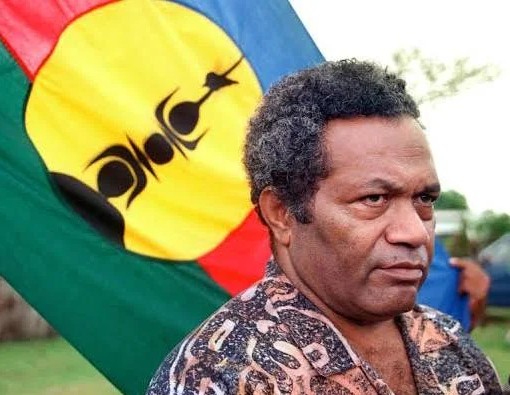
- Charismatic independence leader for New Caledonia - Ex- priest, educated politician whose arguments used logic * - Fought for awareness of Kanak identity and independence - President of FLNKS, the party overseeing Kanak independence - Designed the Kanak flag, recently seen jointly with the tricolore - Devised and signed the tripartite Matignon Accords (Paris 1988) - Independence announced for 1998. Independentists killed - Was assassinated by an extremist of his own side in 1989.
Jean-Marie Tjibaou (son, Emmanuel, currently a member of the French National Assembly for New Caledonia) coined the phrase “PACIFIC MY NUHOM” [Pacific, My New Home], to show the links between his country and the Melanesian countries of the Pacific (Papua New Guinea, Solomon Islands and Vanuatu). He spoke with passion, persuasion of the similarities in their histories, languages, and customs.
Further he was also able to resolve two demanding situations:
1. The PNG leadership was unable to support him because Bernard Narakobi who held a philosophy of Melanesia did not come to power in PNG. Yet thanks to the Non-Aligned Movement of newly independent Vanuatu, Tjibaou was supported at the United Nations Assembly in 1986 with a vote confirming: ‘the inalienable right of the people of New Caledonia to self-determination’
2. François Mitterand (of the Socialist Party) became President but was not able to support him early on. Yet Tjibaou succeeded to negotiate with his Prime Minister Michel Rocard ‘Les Accords de Matignon’ in 1988 when he led the pro-independence delegation while Jacques Lafleur, a ‘Caldoche’ or New Caledonian of European origin led an anti-independence delegation. They shook hands. The photo of the ‘handshake’ shocked some of his younger extremists (this may have led to his assassination).
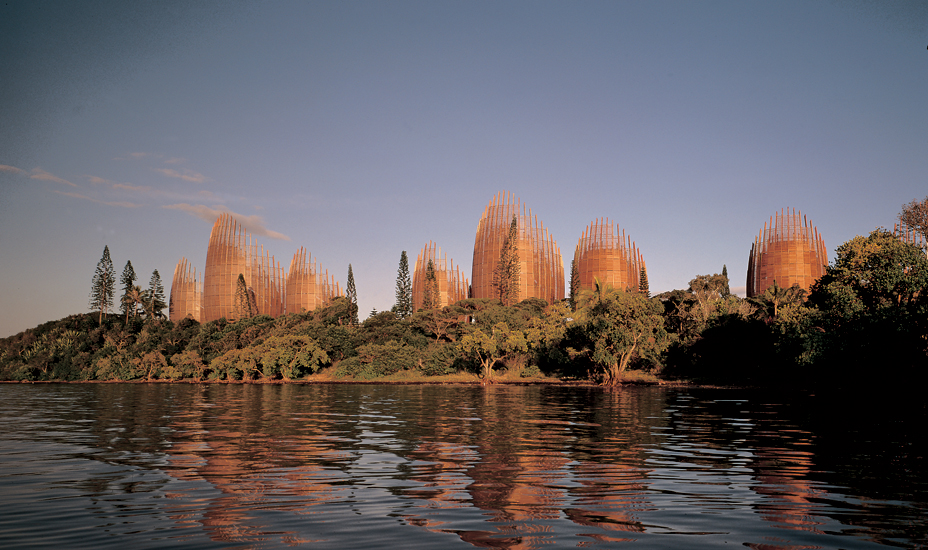
Jean-Marie Tjibaou’s name was given to a newly designed Cultural Centre (see above) inaugurated in Noumea (1998) to add value to the Kanak Culture, a project he had initiated at the time of the Matignon Accords. It is an Agency for the development of the Kanak Culture and is led by his widow Marie-Claude Tjibaou.
Further the two men involved with Rocard in the handshake were awarded in 2010 (this was posthumous for J M Tjibaou) ‘La Colombe de la Paix,’ an annual prize via Germany supported by UNESCO.
*Quote: We want the right to Independence in our country. It is not more racist than to speak of having French citizenship.
JEAN-MARIE TJIBAOU: sonhéritage pour Kanaky-Nouvelle Calédonie
Lorsque j’étais en Papouasie Nouvelle Guinée, à l’université, dans les années 1980, j’ai eu l’occasion extraordinaire de traduire à un forum sur le Pacifique le discours de :
Jean-Marie Tjibaou (1936-1989)
- leader indépendantiste charismatique de la Nouvelle-Calédonie - prêtre défroqué, politicien éduqué, de parole raisonnée* - lutta pour faire reconnaitre : identité kanak et indépendance. - président du FLNKS, parti pour l'Indépendance - dessina le drapeau pour 'Kanaky', récemment joint au tricolore - négocia (Paris) en tripartie, signa les Accords de Matignon 1988 - prévu l’Independence pour 1998, mais Indépendantistes tués - a été assassiné par un extrémiste de son propre camp en 1989.
Jean-Marie Tjibaou (dont le fils, Emmanuel, représente 'Kanaky' en ce moment comme membre de l’Assemblée Nationale en France) a inventé une phrase inclusive: ‘PACIFIC MY NUHOM’ [Pacific My New Home]. Il a démontré les liens de son pays avec les pays Mélanésiens du Pacifique ( Papouasie Nouvelle Guinée, Les Iles Solomon et Vanuatu) et a parlé avec passion et logique des similitudes d’histoire, de langues et coutumes.
Plus tard il réussira à résoudre deux autres situations difficiles.
1 Les leaders de PNG ne pouvaient l’aider car Bernard Narakobi malgré une philosophie de Mélanésie n’a pas pris le pouvoir. Mais Tjibaou réussit à se joindre au ‘Mouvement Non-aligné’ de Vanuatu, nouvellement indépendant et de faire agréer et voter aux Nations Unies en 1986 : ‘le droit inaliénable des peuples de la Nouvelle Calédonie à l’auto-détermination’.
2 François Mitterand du parti Socialiste devint President en 1981 mais ne l’a pas soutenu dès le début. Tjibaou réussit néanmoins à négocier grâce au Premier Ministre Rocard les Accords de Matignon en 1988 : il mena une délégation indépendantiste jointe avec la délégation anti-indépendantiste du député NC Jacques Lafleur. Ils se sont serrés la main et la photo de cette ‘poignée de main’ a choqué des jeunes extrémistes de son mouvement (ce qui a pu être la cause de son assassinat).
Jean-Marie Tjibaou avait donné son nom au Centre Culturel (ci- dessus) inauguré en 1998 à Nouméa pour valoriser la culture kanake qu'il ’avait projeté au moment des Accords de Matignon. Cette Agence pour le Développement de la Culture Kanak est tenue par sa veuve Marie-Claude Tjibaou.
Plus récemment les deux hommes de la ‘poignée de main’ ont reçu en 2010 (à titre posthume pour J M Tjibaou) la ‘Colombe de la Paix’, prix annuel de l'Allemagne soutenue par l'UNESCO.
* Citation Nous voulons le droit d’avoir l’Indépendance de notre pays. Ce n’est pas plus raciste que de parler d’une citoyenneté Française.
I would love to devise the ideal home based on some of my memories. My parents’ home in France had a cellar to keep wood, wine and canned vegetables. This was a very functional home for my mother who loved gardening and keeping preserves.
One of the houses where I lived for a very short time had an upper floor with a study which opened onto a balcony. I’d love this to have its windows protected by shutters, against cyclones, and the heat, as it was customary where I lived in for ten years in the cyclone belt of Western Australia.
I would like a home, like one I once lived in for a while in Papua New Guinea, to have an outdoor area that includes a long verandah enclosed for privacy where the children walked their bicycles through the gate. The surrounding breeze blocks also kept our dog safe from running away, as well as it allowed us to try and raise a pet turtle. Sad events can occur if ever the dog escaped onto the open and was run over on the road or if the turtle drowned in a pool of water.
More exciting times happened when I grew beautiful white frangipani flowers next to purple bougainvillea. A mango tree was often depleted by children on their way to school. I think pawpaw trees would do better, if the region was not subject to violent cyclonic winds.
Located in a in a friendly area, the premises allowed children to run in and out of the nearby houses, share meals and cold drinks or have sleepovers at one another’s.
When all was well, the children bouncing in and out of a home-made swing, climbing up and down the trees I’d recline and reflect in peace upstairs on the balcony which had a great view of distant hills.
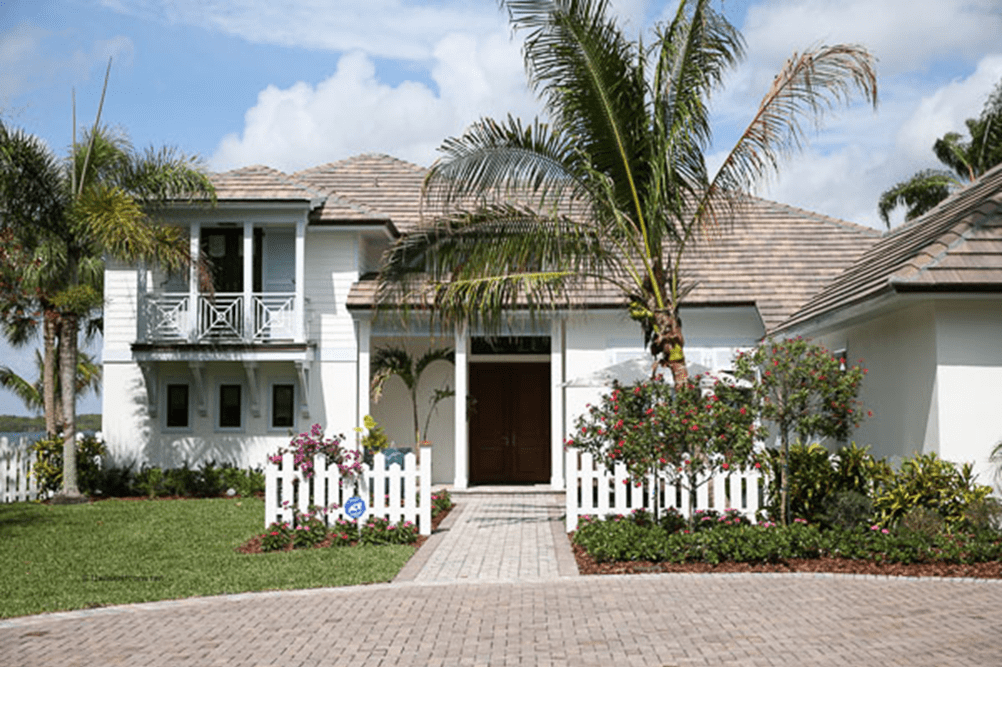
This is the imagined compound of my dream which has features of some of the houses I lived in, with a lot of extra space for comfort.
La maison de mes souvenirs.
Je voudrais raconter ma maison idéale en m’inspirant de celles dans lesquelles j’ai vécu. La maison de mes parents en France avait une cave et ma mère qui jardinait y gardait ses conserves, mon père son vin et du bois.
J’ai une fois pendant peu de temps vécu en Australie dans une maison qui avait un petit bureau qui ouvrait sur un balcon. J’aimerais que les fenêtres aient, comme dans la zone cyclonique de l’Australie Occidentale ou j’ai habité pendant dix ans, des volets qui protègent des ouragans, des vents et de la chaleur.
Je serais heureuse de trouver une maison avec un grand jardin, comme ou j’ai vécu quelque temps en Papouasie Nouvelle Guinée, et sur le côté une longue verandah qui avait un portail par lequel les enfants rangeaient leur vélo et entourée de blocks qui permettaient d’élever un chien, et même si possible une tortue. Malheureusement le chien pourrait s’échapper et se faire écraser sur la route ou la tortue rentrer dans un bol d’eau et se noyer, et ce serait très triste.
La vie était beaucoup plus agréable quand je faisais pousser des frangipanes à fleurs blanches avec des bougainvillées mauves. Un manguier bien qu’il soit agréable se fait prendre tous ses fruits par les enfants. Je préfèrerais des papayers pourvu qu’il n’y ait pas de vents cycloniques pour les décimer.
La maison étant située dans un quartier agréable, les enfants pourraient se rendre visite les uns aux autres, et trouver à manger ou à se rafraichir chez leurs amis, à monter aux arbres ou sur les balançoires et passer la nuit les uns chez les autres. Quand tout va bien, je peux m’allonger sans souci sur mon balcon et contempler la vue de distantes collines.
C’est ainsi que j’imagine la composition d’une demeure de mes rêves, avec des éléments de mon passé mais aussi un supplément d’espace et de confort.
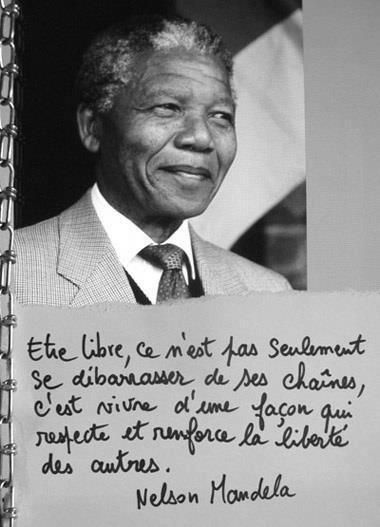
                    “For to be free is not merely to cast off one's chains, but to live
                          in a way that respects and reinforces others' freedom.”
                         Nelson Mandela, Long Walk to Freedom, 1994.
                                                  [Pinterest Pic]
Looking for Freedom: Embracing change and identity


Freedom came to me
the day I moved from home,
my folk living in a gendarmerie.

I withdrew from France,
I left, and rejected
all my parents had intended for me.

Straight across to England I faced its frozen winds.
With luck I happened to bump into a young man
who wanted to travel, so we went overseas.

To Africa where Zambia became Independent.
Years of pleasure in the teaching
of the young and motivated learners!

Following old traditions that seemed new to me,
I adapted, out in the bush, used a hot water bottle
for my newborn who needed an incubator.

Then in the Pacific, Papua New Guinea
also gained its Independence. My family surrounded
by varied Indigenous folks who spoke multiple languages.

Travels and friendships were soon to end.
Integrated I’d thought, but we were to migrate.
Australia. How would it modernise our lifestyle?

There, ‘shock and awe’, we glared. Who’d fill the gap,
to bring in the Aborigines, who possessed less resources
than our friends in Africa or the Pacific?

I’d need to free myself again. I didn’t want to become
more French than before. Still I remained wondering
how long it’d take for Aboriginal culture
to become ‘respected and reinforced’, here.


Liberté : Accueillir un renouveau d’identité


La liberté, je l’ai cherchée.
Je décidai, un jour, de quitter la maison,
mon père gendarme, je partis sans les clés.

J’abandonnai la France, rejetai mon passé
tout ce que mes parents pour moi auraient voulu.
Je laissai ma famille et traversai la Manche.

Les vents Anglo-Saxons me refroidirent.
Enfin, je rencontrai un jeune homme qui voulait
rallumer sa vie en voyageant à l’étranger.

En Afrique, la Zambie prit son indépendance.
Des années de plaisir à enseigner
des étudiants jeunes et très motivés !

Des traditions anciennes, quoique nouvelles pour moi.
Je m’adaptai. Un jour en pleine brousse, mon bébé
n’eut pour couveuse qu’une simple bouillotte toute chaude.

Plus tard dans le Pacifique, La Papouasie Nouvelle Guinée
eut, elle aussi, son Indépendance. Ma famille fut alors entourée
de personnes Indigènes dont les langues offraient multiples variétés.

Soudain les voyages et les rencontres amicales se terminèrent,
je me croyais intégrée mais l’heure de notre rapatriement arriva.
Emigrants en Australie, aurons-nous une vie plus modernisée ?

‘Le choc et l’admiration’ deviennent ‘Rapide Dominance’.
Comment garnir accès pour les Aborigènes
qui avaient moins de ressources que nos amis
d’Afrique ou du Pacifique ?

Aurais-je donc le temps de me relibérer
Ou deviendrais-je plus Française qu’avant ?
Mais combien de temps pour que la culture
Aborigène soit ‘respectée et renforcée’, ici ?
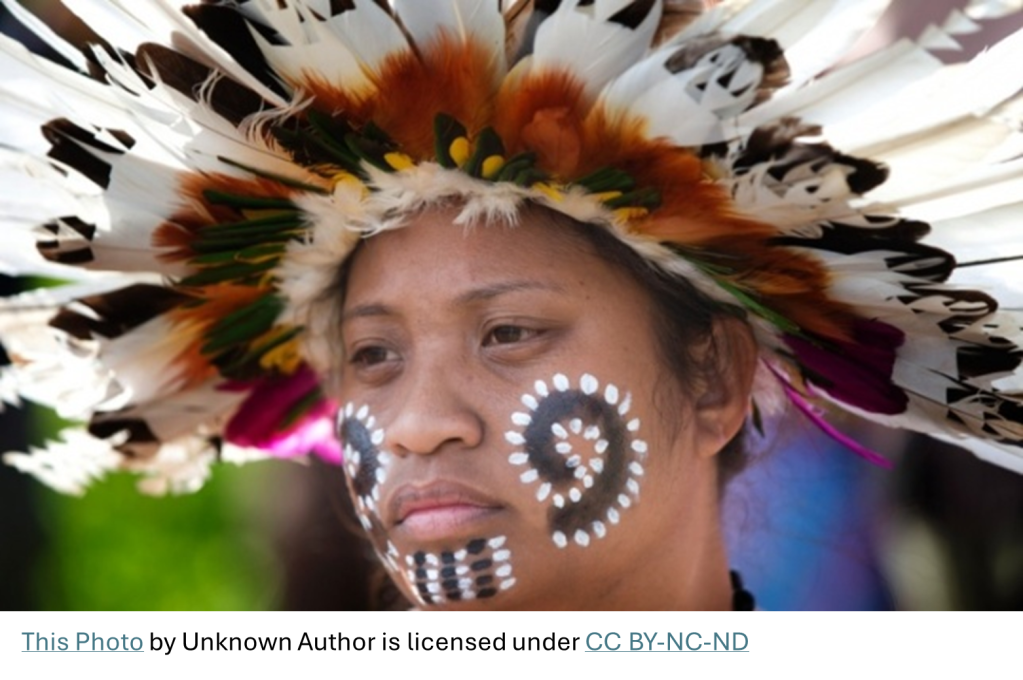
This week is the fiftieth anniversary of Independence in Papua New Guinea. Our family’s ten years in Port Moresby were extremely rewarding. We lived on the university campus from 1976 till 1986. The years after Independence were times of intense development. At the University, students told you they were proud of where they came from their [Ples] and their language [TokPles]. They were good enough to invite us to visit their region, no matter how far away they lived.
We met interesting people in town, and my best friend nicknamed me Mauswarra [the mouth that runs fast in Tok Pisin], in the same way as my family in France used to say I was Un moulin à paroles [a continuous word-windmill in French]. If I still lived in Port Moresby, I would now be called Bubu Mama [Grandma in Hiri Motu].
I am grateful for the warm welcome we received and how much we learned about a varied country with amazing landscapes of soaring mountains and seaside beaches. We had a Christmas lunch at a windy Ella Beach: lettuce leaves flew off, but we were able to eat the slices of cold turkey that remained on our plates. Two events at Idler’s Bay: a difficult one when our daughter was stung by a jelly fish; and a cheerful one when we attended David and Faith’s wedding. We also had a wonderful time at Gabba Gabba where the villagers gave us cool and large watermelons to eat, and their children played cricket with ours. We went to Yule Island on an outrigger canoe with eskis full of supermarket fruit and came back with fresh coconuts.
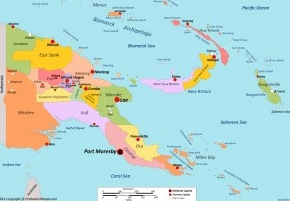
We were lucky to fly inland to Tapini and back safely in spite of the difficult airstrip; went to Bulolo and Wau to look at the remnants of gold mining and to the best market in the world at Goroka where I bought two of my favourite bilums [traditional string bags]. We also met with friendly people in stunning Madang and in the Island of Bougainville who always expressed the love of self-sufficiency. I cannot do justice to this country, and I regret not visiting other exciting places, like Milne Bay, the Sepik, the Western Highlands, East and West New Britain and Manus.
Papua New Guinea has in excess of 800 languages, Austronesian and Non-Austronesian which are able to do things that western linguists never thought possible. Through verb-stringing and other infixes languages focus on the manner of an action rather than on its timing, which is marked by adverbs. Besides liklik Tok Pisin and Hiri Motu bada (not really ‘much’!) I would have loved to learn languages from the Goilala people.
When we left UPNG students and staff organised a mumu, pig cooked in the ground with taro and vegetable wrapped in banana leaves as a farewell party.
On behalf of my family, it is my pleasure to wish all my friends and their wantoks [relatives], whom I cannot name here because I’d be sure to forget someone special, and in honour of those that have passed away, my absolute best for the 50th Independence Day Celebration on 16th September 2025.
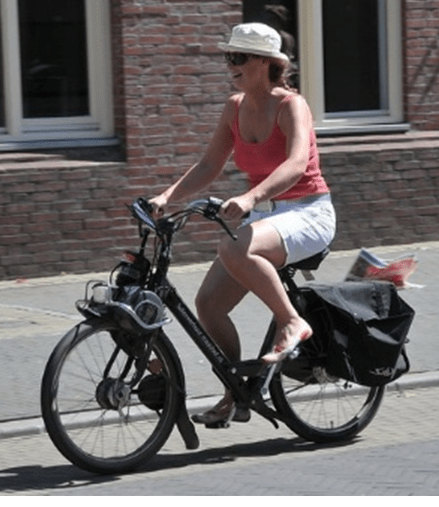
I want to talk of a two-wheel transport method, but it’s not the bicycle behind which my father used to scream ‘Look ahead of you’ but the vehicle I’ve loved for most of my life, the Vélosolex (which, I regret, doesn’t exist anymore in France).
Warning: Do not be confused by imitations.
A How to ride a Vélosolex: 1 Note the motor is over the front wheel behind the handlebar. 2a Sit and ride the solex like a bike, then press the black vertical stick gently onto the motor to make it start. 2b Or run alongside the bicycle releasing the black vertical stick on to the front wheel and jump fast onto the saddle. (Warning: that is not a safe technique, you could fall). 3 Once you hold on to the handlebar there is no accelerator as in motorbikes, cars or some bicycles, so you accelerate by pressing on with the right handlebar, depending on whether you want to or not.
B Advantages of the Vélosolex: 1 You are neither as slow nor as fast as other two wheelers, you’ll find your own rhythm. 2 You are not a motor cyclist either who revs past people outside shops or café customers on street pavements to make noise or contaminate the atmosphere. 3 You can go up parallel to a queue of vehicles. Watch out that no one opens their car doors. 4 Thanks to your solex, you can attend your university lectures on time.
Le Vélosolex, une icône de France
Je veux parler d’un mode de transport à deux roues, mais ce n’est pas la petite bicyclette derrière laquelle mon père criait ‘Regarde devant toi’ mais le véhicule que j’ai le plus aimé toute ma vie, le Vélosolex (qui, je regrette, n’existe plus).
Attention : Ne vous laissez pas tromper par des imitations.
A Comment rouler en Vélosolex : 1 D’abord trouver le moteur au-dessus de la roue avant, derrière le guidon. 2a S’asseoir sur le solex comme à vélo et pousser le bâtant noir du moteur légèrement sur la roue avant. Le moteur se branchera. 2b Ou partir en courant le long du solex, pousser le bâtant noir du moteur à la main, et monter très vite sur la selle. (Attention : cette méthode est dangereuse, vous pouvez tomber). 3 Quand on tient le guidon, il n’y a pas de levier de vitesse comme sur les motos, voitures ou même certains vélos, donc on accélère en appuyant avec la manette de la main droite, si on le veut.
B Les avantages du Vélosolex : 1 On n’est ni aussi lent ni aussi rapide que les cyclistes, on trouve son rythme soi-même. 2 On n’est pas non plus un motard qui change de vitesse, en dépassant les magasins et les gens au café, sur le bord de la rue pour faire du bruit et contaminer l’atmosphère. 3 On peut, s’il y a une file de voitures remonter parallèle à tous les véhicules. Attention qu’elles n’ouvrent pas leurs portières ! 4 Grace à votre solex vous pouvez arriver à l’université pour vos cours à l' heure.
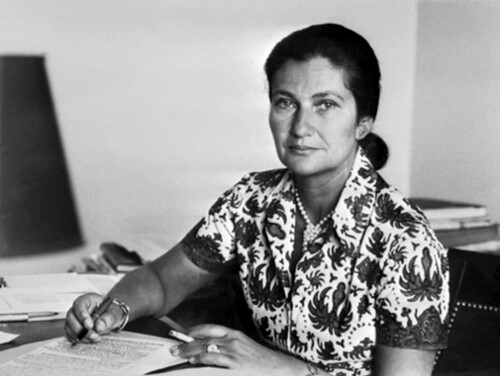
Who would still confuse Simone Veil (1927-2017) with Simone Weil, a humanist and mystic philosopher who died young in England (1909-1943)? Both women with similar names are from France, my country of origin.
It is Simone Veil I want to discuss. She was a French politician as well as a holocaust survivor. While studying for her Baccalauréat in April 1944, she was arrested by the Gestapo together with her whole family in Nice.
Her father and brother were deported to Lithuania. Never seen again, they were listed as executed. With her mother and two sisters she went to Auschwitz and later went on the ‘death march’ to Brobeck and Bergen-Belsen. There her mother died of Typhus while Simone who said she was below eighteen was enlisted to do forced labour. The three sisters managed to be released separately from 1945.
On her return Simone studied law and politics and later became the French Minister for Health. I was thirty years old when in 1975 the 'Veil Act' to legalise abortion was passed. I heard her dedicated speeches in the National Assembly that affirmed a woman’s right to bring pregnancy to interruption. She was convincing and managed to rally all the male representatives of the National Assembly.
This was significant for me who had witnessed through some good friends of mine the difficulties women had to survive because of numerous illegal abortions in the 1960s in France. Since then Simone Veil received the nickname of ‘La Merveille’ [La Mère Veil - The Marvellous Mother] from women and feminists who respect and revere her.
Indefatigable as a politician, she became the first woman to join the European Parliament and received a wide range of high-level awards eventually receiving the Légion d’Honneur in 2012. She was re-interred with her husband in the Pantheon in 2018.
Later a Prize, awarded on International Women’s Day, was instituted in her name to honour people who fight for women’s causes. Living overseas, I am lucky to have had access to ‘A Life,’ her 2009 memoir and to the 2022 film ‘Simone Veil A woman of the century.’
Simone Veil, femme qui m’a inspiré
Qui encore continue à confondre Simone Veil (1917-2017) avec Simone Weil, une philosophe humaniste et mystique qui mourut jeune en Angleterre (1909–1943) ? Deux femmes aux noms semblables venant de France, mon pays d’origine.
C’est de Simone Veil, dont je veux parler, une femme politique Française qui avait survécut l’holocauste. Elle préparait son Baccalauréat quand elle fut arrêtée avec toute sa famille par la Gestapo en Avril 1944 à Nice.
Son père et son frère, déportés en Lituanie n’ont jamais été revus et furent déclarés exterminés. Avec sa mère et ses sœurs elle partit pour Auschwitz et suivit les 'marches de la mort' à Brobeck, puis Bergen-Belsen où sa mère mourut du Typhus. Simone disant qu’elle avait moins de dix-huit ans fut retenue pour faire des travaux forcés. Les trois sœurs furent libérées séparément à partir de l’année 1945.
A son retour Simone fit ses études de droit et de politique, et plus tard devint Ministre de la Santé. J’avais 30 ans lorsque en 1975, la 'Loi Veil' légalisa l’avortement. J’ai entendu les discours de Simone Veil qui affirmait l’autonomie de la femme et son droit à une interruption volontaire de grossesse et qui réussirent à persuader tous les représentants masculins de l’assemblée nationale à faire passer cette loi.
C'était un moment important pour moi qui avait été témoin, par l'intermédiaire de quelques-unes de mes amies, des difficultés que les femmes avaient à survivre à cause des nombreux avortements illicites dans les années 1960 en France. Depuis cette année-là Simone Veil a reçu le surnom de ‘La Merveille’ [ la Mère Veil] par les femmes et les féministes qui l’ont révérée et profondément respectée.
Une politicienne infatigable elle devint la première femme élue au Parlement Européen et reçut un grand nombre de prix et La Légion d’Honneur lui fut remise en 2012. Récemment elle fut re-enterrée avec son mari au Panthéon.
Depuis un prix, présenté pour la Journée Internationale de la Femme, fut institué en son nom en honneur des personnes qui améliorent la cause de femmes. Bien que je vive à l’étranger, j’ai pu avoir accès, en Australie, à son mémoire: ‘Une Vie (2009) et au film de 2022 ‘Simone Veil - Une femme du siècle.’









 Yayi's Paroles
You must be logged in to post a comment.