Harassing people, 1987 Kalgoorlie, Western Australia Walking into a shop behind two of my college students who happened to be of Aboriginal descent I saw a staff member follow them in every aisle, from one counter to the next. When I questioned this, her answer was ‘Aboriginals always come in pairs to steal from the shops.’
Ignoring People, 1999 Roebourne, Western Australia The Aboriginal renter of a premises informed a plumber of the garden tap leaking. Nothing happened. When an enquiry was made, the plumbing company revealed the plumber wasn’t sure which street number it was, and as the house he went to did not have an outside tap running, he had gone back to base and hadn’t reviewed the job since.
Persecuting people, 2006 Fitzroy Crossing, Western Australia A few years ago I visited a remote community shop in Western Australia. When the shopkeeper signed me to come forward to pay, I pointed to the young Aboriginal person he’d ignored waiting ahead of me. The youth approached holding sandals. The shopkeeper waved the youth’s welfare card and shouted, ‘No you can’t have those.’ He didn’t tell him what the balance was on his card and kept the card in his shop. The young man, shamed, sidled out.
Causing harm to people, 2009 Roebourne, Western Australia An Aboriginal child who was two years of age died of electrocution one day at home. During a game of hide and seek, the child, who was crawling near the wall received a shock from a wet electrical outlet at the house. The inquest found the government rental property lacked a mandatory safety switch although it was signed as installed.
Name calling people, 2018 Adelaide, South Australia In a group conversation a colleague referred to a migrant woman whom I knew, saying ‘These people, they don't want to work.’ I spoke up suggesting it was possible that the migrant woman was not able to obtain a job rather than she had refused to work. The colleague did not say any more, but others continued to speak of the difficulty in obtaining work. I felt good having spoken up.
Bullying people, 2020s Australia We have all heard racist insults, spoken at sport or anywhere else, I’ve thought this comes from some homes where adults make unpleasant remarks about persons of colour they see on television or walking across the road. This counters whatever efforts teachers have made when teaching cultural awareness. Racist words and actions leave a scar on your soul.
Diffusez des informations plutôt que des suppositions
Harceler autrui, 1987 Kalgoorlie, Australie Occidentale En entrant dans un magasin derrière deux de mes étudiants qui étaient Autochtones, je vis une employée les suivre dans tous les rayons, d’un compteur a l’autre. Quand je l’ai questionnée à ce sujet, sa réponse a été ‘Les Autochtones viennent toujours à deux quand ils veulent voler dans les magasins.’
Ignorer autrui, 1999 Roebourne, Australie Occidentale Le locataire Autochtone d’une demeure a informé un plombier d’une fuite d’eau du robinet du jardin. Rien ne s’est passé. Lorsqu’une demande a été faite, la compagnie du plombier a dit que leur employé n’était pas sûr du numéro de la maison, et comme il n’y avait pas de fuite à la maison où il était allé, il était revenu au bureau et n’avait pas revu le cas depuis.
Persécuter autrui, 2006 Fitzroy Crossing, Australie Occidentale Un jour, il y a quelques années, je visitai un magasin dans une communauté d’Australie Occidentale. Lorsque le patron me fit signe de m’avancer au comptoir, je lui montrai un jeune homme Aborigène, qui attendait devant moi et qu’il avait ignoré. Celui-ci avança tenant des sandales à la main. Le commerçant agita une carte d’aide sociale en criant « Non, tu ne peux pas acheter celles-ci. » Il ne lui dit pas de combien était la solde sur sa carte et garda la carte dans le magasin. Le jeune homme, honteux, se glissa dehors.
Nuire à autrui, 2009 Roebourne, Australie Occidentale Un enfant Autochtone de deux ans est mort électrocuté un jour chez lui. Lors d'une partie de cache-cache, l'enfant, qui rampait près du mur, a reçu une décharge électrique provenant d'une prise humide. L'enquête a révélé que le logement locatif public était dépourvu du dispositif de sécurité obligatoire, alors même qu'il était attesté comme ayant été installé.
Injurier autrui, 2018 Adelaide, AustralieMéridionale Pendant une conversation en groupe une collègue a parlé d’une migrante que je connaissais en disant "Ces gens-là, ils ne veulent pas travailler." Je suis intervenue pour suggérer qu'il était possible que la migrante n'ait pas réussi à trouver un emploi, plutôt qu'elle ait effectivement refusé de travailler. La collègue n'en dit pas davantage, mais d'autres continuèrent à parler de la difficulté de trouver du travail. Je me sentis bien d'avoir pris la parole.
Intimider autrui, 2020s, Australie Nous avons tous entendu des insultes racistes, que ce soit dans le cadre sportif ou ailleurs ; il est possible qu'elles trouvent leur origine dans certains foyers où les adultes tiennent des propos désobligeants sur les personnes de couleur qu'ils voient à la télévision ou dans la rue. Cela réduit à néant les efforts déployés par les enseignants pour sensibiliser à la diversité culturelle. Les propos et les actes racistes laissent une cicatrice sur votre âme.
Why Roebourne is my favourite small town in Australia
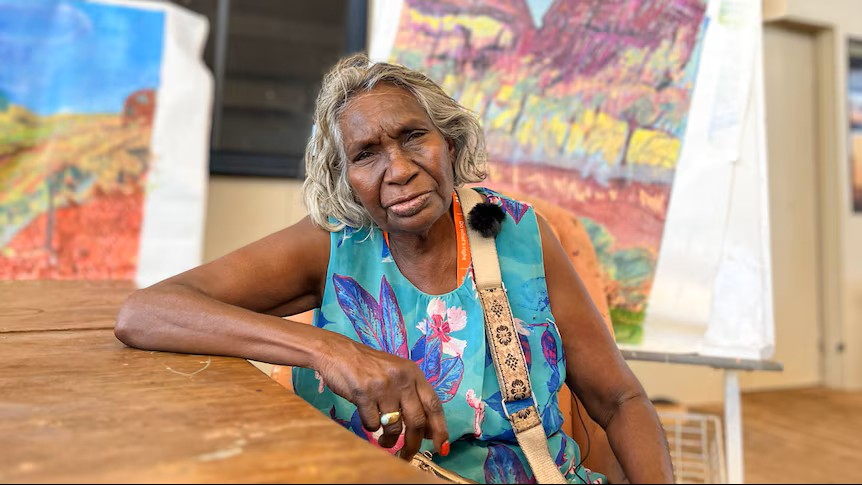
In March 2026 Yindjibarndi Elder Wendy Hubert and Juluwarlu Art Cooperation travelled 5,000 km by road from Roebourne to Sydney as guests of the Sydney Biennale. Links: - Indigenous artworks taken on 5,000km road trip from the Pilbara to Biennale of Sydney - ABC News - Wendy Hubert | 25th Biennale | Rememory | SBS On Demand
Roebourne [Ieramugadu, in Ngarluma; population 981-2016 census ], is located within the City of Karratha at 1,563 from Perth (West Australia) From 1930-1950 it was a non-Indigenous administrative centre. The Yindjibarndi, Kuruma, Yaburrara, Marthudunera, Banjima, and Kariyarra people were gathered to camps and reserves with controls and curfews placed on Aboriginal people’s movements to, from, and within the town. Later, iron-ore mining enterprises constructed company towns and moved people from the crowded surrounds into Roebourne in the 1960s.
Exile and the Kingdomwww.sbs.com.au/ondemand/tv-series/exile-and-the-kingdom an award-winning documentary captured the spirit of the town, narrated by a late elder with the Yindjibarndi, Ngarluma, Banyjima and Kurrama people of Roebourne. It recounts the experiences of the Aboriginal community from pre-colonial times to the 1990s.
Community centres in Roebourne include a Health Centre, an Aged people’s home, a library, a primary and secondary school. It holds cultural centres like the Ngarluma Yindjibarndi Foundation Ltd, and the media station https://www.ngaardamedia.com.au/ngaarda-radio. Preserving the Yindjibarndi history & culture Juluwarlu https://juluwarlu.com.au/ documents the ngurra (the land) with the help of artist like Yindjibarndi Elder Wendy Hubert while teacher, linguist and artist, Allery Sandy, runs the art centre ‘Yinjaa-Barni (Working Together)’ (www.yinjaa-barni.com.au)
‘Wanthiwa’ is the Yindjibarndi ‘Welcome’ word I heard when I walked down the streets in Roebourne. I met the ‘strong’ women and men that made the town real, similar to when I lived in France and people always greeted each other. I enjoyed walking alongside families sitting on the verandah. The town residents also walked from one house to the other to consult with one another, as against those who walk for exercise, which most of us do in Australia, without talking to anyone. I have fond memories of families sitting on the verandah. This contrasted with life in Karratha where I lived, driving from one spot to the next, usually in large 4 x 4 vehicles and only seemed to speak to people in shops or offices. I worked as the Roebourne Prison Education Officer for three years where a majority of Indigenous people spent spells of months or years as minimum priority prisoners, often for fine overloads or breaching a driving licence. There I ran the Education Centre where prisoners used their time catch up with their education which had been interrupted.
Community gatherings I later worked for the local shire and organised exchanges between the Indigenous community and the multicultural residents of the local towns. We shared picnics with a taste of kangaroo tails cooked in the ashes. A gathering is held in early July for all the older Aboriginal people to celebrate their birthdays, given that their birthdates were never registered.
In Australia’s massive country, this compact town will always have a place in my heart.
Roebourne , ma petite ville préférée en Australie En mars 2026, Wendy Hubert, aînée Yindjibarndi, et Juluwarlu Art Coopération ont parcouru 5 000 km par la route, de Roebourne à Sydney, en tant qu’invités de la Biennale de Sydney. Links below: Indigenous artworks taken on 5,000km road trip from the Pilbara to Biennale of Sydney - ABC News Wendy Hubert | 25th Biennale | Rememory | SBS On Demand
Roebourne, dont le nom est Ieramagadu dans la langue Ngalurma avait une population de 981 habitants au recensement de 2016, est située dans l’agglomération de Karratha à 1563 km de Perth (capitale de l’Australie Occidentale). De 1930 à 1950 ce fut un centre administratif non- Autochtone. Les peuples Yindjibarndi, Kuruma, Yaburrara, Marthudunera, Banjima et Kariyarra furent regroupés dans des camps et des réserves. Des contrôles et des couvre-feux furent imposés aux Aborigènes quant à leurs déplacements à destination, en provenance et à l'intérieur de la ville. Plus tard, dans les années 1960, des entreprises minières de minerai de fer construisirent des villes ouvrières et déplacèrent les populations d’un environnement surpeuplé vers Roebourne.
Exile and the Kingdomwww.sbs.com.au/ondemand/tv-series/exile-and-the-kingdom un documentaire primé, a capturé l’esprit de la ville, narré par un ancien aujourd’hui disparu des peuples Yindjibarndi, Ngarluma, Banyjima et Kurrama de Roebourne. Il relate l’histoire d’une communauté aborigène, des temps précoloniaux aux années 1990.
Les Centres de communauté de Roebourne consistent d’une clinique, d’un centre pour personnes âgées, d’une bibliothèque et une école primaire et secondaire. La ville contient la Fondation Ngarluma Yindjibarndi Ltd et une media https://www.ngaardamedia.com.au/ngaarda-radio Le groupe de Juluwarlu https://juluwarlu.com.au/ se concentre sur l’histoire et la culture documente le ngurra (la terre natale) avec l’aide d’artistes comme l’aînée Yindjibarndi Wendy Hubert. Un autre studio d’art le Yinjaa-Barni (Le Travail Ensemble) www.yinjaa-barni.com.au est tenu par l’aînée Yindjibarndi Allery Sandy, institutrice, linguiste et artiste.
Wanthiwa est le mot Yindjibarndi pour «Bienvenue» que j’entendais en passant dans les rues de Roebourne. Je fis connaissance de femmes ‘fortes’ et de leurs partenaires qui rendent la ville vraiment réelle, me rappelant ma vie en France quand les gens se saluaient toujours. J’aimais bien voir toutes les familles assises sur leurs vérandas lorsque je passais dans la rue. Là les résidents allaient d’une maison à l’autre pour discuter entre eux, ce qui était le contraire de ceux qui se promènent pour faire de l’exercice, comme nous le faisons tous en Australie, sans jamais parler à personne. Ceci était un contraste avec la vie à Karratha où j’habitais, et où on conduisait d’un endroit à l’autre, le plus souvent dans de gros véhicules 4x4 et où on ne parlait aux gens que dans les bureaux ou les magasins. Je travaillais pendant trois ans dans le centre d’éducation de la Prison Régionale de Roebourne où il y avait une majorité de prisonniers Indigènes qui étaient condamnés à une peine minimale de quelques mois ou années, soit pour des amendes accumulées ou pour infractions au permis de conduite. Là j’organisais le Centre d’Education et les prisonniers utilisaient ce temps-là pour se rattraper sur leurs études qui avaient été interrompues.
Réunions entre groupes communautaires J’ai travaillé ensuite pour la municipalité et facilité les échanges entre groupes Indigènes et groupes multiculturels de la région. Nous avons fait des pique-niques et gouté 'la queue de kangourou cuite dans les cendres'. Tous les ans, début juillet, la communauté organise une journée pour célébrer l’anniversaire des personnes Aborigènes âgées car leurs naissances n’avaient pas été enregistrés.
Dans l'immense pays qu'est l'Australie, cette petite ville aura toujours une place dans mon cœur.
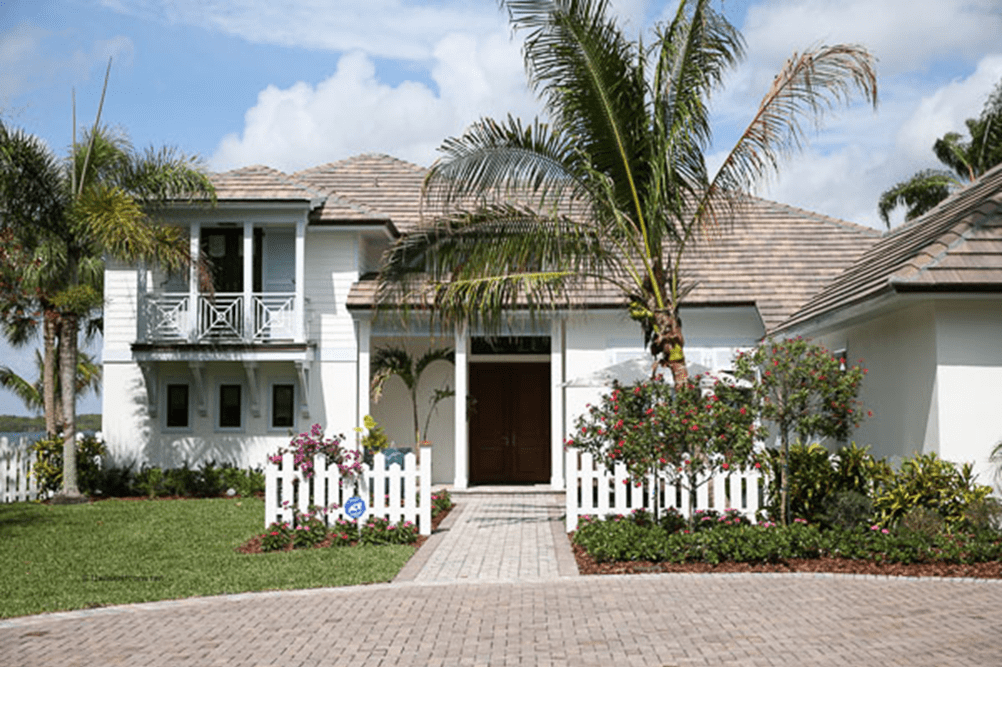
I would love to devise the ideal home based on some of my memories. My parents’ home in France had a cellar to keep wood, wine and canned vegetables. This was a very functional home for my mother who loved gardening and keeping preserves.
One of the houses where I lived for a very short time had an upper floor with a study which opened onto a balcony. I’d love this to have its windows protected by shutters, against cyclones, and the heat, as it was customary where I lived in for ten years in the cyclone belt of Western Australia.
I would like a home, like one I once lived in for a while in Papua New Guinea, to have an outdoor area that includes a long verandah enclosed for privacy where the children walked their bicycles through the gate. The surrounding breeze blocks also kept our dog safe from running away, as well as it allowed us to try and raise a pet turtle. Sad events can occur if ever the dog escaped onto the open and was run over on the road or if the turtle drowned in a pool of water.
More exciting times happened when I grew beautiful white frangipani flowers next to purple bougainvillea. A mango tree was often depleted by children on their way to school. I think pawpaw trees would do better, if the region was not subject to violent cyclonic winds.
Located in a in a friendly area, the premises allowed children to run in and out of the nearby houses, share meals and cold drinks or have sleepovers at one another’s.
When all was well, the children bouncing in and out of a home-made swing, climbing up and down the trees I’d recline and reflect in peace upstairs on the balcony which had a great view of distant hills.
This is the imagined compound of my dream which has features of some of the houses I lived in, with a lot of extra space for comfort.
La maison de mes souvenirs.
Je voudrais raconter ma maison idéale en m’inspirant de celles dans lesquelles j’ai vécu. La maison de mes parents en France avait une cave et ma mère qui jardinait y gardait ses conserves, mon père son vin et du bois.
J’ai une fois pendant peu de temps vécu en Australie dans une maison qui avait un petit bureau qui ouvrait sur un balcon. J’aimerais que les fenêtres aient, comme dans la zone cyclonique de l’Australie Occidentale ou j’ai habité pendant dix ans, des volets qui protègent des ouragans, des vents et de la chaleur.
Je serais heureuse de trouver une maison avec un grand jardin, comme ou j’ai vécu quelque temps en Papouasie Nouvelle Guinée, et sur le côté une longue verandah qui avait un portail par lequel les enfants rangeaient leur vélo et entourée de blocks qui permettaient d’élever un chien, et même si possible une tortue. Malheureusement le chien pourrait s’échapper et se faire écraser sur la route ou la tortue rentrer dans un bol d’eau et se noyer, et ce serait très triste.
La vie était beaucoup plus agréable quand je faisais pousser des frangipanes à fleurs blanches avec des bougainvillées mauves. Un manguier bien qu’il soit agréable se fait prendre tous ses fruits par les enfants. Je préfèrerais des papayers pourvu qu’il n’y ait pas de vents cycloniques pour les décimer.
La maison étant située dans un quartier agréable, les enfants pourraient se rendre visite les uns aux autres, et trouver à manger ou à se rafraichir chez leurs amis, à monter aux arbres ou sur les balançoires et passer la nuit les uns chez les autres. Quand tout va bien, je peux m’allonger sans souci sur mon balcon et contempler la vue de distantes collines.
C’est ainsi que j’imagine la composition d’une demeure de mes rêves, avec des éléments de mon passé mais aussi un supplément d’espace et de confort.
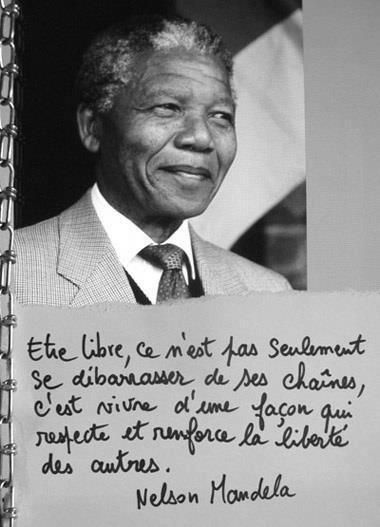
                    “For to be free is not merely to cast off one's chains, but to live
                          in a way that respects and reinforces others' freedom.”
                         Nelson Mandela, Long Walk to Freedom, 1994.
                                                  [Pinterest Pic]
Looking for Freedom: Embracing change and identity


Freedom came to me
the day I moved from home,
my folk living in a gendarmerie.

I withdrew from France,
I left, and rejected
all my parents had intended for me.

Straight across to England I faced its frozen winds.
With luck I happened to bump into a young man
who wanted to travel, so we went overseas.

To Africa where Zambia became Independent.
Years of pleasure in the teaching
of the young and motivated learners!

Following old traditions that seemed new to me,
I adapted, out in the bush, used a hot water bottle
for my newborn who needed an incubator.

Then in the Pacific, Papua New Guinea
also gained its Independence. My family surrounded
by varied Indigenous folks who spoke multiple languages.

Travels and friendships were soon to end.
Integrated I’d thought, but we were to migrate.
Australia. How would it modernise our lifestyle?

There, ‘shock and awe’, we glared. Who’d fill the gap,
to bring in the Aborigines, who possessed less resources
than our friends in Africa or the Pacific?

I’d need to free myself again. I didn’t want to become
more French than before. Still I remained wondering
how long it’d take for Aboriginal culture
to become ‘respected and reinforced’, here.


Liberté : Accueillir un renouveau d’identité


La liberté, je l’ai cherchée.
Je décidai, un jour, de quitter la maison,
mon père gendarme, je partis sans les clés.

J’abandonnai la France, rejetai mon passé
tout ce que mes parents pour moi auraient voulu.
Je laissai ma famille et traversai la Manche.

Les vents Anglo-Saxons me refroidirent.
Enfin, je rencontrai un jeune homme qui voulait
rallumer sa vie en voyageant à l’étranger.

En Afrique, la Zambie prit son indépendance.
Des années de plaisir à enseigner
des étudiants jeunes et très motivés !

Des traditions anciennes, quoique nouvelles pour moi.
Je m’adaptai. Un jour en pleine brousse, mon bébé
n’eut pour couveuse qu’une simple bouillotte toute chaude.

Plus tard dans le Pacifique, La Papouasie Nouvelle Guinée
eut, elle aussi, son Indépendance. Ma famille fut alors entourée
de personnes Indigènes dont les langues offraient multiples variétés.

Soudain les voyages et les rencontres amicales se terminèrent,
je me croyais intégrée mais l’heure de notre rapatriement arriva.
Emigrants en Australie, aurons-nous une vie plus modernisée ?

‘Le choc et l’admiration’ deviennent ‘Rapide Dominance’.
Comment garnir accès pour les Aborigènes
qui avaient moins de ressources que nos amis
d’Afrique ou du Pacifique ?

Aurais-je donc le temps de me relibérer
Ou deviendrais-je plus Française qu’avant ?
Mais combien de temps pour que la culture
Aborigène soit ‘respectée et renforcée’, ici ?
Having a good time is hard. I cannot do it on my own. I need folk around me, a good number is about ten. I like to mix with people I’ve met before, who are from a range of ages. It doesn't mean I will talk to them all at once. It’s more dynamic if we sit down, eat and drink together.
All of a sudden the calmest person in the room makes a joke about what you wear and how strange your voice is. After this, no end of jokes sparkle making us laugh. Somebody declares finding the venue was a real nightmare. Then others complain I delayed them because I went early to their sister’s house hoping to get a lift. It was, they say, the wrong time and the wrong place. Then I burst out laughing and we all have a giggle. My friends take some photos of me scratching my head.
It’s best if I’m able to make fun of myself. It is at that stage I realise I’m having a good time at last.
Comment bien s’amuser
Il est difficile de bien s’amuser. Mais je ne sais pas faire ça toute seule. J’ai besoin de monde autour de moi, environ dix est un bon nombre. Il s’agit de personnes d’âge différent que je connais déjà. Il est évident qu'on ne se parlera pas tous en même temps. Pour la dynamique de ce groupe, le plus simple est de s’asseoir, de manger et boire ensemble.
Soudain la personne la plus calme du groupe fait une plaisanterie sur tes habits et dit que tu parles de façon bizarre. A ce moment là, toute la salle éclate de rire. Quelqu’un assure que le chemin qu’on a pris pour venir à cet endroit donnait l’impression qu’on était parti au bout du monde. D’autres se plaignent que je les ai retardés car je m’étais trompée de point de départ. J’’étais arrivée chez sa sœur très tôt. J'étais là, me dit-on, à un mauvais moment et à la mauvaise adresse. Tout le groupe se met à rire, moi aussi. Quelqu’un prend ma photo pendant que je me gratte la tête.
Tout va bien si je réussis à me moquer de moi. C’est là que je me rends compte que je m'amuse.








You must be logged in to post a comment.