‘Tien te dret’ (Occitan )

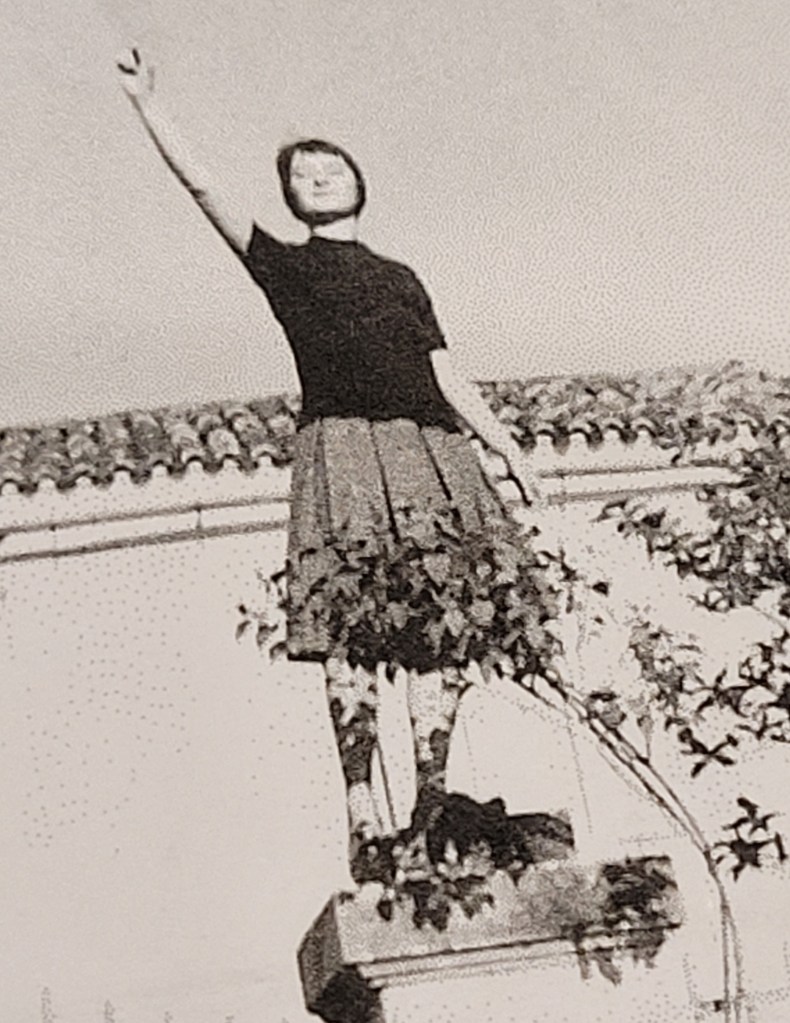
[‘Tien te dret’ in Occitan; photo by M-J. Damy]

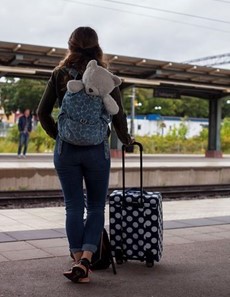
 The first time I leave home (Trilingual)

The first time I leave home
The year is 1955. My mother gives me a black and white suitcase
and gives me bread and salami for the trip. I'm taking the train
to England. It passes through Paris to Le Havre. I put the salami
in my suitcase because I'm not hungry. With my friends and a
teacher we are going to Bristol by night ferry. In Southampton,
we take a dusty old train to Bristol station. I spend a month with
a nice family. But in the evening I feel homesick when I open
my suitcase which smells of salami.

La première fois que je quitte la maison
Nous sommes en 1955. Ma mère m'offre une valise noire et
blanche et me donne du pain et du saucisson pour le voyage.
Je prends le train pour l’Angleterre. Il va au Havre par Paris.
Je range le saucisson dans ma valise car je n’ai pas faim. Avec
mes amies et une professeur nous allons à Bristol par ferry de
nuit. A Southampton, nous prenons un vieux train poussiéreux
pour nous rendre en gare de Bristol. Je passe un mois avec une
famille sympathique. Mais le soir j’ai le mal du pays en ouvrant
ma valise qui sent au saucisson.

La primera vez que salgo de casa
Es el año 1955. Mi madre me regala una maleta blanca y negra
y me da pan y salchichas para el viaje. Voy a tomar el tren
a Inglaterra. Pasa por París y Le Havre. Guardo la salchicha
en mi maleta porque no tengo hambre. Con mis amigos
y una profesora vamos a Bristol en ferry nocturno. En
Southampton, tomamos un viejo tren polvoriento hasta
la estación de Bristol. Paso un mes con una familia agradable.
Pero por la noche siento nostalgia cuando abro mi maleta
que huele a salchicha.

Requiem for a Voice

by Anne-Marie Smith

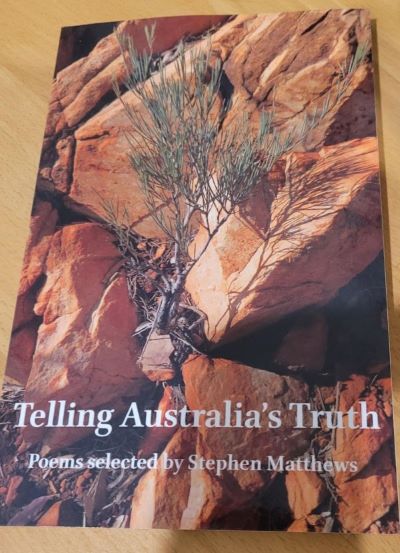
Feel free to contact:Telling Australia’s Truth by Stephen Matthews at:
https://www.ginninderrapress.com.au

 	[D’après François Villon’s Ballade
‘Frères humains qui après nous vivez’, 1489]


Sisters among whom I’ve enjoyed living,
Those of you whose words I have read and heard,
Women who ponder the choices we have,
My daughters (and those later born of them),
Sisters be aware, you are role models
Forget the crude jests and crass abuses
That mocked you and your personal beliefs
The Uluru call was a people’s cry
Own your power and claim: kulila*!
People, be humane: listen to the voice.

Australians, your First Peoples have spoken
Asking for their growth to be supported,
Calls for survival have remained unheard
Can’t we offer them the chance of progress?
Ignore the put-downs rebukes and the likes
Yesterday we closed and maintained silence,
We switched off the news, respecting elders
Let’s be heard again, speak for a fair go!
Grant the First Peoples what they ask: be just!
People, be humane: listen to the voice.

And you good reader, wishing to alleviate
The First People’s needs in healthier days,
You who plan ahead devising programs
For a better life, take a step: be kind!
People, be humane: listen to the voice.

*kulila: means ‘listen!’ in Pitjantjatjara language in the APY lands

Feel free to contact Telling Australia's Truth by Stephen Matthews:
https://www.ginninderrapress.com.au

International Mother Language Day / Journee Internationale de la langue Maternelle

International Mother Language Day | United Nations

The Mother Language is the first language we’ve known and
we identify with. It’s also called the First or Principal language.
Education in the mother language means that instruction is
made in that language, which is also taught as a subject. In
bilingual education two languages are used for instruction.

No need to be edgy; no tripping on jokes,
say it straight.
No need for a silent pause; no puzzling over context,
burst into laughter.
No need to be tongue-tied; no hesitation choosing a word,
just verbalise it.


Journée Internationale de la Langue Maternelle | Nations Unies

La Langue Maternelle est la première langue qu’on connaisse
et avec laquelle on s’identifie. Elle s’appelle aussi la Première
langue ou langue Principale. L’enseignement dans la langue
maternelle signifie que l’instruction se fait dans la langue
maternelle qui est aussi un sujet enseigné. Dans l’éducation
bilingue deux langues servent d’instruction.

Pas besoin d’être tendu ; on ne gâtera pas la plaisanterie,
disons ce que nous pensons !
Pas besoin de pause silencieuse ; ni de reflection sur le contexte,
éclatons de rire !
Pas besoin de tâter le terrain, d’ hésiter pour un choix de mot,
simplement prononçons-nous !

Yuwa, Uwa, Yes, Oui, Si, Da, Ja, Nai, Ya, Oi be, Āe, Ngawa*

Banksy and Yayi (Bilingual)

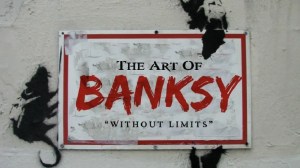
My Banksy exhibition Review:

I have come up from underground, 
A Teddy holds a Molotov cocktail
A girl, safety jacket of hope. 
Pulp Fiction’s Travolta 
clutches not a gun but a banana. 
Anti-immigration birds wave their signs:
'Go back to Africa 
and Keep off our Worms.'
Meantime the English Maid 
sweeps all under a wall. 


Yayi d’apres Banksy [sans stencil] :

Les chants d’Elysée n’ont Pas Ri. 
Les Misérables font la Causette. 
Elles Gavent Roche et tous les gamins. 
Napoléon envoilé d’une cape rouge 
ne passera pas les Alpes à cheval.
Et à Londres on voit 
Show me the Monet.

Banksy and Yayi

My Banksy exhibition Review:

I have come up from underground, 
A Teddy holds a Molotov cocktail
A girl, safety jacket of hope. 
Pulp Fiction’s Travolta 
clutches not a gun but a banana. 
Anti-immigration birds wave their signs:
'Go back to Africa 
and Keep off our Worms.'
Meantime the English Maid 
sweeps all under a wall. 


Yayi d’apres Banksy [sans stencil] :

Les chants d’Elysée n’ont Pas Ri. 
Les Misérables font la Causette. 
Elles Gavent Roche et tous les gamins. 
Napoléon envoilé d’une cape rouge 
ne passera pas les Alpes à cheval.
Et à Londres on voit 
Show me the Monet.

Three significant songs (Bilingual)

l

Living  in a  multi-
cultural  country,                     
I identify with 
La Compagnie 
Créole’s songs like 
C’est bon pour le 
moral and with the language and 
rhythms of speakers whose cultures 
willingly merge.
Boris Vian’ s Le Deserteur is a French protest song about the Algerian War 
but it was banned till after the war. It was written as a Letter to the President to tell 
him he is anti-militarist and 
a deserter.
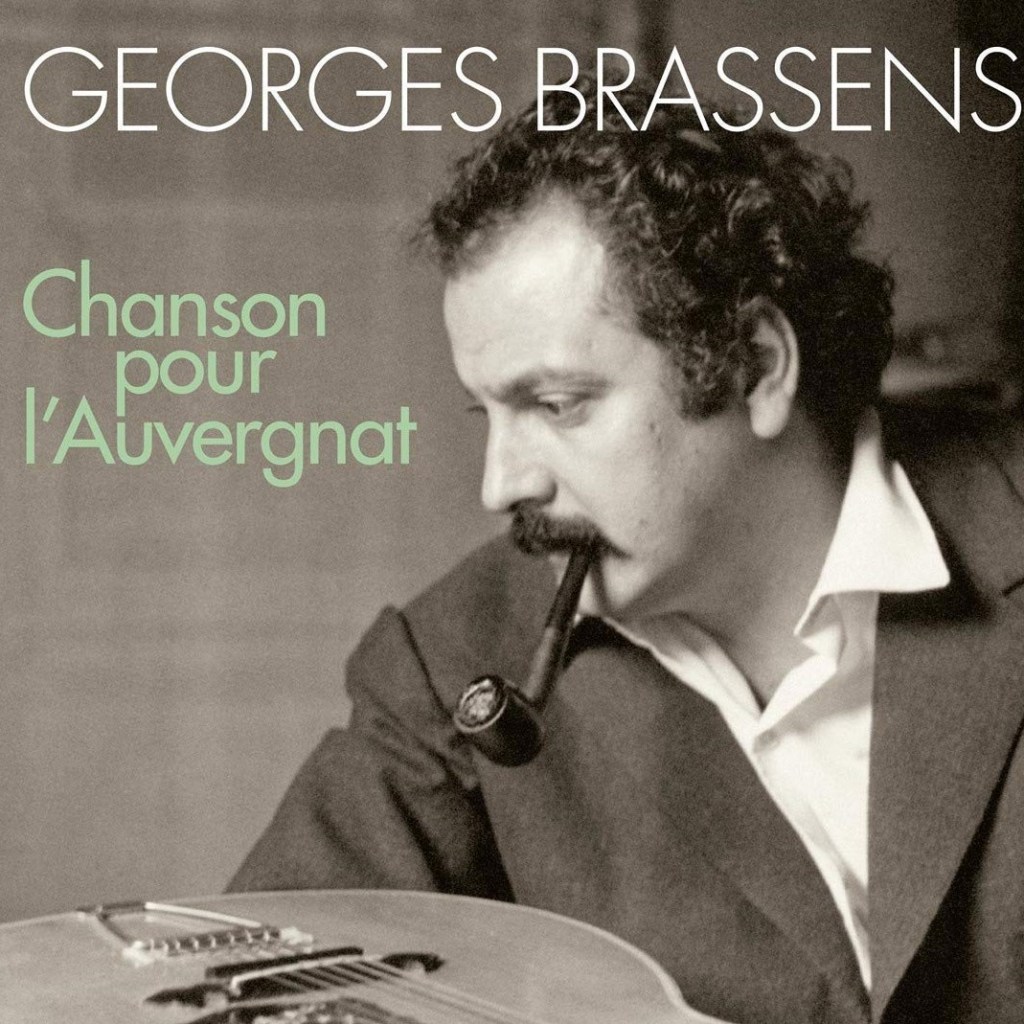
George Brassens’ 
Chanson pour
 l’Auvergnat is a ballad that celebrates those 
who cater for needy people when they are 
cold, hungry and  homeless, emphasising 
the need for a social conscience.
C'est bon pour 
le moral 

A petit feu 
pour démarrer
Une caresse 
pour décoller
Si tu veux 
te réchauffer
Faut savoir 
bien biguiner
C'est bon pour le moral

Si t'es nounou 
bien balancée
Ou playboy s
uper sapé
Et que tu cherches 
á t'amuser
La compagnie va 
te chanter

C'est bon pour le moral
C'est bon, bon
C'est bon, bon
C'est bon, bon
C'est bon pour le moral
Le Deserteur


Monsieur le Président

Je vous fais une lettre
Que vous lirez peut-être
Si vous avez le temps
Je viens de recevoir
Mes papiers militaires
Pour partir à la guerre
Avant mercredi soir

Monsieur le Président
Je ne veux pas la faire
Je ne suis pas sur terre
Pour tuer des pauvres gens
C'est pas pour vous fâcher
Il faut que je vous dise
Ma décision est prise
Je m'en vais déserter

Chanson pour
 l’Auvergnat
 
Elle est à toi, 
cette chanson

Toi, l'Auvergnat 
qui, sans façon
M'as donné 
quatre bouts de bois
Quand, dans ma vie,
 il faisait froid

Toi qui m'as 
donné du feu quand
Les croquantes 
et les croquants,
Tous les gens 
bien intentionnés,
M'avaient fermé 
la porte au nez…
Ce n'était rien 
qu'un feu de bois,
Mais il m'avait 
chauffé le corps,
Et dans mon âme
il brûle encor’
A la manièr' 
d'un feu de joi’.

Toi, l'Auvergnat 
quand tu mourras,
Quand lecroqu'mort
 t'emportera,
Qu'il te conduise,
 à travers ciel,
Au Père éternel.

May Day

      Today there will  be music 
      in many countries
      and some Australian cities 
                                            
     but May Day is not celebrated at all 
      in Adelaide where I moved to.  
     I’m nostalgic as in France it was always 
      a public holiday for Labour Day.

        On my way home I would be welcome 
        by the most subtle of spring scents,
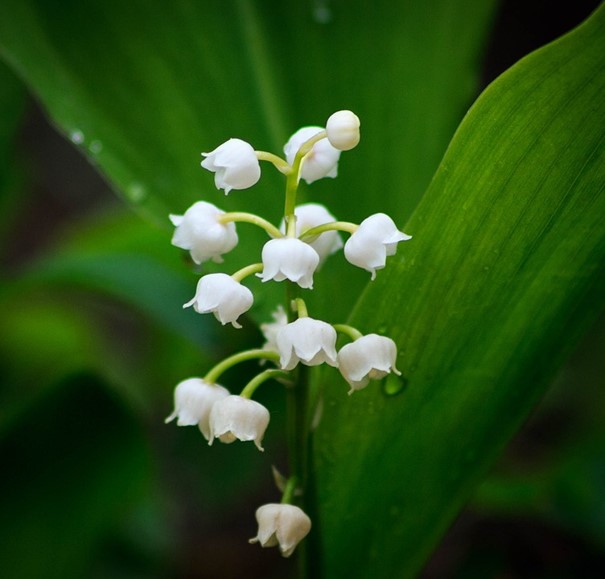
        the lily of the valley with white radiant 
        translucent bell shapes resting
        on bright green stems.
        On the First of May anyone
                                                                                           
                     giving  you a sprig of lily of the valley
                     would wish you good luck.
                     I’ll miss the scent and singing  for workers.

World Press Freedom Day

Shaping a Future of Rights: Freedom-of-expression for all human rights  

Maria Ressa, a Philippines’ journalist, Nobel Peace Prize recipient for … ‘efforts to safeguard freedom of expression, which is a precondition for democracy and lasting peace.’

Freedom of Expression as a Driver for all Human Rights – 30th Anniversary

In 2021 for the first time the Nobel Peace Prize was awarded to 2 journalists, Dmitry Muratov
and Maria Ressa, Co-founder and CEO of Rappler who also received the UNESCO/Guillermo Cano World Press Freedom Prize.

‘Without truth, you can’t have trust. Without trust, we have no shared reality, no democracy,
and it becomes impossible to deal with our world’s existential problems: climate, coronavirus, the battle for truth.

Awarded to her for
‘efforts to safeguard freedom of expression,

which is a precondition for democracy and lasting peace.’


La Liberte d’expression fait base aux Droits de l’Homme – 30 IEME ANNEE:

En 2021 pour la première fois le Prix Nobel de la Paix fut présenté à 2 Journalistes, Dmitry Muratov and Maria Ressa, la Co-fondratice et Directrice de Rappler qui reçut aussi le Prix mondial de la Liberté de la Presse Cano.

‘Sans les faits, il n’y a pas de vérité. Sans la vérité , il n’y a pas de confiance.
Sans confiance, il n’y a pas d’ échange de réalité, de démocratie,
et il n’est plus possible de résoudre les problèmes existentiels dans le monde :
 le climat, le coronavirus, le conflit sur la vérité.’

Prix pesente a elle pour
‘l’effort à sauvegarder la liberté de la parole,

qui est  une précondition à la démocratie et au maintien de la paix.’