Bilingual Babies and children’s brain- The Bilingual Brain (Part I):

         I have gathered information from a book called 'The Bilingual Brain' which impressed me because it highlighted many of my own experiences as a bilingual speaker of French and English. It also confirmed my observations as a parent of two bilingual children. On a personal level, I have witnessed my daughter switch language at the juncture that Chomsky argues sees a grammatical change in sentences: ‘I want to / lire un livre [read a book].
Feel free to read Albert Costa. The Bilingual Brain. Penguin Books, 2017.
Below I highlight some of the examples I selected from his book.

1     Bilingual people can be speakers of two languages regardless
     • whether they learnt a language from birth
     • how frequently they speak the language they have acquired
     • how proficient they are in that particular language

2    Bilingual Babies
     -      Babies take note of differences
     The note babies make of differences is measured by an electronic pacifier which registers the
with which it is being sucked. For example e.g. in a sequence ‘ba ba ba pa ba ba ba’ babies are shown to
take interest by sucking more vigorously at the time they hear the newly introduced phoneme ‘pa’.

    -       Babies learn about sounds systems
        Between six and eighteen months we know they recognise words they hear regularly. Bilingual
babies by about eight months of age can work out that distinction between two languages although they
don’t yet know much language at all. An example of this distinction is noticeable in the way English and Spanish group their consonants, as in the use of ‘-str’ which is called a consonant cluster.
         In English, words can start with ‘str- (strong, strange, etc)
         In Spanish, they do not. The letters s, t, and r ‘str’ don’t exist in the same syllable, as no words end
          in -st or begin with str-.
Instead, s and t are divided by a syllable in the Spanish word ‘astronaut’ (as–tro-nau-ta) or by a
word boundary los trenes, [the trains].

Bilingual Spanish/English babies come to differentiate how the sound of the consonant cluster ‘str’ is
used in both languages and are aware that:
     •     in a word like ‘strong’, -str is joined as one sound in English
     •     in a phrase like ‘los trenes’ [the trains] they make separate words in Spanish.
Costa tells us this is how babies come to learn the sound systems of the languages they hear, as we all do according to Chomsky.

3     Bilingual children
      - Perceiving the others’ points of view
Bilingual children, 4–6 years of age, were more empathetic when selecting items or making decisions because they were likely to think of alternative perspectives when relating with people around them.
It showed, they could grasp more easily than non-bilingual children that ‘others’ could hold different viewpoints. This is possibly due to their own sense of diversity.

       The example below comes from a study where children were shown two grids - Grid One and Two.
      The children knew that they could see Grid One, which was labelled as Theirs and it showed 3 cars (Large, Medium, and Small).
      They also knew that although they were able to see Grid Two which belonged to a man called 'the director', he could only see his own grid, Grid Two, which showed only 2 cars (Large and Medium) but he was not able to see 'Theirs', Grid One.
   In that study, for our information only, the small car is referred to as a ‘distractor.’

       For the experiment bilingual and monolingual children were told that the director asked them to give him the smaller car.
      Bilingual children gave him the ‘medium’ one more often (80% of the time) because they realised that the director didn’t have a small car (the ‘distractor’) in his grid or his vision.
     Monolingual children on the other hand gave him the medium car less often (50% of the time) and the small car more often, as if they didn't realise the director had not seen the smallest car.

Costa says that bilingual children in this experiment showed they were more able to ‘put themselves in other people’s shoes.’

      - Multitasking
        Bilingual children, 5–6 years of age, when asked to sort out cards by a first criterion, colour, and then by a second criterion, shapes, were found to work faster than monolinguals, when classifying them by the second criterion (shapes).
       Thy showed a capacity for flexibility of perceptions seen in the previous example. They tended to switch from colour to shapes more readily.

NOTE: Study on the Bilingual Brain (Part II): 'Of Bilingual Adults' - To appear in my next blog
Bébés et enfants et leurs cerveaux bilingues : The Bilingual Brain (Part I) :
J’ai réuni des éléments d’ un livre qui s’appelle 'Le Cerveau Bilingue'. Ceci m’a impressionné car il démontrait des habitudes qui me sont habituelles en tant que bilingue moi-même (Français/Anglais). La section sur les enfants m’a rappelé multiples observations de mes deux enfants bilingues. J'ai eu l'occasion d'observer ma fille qui changeait de langues en disant ‘I want to / lire un livre’ exactement à l’endroit qui, d’après Chomsky, marque un changement grammatical de la phrase.
N’hésitez pas à lire : Albert Costa. The Bilingual Brain. Penguin Books, 2017. Ci-dessous, je discute des exemples que j’ai sélectionnés dans ce livre.
1 On est bilingue lorsqu’on est une personne a) qui apprend 2 langues à la naissance ; b) qui parle fréquemment une langue qu’on a étudié ; c) qui parle à son niveau de compétence dans cette langue.
2 Les bébés bilingues - Les bébés font attention aux différences La façon avec laquelle Les bébés font attention aux différences est mesurée à l’aide d’une sucette électronique qui enregistre le rythme avec lequel le bébé la suce. Par example dans une séquence ‘ba ba ba pa ba ba ba’ les bébés montrent de l’intérêt en suçant plus fort lorsqu’ils entendent 'pa', le nouveau phonème introduit. Entre 6 et 18 mois ils reconnaissent des mots qu’ils entendent de façon régulière. Dès 8 mois ils comprennent la distinction entre 2 langues bien qu’ils n’aient que très peu de langage.
- Les bébés apprennent le système phonétique des langues Un example de cette distinction, que feront les bébés, existe entre l’Anglais et l’Espagnol. On entend comment une langues regroupe les consonnes en grappe, mais pas l’autre dans ‘-str’. En Anglais, des mots peuvent commencer par ‘-str’ (strong, strange,) [fort, étrange]. En Espagnol, ce n’est pas possible. Les lettres s, t, and r ‘str’ n’existent pas dans la même syllabe, car aucun mot ne finit en -st ou commence en str-. Les phonèmess ettsont séparés par une syllabe dans le mot Espagnol:‘ as-tro-nau-ta’[l’astronaute] ou par une séparation entre 2 mots comme quand on dit en Espagnol: lastrenes [les trains].
Costa dit que c’est ainsi que les bébés apprennent le système phonologique des langues qu’ils entendent, et c'est ce que nous faisons tous d'après Chomsky.
3 Les Enfants Bilingues - Ces enfants reconnaissent du point de vue des autres Les enfants bilingues de 4–6 ans sont moins egocentriques et choisissent des alternatives rapidement parce qu’il est possible qu’ils voient le point de vue de ‘l’autre’. Il est possible que ce soit dû aux éléments de diversité de leur environnement. Voici un des exemples de la recherche : On montre deux grilles à des enfants. Grille Un s'appelle 'leur grille' et contient 3 voitures (une grande, moyenne et petite). En même temps ils peuvent voir la grille d’un homme, Le Directeur, Grille Deux, mais elle ne montre que 2 voitures (la grande et la moyenne). Le Directeur, on leur explique, lui ne peut voir qu’une grille La Grille Deux. Les enfants voient qu’elle ne contient que deux voitures (une grande et une moyenne). Pour cette expérience la petite voiture s’appelle 'le distracteur'.
En commençant l’expérience on a dit aux enfants que le Directeur leur demande de lui donner la plus petite voiture. Les enfants bilingues lui donnèrent la voiture moyenne plus souvent, 80% de fois, parce qu’ils se sont rendu compte qu’il n’avait pas de petite voiture, ni dans sa grille, ni dans sa vision ('le distracteur'). Mais les enfants monolingues ne lui donnèrent la voiture moyenne moins souvent, 50% de fois. Il semble qu'ils ont agi comme s’ils pensaient que Le Directeur avait vu la petite voiture de la Grille Un, ce qui n’est pas le cas.
Costa conclut que les enfants bilingues ont plus de facilité à 'se mettre à la place d'autrui'.
- Ces enfants mènent plusieurs tâches de front avec aise Des enfants bilingues de 5 à 6 ans ont d’abord trié des cartes par un premier critère, la couleur des dessins et puis par un deuxième critère, la forme des dessins sur les cartes. Les enfants bilingues ont rempli cette deuxième tâche plus rapidement que les enfants monolingues. Ils ont démontré une tendance à changer plus rapidement d’un critère à l’autre (couleur /forme).
Leur capacité de perception flexible, déjà vue dans l’exemple précédent montre qu’ils sont capables de changer leurs points de vue avec facilité.
NB : Etude du cerveau bilingue (2eme partie) : Les Adultes Bilingues : Voir mon prochain blog.
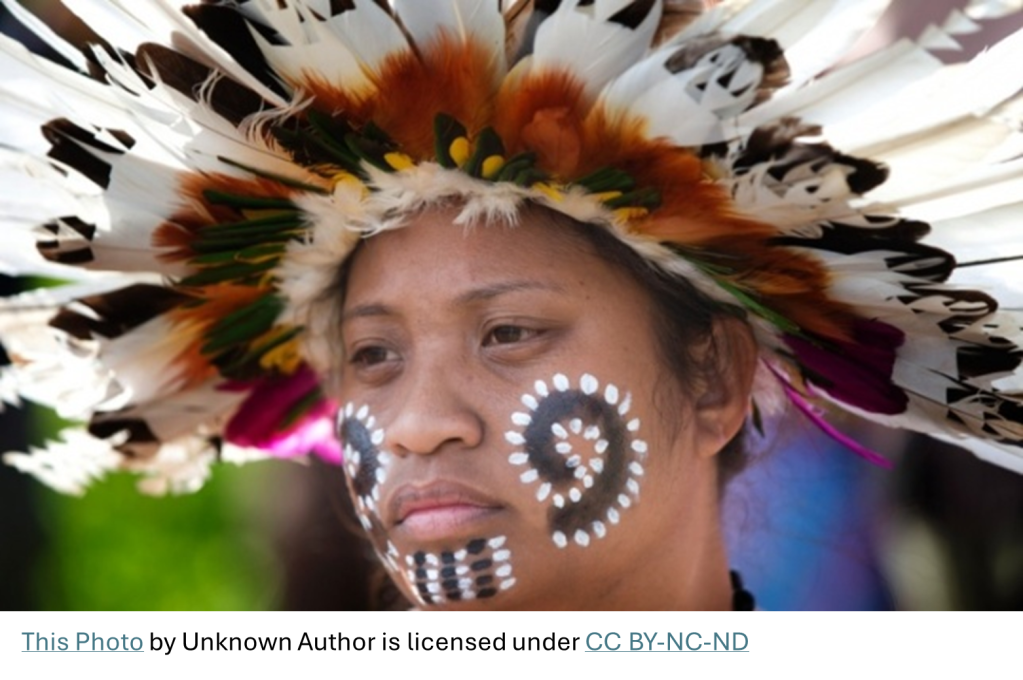
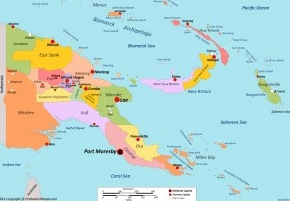
This week is the fiftieth anniversary of Independence in Papua New Guinea. Our family’s ten years in Port Moresby were extremely rewarding. We lived on the university campus from 1976 till 1986. The years after Independence were times of intense development. At the University, students told you they were proud of where they came from their [Ples] and their language [TokPles]. They were good enough to invite us to visit their region, no matter how far away they lived.
We met interesting people in town, and my best friend nicknamed me Mauswarra [the mouth that runs fast in Tok Pisin], in the same way as my family in France used to say I was Un moulin à paroles [a continuous word-windmill in French]. If I still lived in Port Moresby, I would now be called Bubu Mama [Grandma in Hiri Motu].
I am grateful for the warm welcome we received and how much we learned about a varied country with amazing landscapes of soaring mountains and seaside beaches. We had a Christmas lunch at a windy Ella Beach: lettuce leaves flew off, but we were able to eat the slices of cold turkey that remained on our plates. Two events at Idler’s Bay: a difficult one when our daughter was stung by a jelly fish; and a cheerful one when we attended David and Faith’s wedding. We also had a wonderful time at Gabba Gabba where the villagers gave us cool and large watermelons to eat, and their children played cricket with ours. We went to Yule Island on an outrigger canoe with eskis full of supermarket fruit and came back with fresh coconuts.
We were lucky to fly inland to Tapini and back safely in spite of the difficult airstrip; went to Bulolo and Wau to look at the remnants of gold mining and to the best market in the world at Goroka where I bought two of my favourite bilums [traditional string bags]. We also met with friendly people in stunning Madang and in the Island of Bougainville who always expressed the love of self-sufficiency. I cannot do justice to this country, and I regret not visiting other exciting places, like Milne Bay, the Sepik, the Western Highlands, East and West New Britain and Manus.
Papua New Guinea has in excess of 800 languages, Austronesian and Non-Austronesian which are able to do things that western linguists never thought possible. Through verb-stringing and other infixes languages focus on the manner of an action rather than on its timing, which is marked by adverbs. Besides liklik Tok Pisin and Hiri Motu bada (not really ‘much’!) I would have loved to learn languages from the Goilala people.
When we left UPNG students and staff organised a mumu, pig cooked in the ground with taro and vegetable wrapped in banana leaves as a farewell party.
On behalf of my family, it is my pleasure to wish all my friends and their wantoks [relatives], whom I cannot name here because I’d be sure to forget someone special, and in honour of those that have passed away, my absolute best for the 50th Independence Day Celebration on 16th September 2025.
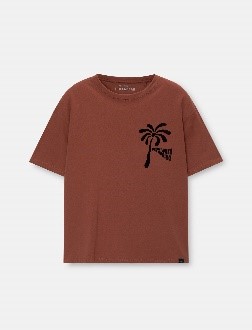
Have you ever owned a T-shirt that you'd call either brown, orange or red?
Naming a colour can be based on how your culture and language organise categories but linguists are still not clear on this issue. Your description can also depend on your perception or mood.
People who own dark cars will argue they have, even in daylight, shades of brown, grey or blue. As for the colours of red cars, some may choose to call darker reds ruby or burgundy while brighter reds may be labelled crimson or scarlet.
Speakers of languages that have different names of shades to the ones in the language we speak express colour distinction in a way that everyone will be able to understand. For example, if someone said a shirt has the hue of a burning fire or it reminds you of sunsets, you’ll know it has shades of red.
I personally make a distinction between green and blue that differs from my husband’s, but this isn’t for discussion here.
C’est de quelle couleur?
N'avez-vous jamais eu une T-shirt qui pourrait être soit de couleur marron, orange ou rouge ?
On donne des noms aux couleurs d’après la façon dont sa culture et sa langue organisent les catégories mais les linguistes n’ont toujours pas encore éclairci ce problème. Votre description peut aussi dépendre de votre perception ou de votre humeur.
Certaines personnes qui ont des voitures de couleur foncée vous diront qu’elles émettent, même en plein jour, des lueurs marron, grises ou bleues parfois. Dans le cas de voitures de couleur rouge, les gens choisissent d’appeler les rouges plus foncées soit fuchsia ou bordeaux tandis que les rouges plus brillants peuvent être nommer vermeil ou écarlate.
Une personne dont la langue classe les couleurs différemment des vôtres, n’aura aucune difficulté à exprimer à quelconque la teinte dont elle vous parle. Si elle vous dit qu’un objet est de la couleur d’un feu qui brûle ou que la teinte de cet objet vous rappelle un soleil couchant, vous saurez qu’il s’agit d’un rouge.
Quant à moi, je fais une distinction entre le bleu et le vert différente de celle de mon mari, mais je ne vais pas discuter cela maintenant.
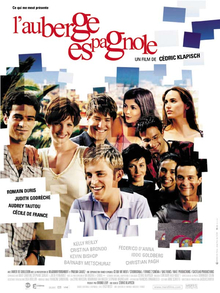
La cabane espagnole: friendship and film on the beach

Sofia loved to talk and told me her story.
When she lived in a quiet tropical seaside bay
Her folks had rejected her and her friend.
In town they’d set up an open house
And showed a film in the late afternoons.

Some youths attended and all had fun
Soon they’d brought some more friends.
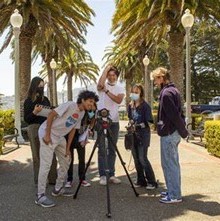
After viewing, they’d talk of film making.
Girls and boys learnt cinema techniques
Studying photo effects, angles and hues.

After Sofia ran out of cash and electricity
They all went outside on the beach front
The youths took to the stage and acted
A story inspired by one of their films.
Their title was  ‘The Spanish Beach Hut’.

Later the two friends built a hut on the beach.
Students  came from overseas, moved in and stayed
Until they decided who were their best friends.
                                                                           The  End


La Cabane Espagnole: amitiés et films à la plage

Sofia qui aimait parler me raconta son histoire.
Elle habitait dans la baie tranquille d’un village tropicale
Et sa famille l’avait repoussée ainsi que son amie.
En ville elles s’installèrent dans une maison
A porte ouverte avec séances de cinéma l’après-midi.

Des jeunes y venaient pour passer de bons moments
Et bientôt amenèrent quelques-uns de leurs amis et amies
Qui finirent la soirée en discutant de techniques de cinéma
Et de certains effets de photographie, d’angle et de lumière.

Lorsque Sofia n’eut plu de fonds pour l’électricité
Ils partirent tous à la plage ou ils présentèrent
Sur scène une histoire inspirée par un de leur films
Il choisirent comme  titre ‘La Cabane Espagnole’.

Alors les deux amies construisirent une cabane sur la plage
Des étudiants vinrent de pays étrangers et restèrent
Jusqu’au jour où ils découvrirent qui étaient leurs meilleurs amis.
                                                                                                             Fin
As soon as I left home, I grasped a life of change riding a motorbike and smoking cigarettes to counter my parents’ humdrum daily lifestyle.
A milestone came for me the year of moon landing, I took one giant step, went to Mwinilunga. In North Western Zambia, at the Zambezi source, new folk shared food with me.
No electricity. We burnt wood in the stove, kerosene in the lamps and had a few candles Often left stains of wax on students’ homework books.
At open air concerts, villagers came to sing, to booming drums we danced the Congolese Rumba. I even joined when eight months’ pregnant.
No newspapers in town. A radio and batteries. The sun shone over us its healthy radiant heat. At night, the stars sparkled.
Traces of defiance and of independence are still burning in me. I’ve danced myself away at cultural events, backed First Nations’ requests that their voices be heard.
Yet I’m still waiting to see sparkling stars enlighten the modern world I live in. Suburbia be damned!
Comme je voudrais encore vivre en marge de ce monde
Quand j’ai quitté mes parents j’ai vécu une vie différente Circulant en moto et fumant des cigarettes. Pour contre-carrer leur train-train habituel .
Une étape importante est arrivée pour moi l'année de l'alunissage, j'ai fait un pas géant, Partie pour la Zambie dans le Nord-Ouest Là, à Mwinilunga, à la source du Zambèze, de nouveaux amis partageaient leur nourriture avec moi.
Pas d’électricité. Chez nous, un four à bois, une lampe au kérosène, quelques bougies. Souvent on laissait des tâches de cire en corrigeant les cahiers des élèves.
Les concerts étaient en plein-air. les habitants venaient chanter, Nous dansions, au bruit de tambours sonores, la Rumba Congolaise à laquelle j’ai osé me joindre, bien qu’enceinte de huit mois.
Pas de journaux en ville. Une radio et des piles. Le soleil chaleureux chauffait avec radiance. La nuit, toutes les étoiles étincelaient.
Des traces d’indépendance et de défi brûlent encore en moi. J’ai dansé comme une folle Du temps de réunions interculturelles. J’ai soutenu les requêtes des Premières Nations qui voulaient qu’on écoute leurs voix et leurs paroles.
Mais j’attends encore voir un scintillement d’ étoiles éclairer le monde moderne que j’habite. Maudite soit la vie en banlieue !
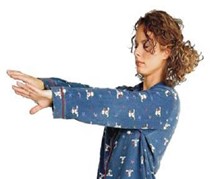
I have an imaginary house in my dreams. It is a pleasant house with many rooms. It is in a city where I once lived but not in the same street. There I speak to all the neighbours who seem to know my family well. This morning when I woke up in that house I wanted to go to the bathroom. I was surprised to find the door opened. I also could smell coffee. As I opened my eyes I was in my present day real lounge. I saw my husband and said ‘ I was looking for the bathroom.’ As I turned around to go to my real bathroom I heard him say ‘Sleepwalked again?’
Somnambule
J'ai une maison imaginaire dans mes rêves. C'est une maison agréable avec de nombreuses pièces. Elle est dans une ville où j'ai vécu, mais pas dans la même rue. Je parle à tous les voisins qui semblent bien connaître ma famille. Ce matin quand je me suis réveillée dans cette maison-là, je voulais aller à la salle de bains. J’ai été surprise de trouver la porte ouverte. J’ai aussi senti l' odeur du café. Ouvrant les yeux j’ai découvert que j'étais dans le salon de ma vraie maison. Voyant mon mari je lui dis ‘Je cherchais la salle de bains.’ Je faisais demi-tour sur ma vraie salle de bains quand il a dit 'Encore somnambule ?’











 Yayi's Paroles
You must be logged in to post a comment.