Words and Paroles: a monthly bilingual (En-Fr) blog and other vignettes
Author: Yayi-Australie
I am a French-born Australian linguist who loves writing about multicultural experiences. Taught English in Zambia and Papua New Guinea, gained a Doctorate with UPNG. In Western Australia I worked with migrants and Indigenous communities in Kalgoorlie and Roebourne. In charge of Amnesty International WA, then moved to Adelaide. Short-listed by The Human Rights Commission for the Literature NF Award for the anthology I edited with the Multicultural Writers Association of Australia, I later published my memoir. Volunteered with the Writers Centre, became active with PEN.
                    A Chant
                       -
Two ten-year old Australian  suicides in WA

                      ***
Ten year-olds are children

Let them talk to their folks

Let their eyes open wide

Let their lips start smiling

Let them walk free of pain

Let them feel how much

We will aways love them.

                      ***
 A Poem [After Prévert]
		-
The  sad  suicide of two
ten-year old Australians
                 ***
They say no with the head
they say yes with a smile
they agree with loved ones
they say no to teachers.
Sitting beside the board,
the problems yet to solve
they burst out in laughter,
and rub off the writings.
Despite the many threats
of staring  smart-arses
they draw in full colour
the face of happiness
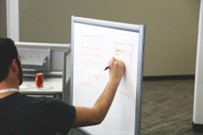
on the whiteboard
of adversity.
Anyone feeling
‘unwell within themselves’ or ‘feeling things
are not quite right’, please contact: 13 YARN
[D’après François Villon’s Ballade ‘Frères humains qui après nous vivez’, 1489]
Sisters among whom I’ve enjoyed living, Those of you whose words I have read and heard, Women who ponder the choices we have, My daughters (and those later born of them), Sisters be aware, you are role models Forget the crude jests and crass abuses That mocked you and your personal beliefs The Uluru call was a people’s cry Own your power and claim: kulila*! People, be humane: listen to the voice.
Australians, your First Peoples have spoken Asking for their growth to be supported, Calls for survival have remained unheard Can’t we offer them the chance of progress? Ignore the put-downs rebukes and the likes Yesterday we closed and maintained silence, We switched off the news, respecting elders Let’s be heard again, speak for a fair go! Grant the First Peoples what they ask: be just! People, be humane: listen to the voice.
And you good reader, wishing to alleviate The First People’s needs in healthier days, You who plan ahead devising programs For a better life, take a step: be kind! People, be humane: listen to the voice.
*kulila: means ‘listen!’ in Pitjantjatjara language in the APY lands
When I say I like Jazz people ask me; ‘Which type? and Who is your favourite?’
It’s tempting to say the Blues and Ray Charles, Traditional Jazz with Glenn
Miller and Benny Goodman or Popular Jazz like Gershwin’s Summertime.
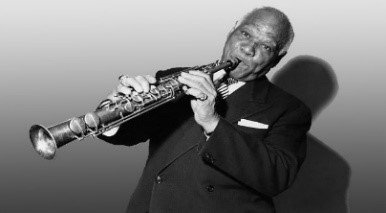
But I favour Early Swing and the repertoire of soloists like trumpetist
Louis Armstrong, and of saxophonist Ragtime player Sidney Bechet.
What appeals to me most in swing is off-beat music that has
a free flow, spontaneity and vocalisation.  Armstrong also
cooperated with Ella Fitzgerald. The famous pieces
I love are, C’est si bon, Petite Fleur
and Oh, Lady Be Good!

Si je dis que j’aime le Jazz on me demande :  ‘Quel Genre et Qui aimez-vous ?’
Je pourrais être tentée de dire Les Blues et Ray Charles, le Jazz Traditionnel
 avec Ben Miller et Benny Goodman ou le Jazz populaire comme dans
Summertime de Gershwin ? Mais je préfère le Swing et le répertoire
de solistes comme du trompettiste Louis Armstrong, et du
saxophoniste du Ragtime Sidney Bechet. Ce qui m’attire
le plus dans le début du Swing c’est la musique qui
se déroule avec un rythme libre et vocalisation
spontanée. Armstrong a aussi coopéré avec
Ella Fitzgerald. Les titres que je préfère
sont : C’est si bon, Petite Fleur
et Oh, Lady Be Good.
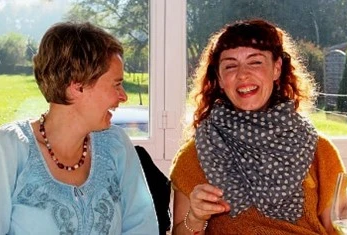
Put things off? I don’t. I move instantly. I improvise and wing it. I get on well with people. At a friend’s I tidy up her magazines by date. I insist she gets rid of some. Then we both burst out laughing over last year’s horoscope and we have fun.
What’s my worst feature? Telling stories, is one, I ramble and have no sense of timing when I share a joke. My abrupt ending comes too soon and nobody gets it. I may well get a sympathetic smile, but there’s a catch: people aren’t sure what to make of me.
Qualités ou Défauts ?
Procrastiner ? Pas moi. Je fais tout instantanément. J’improvise et me lance au hasard. Je m’entends bien avec les gens. Chez une amie, je me mets à trier ses magazines dans l’ordre de dates. J’insiste pour qu’elle en garde moins. Tout à coup nous éclatons de rire en lisant les horoscopes de l’an dernier. C’est très amusant !
Mon plus grand défaut ? J’en ai ! Le pire c’est quand je raconte des histoires, je me perds dans l’intrigue et finis si vite que personne ne comprend rien. J’ai peut-être droit à un sourire sympathique, mais l’ennui c’est que les gens se demandent qui je suis.
International Mother Language Day | United Nations

The Mother Language is the first language we’ve known and
we identify with. It’s also called the First or Principal language.
Education in the mother language means that instruction is
made in that language, which is also taught as a subject. In
bilingual education two languages are used for instruction.

No need to be edgy; no tripping on jokes,
say it straight.
No need for a silent pause; no puzzling over context,
burst into laughter.
No need to be tongue-tied; no hesitation choosing a word,
just verbalise it.


Journée Internationale de la Langue Maternelle | Nations Unies

La Langue Maternelle est la première langue qu’on connaisse
et avec laquelle on s’identifie. Elle s’appelle aussi la Première
langue ou langue Principale. L’enseignement dans la langue
maternelle signifie que l’instruction se fait dans la langue
maternelle qui est aussi un sujet enseigné.  Dans l’éducation
bilingue deux langues servent d’instruction.

Pas besoin d’être tendu ; on ne gâtera pas la plaisanterie,
disons ce que nous pensons !
Pas besoin de pause silencieuse ; ni de reflection sur le contexte,
éclatons de rire !
Pas besoin de tâter le terrain, d’ hésiter pour un choix de mot,
simplement prononçons-nous !
Once a man offered to read my palm. I refused saying
I didn’t believe in palmistry. Besides, I feared I’d be
influenced by his predictions, therefore might ensure
the events took place.
My life has whirled in several directions. Time for a
quick review.
I am, now, in Australia because I met someone who
could get a job here. I wonder if after a prediction that
I’d live overseas I’d have planned to emigrate only to
find I couldn’t get a visa. Or, what if I met a handsome
man that didn’t want to travel?
Where would that leave me?
Il voulait me lire la main
Un jour un homme m’a offert de lire mes lignes de
main. J’ai refusé en disant que je ne croyais pas à la
chiromancie. En fait, j’avais un peu peur d’être
influencée par ses prédictions et de finir par
implémenter les évènements moi-même.
Ma vie est partie dans tous les sens. Il est temps de
vérifier où j’en suis.
Je suis maintenant en Australie parce que j’ai fait
connaissance de quelqu’un qui a trouvé du travail ici.
Je me demande s’il m’avait prédit que j’habiterais à
l’étranger, me serais-je préparer à immigrer pour
découvrir que je n’aurais pas droit à un visa. Ou bien
j’aurais pu rencontrer un partenaire qui ne voulait pas
voyager.



















You must be logged in to post a comment.