Simone Veil: courage and change


Simone Veil: an inspiring woman

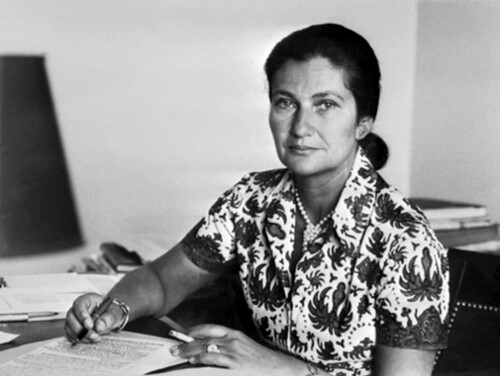
Who would still confuse Simone Veil (1927-2017) with Simone Weil, a humanist and mystic philosopher who died young in England (1909-1943)? Both women with similar names are from France, my country of origin.

It is Simone Veil I want to discuss. She was a French politician as well as a holocaust survivor. While studying for her Baccalauréat in April 1944, she was arrested by the Gestapo together with her whole family in Nice.

Her father and brother were deported to Lithuania. Never seen again, they were listed as executed. With her mother and two sisters she went to Auschwitz and later went on the ‘death march’ to Brobeck and Bergen-Belsen. There her mother died of Typhus while Simone who said she was below eighteen was enlisted to do forced labour. The three sisters managed to be released separately from 1945.

On her return Simone studied law and politics and later became the French Minister for Health. I was thirty years old when in 1975 the 'Veil Act' to legalise abortion was passed. I heard her dedicated speeches in the National Assembly that affirmed a woman’s right to bring pregnancy to interruption. She was convincing and managed to rally all the male representatives of the National Assembly.

This was significant for me who had witnessed through some good friends of mine the difficulties women had to survive because of numerous illegal abortions in the 1960s in France. Since then Simone Veil received the nickname of ‘La Merveille’ [La Mère Veil - The Marvellous Mother] from women and feminists who respect and revere her.

Indefatigable as a politician, she became the first woman to join the European Parliament and received a wide range of high-level awards eventually receiving the Légion d’Honneur in 2012. She was re-interred with her husband in the Pantheon in 2018.

Later a Prize, awarded on International Women’s Day, was instituted in her name to honour people who fight for women’s causes. Living overseas, I am lucky to have had access to ‘A Life,’ her 2009 memoir and to the 2022 film ‘Simone Veil A woman of the century.’

Simone Veil, femme qui m’a inspiré

Qui encore continue à confondre Simone Veil (1917-2017) avec Simone Weil, une philosophe humaniste et mystique qui mourut jeune en Angleterre (1909–1943) ? Deux femmes aux noms semblables venant de France, mon pays d’origine.

C’est de Simone Veil, dont je veux parler, une femme politique Française qui avait survécut l’holocauste. Elle préparait son Baccalauréat quand elle fut arrêtée avec toute sa famille par la Gestapo en Avril 1944 à Nice.

Son père et son frère, déportés en Lituanie n’ont jamais été revus et furent déclarés exterminés. Avec sa mère et ses sœurs elle partit pour Auschwitz et suivit les 'marches de la mort' à Brobeck, puis Bergen-Belsen où sa mère mourut du Typhus. Simone disant qu’elle avait moins de dix-huit ans fut retenue pour faire des travaux forcés. Les trois sœurs furent libérées séparément à partir de l’année 1945.

A son retour Simone fit ses études de droit et de politique, et plus tard devint Ministre de la Santé. J’avais 30 ans lorsque en 1975, la 'Loi Veil' légalisa l’avortement. J’ai entendu les discours de Simone Veil qui affirmait l’autonomie de la femme et son droit à une interruption volontaire de grossesse et qui réussirent à persuader tous les représentants masculins de l’assemblée nationale à faire passer cette loi.

C'était un moment important pour moi qui avait été témoin, par l'intermédiaire de quelques-unes de mes amies, des difficultés que les femmes avaient à survivre à cause des nombreux avortements illicites dans les années 1960 en France. Depuis cette année-là Simone Veil a reçu le surnom de ‘La Merveille’ [ la Mère Veil] par les femmes et les féministes qui l’ont révérée et profondément respectée.

Une politicienne infatigable elle devint la première femme élue au Parlement Européen et reçut un grand nombre de prix et La Légion d’Honneur lui fut remise en 2012. Récemment elle fut re-enterrée avec son mari au Panthéon.

Depuis un prix, présenté pour la Journée Internationale de la Femme, fut institué en son nom en honneur des personnes qui améliorent la cause de femmes. Bien que je vive à l’étranger, j’ai pu avoir accès, en Australie, à son mémoire: ‘Une Vie (2009) et au film de 2022 ‘Simone Veil - Une femme du siècle.’

How I wish I still lived on the edge


How I wish I still lived on the edge


As soon as I left home, I grasped a life of change
riding a motorbike and smoking cigarettes
to counter my parents’ humdrum daily lifestyle.

A milestone came for me the year of moon landing,
I took one giant step, went to Mwinilunga.
In North Western Zambia, at the Zambezi source,
new folk shared food with me.

No electricity. We burnt wood in the stove,
kerosene in the lamps and had a few candles
Often left stains of wax on students’ homework books.

At open air concerts, villagers came to sing,
to booming drums we danced the Congolese Rumba.
I even joined when eight months’ pregnant.

No newspapers in town. A radio and batteries.
The sun shone over us its healthy radiant heat.
At night, the stars sparkled.

Traces of defiance and of independence
are still burning in me.
I’ve danced myself away at cultural events,
backed First Nations’ requests that their voices be heard.

Yet I’m still waiting to see sparkling stars
enlighten the modern world I live in.
Suburbia be damned!


Comme je voudrais encore vivre en marge de ce monde

Quand j’ai quitté mes parents j’ai vécu une vie différente
Circulant en moto et fumant des cigarettes.
Pour contre-carrer leur train-train habituel .

Une étape importante est arrivée pour moi
l'année de l'alunissage, j'ai fait un pas géant,
Partie pour la Zambie dans le Nord-Ouest
Là, à Mwinilunga, à la source du Zambèze,
de nouveaux amis partageaient leur nourriture avec moi.

Pas d’électricité. Chez nous, un four à bois,
une lampe au kérosène, quelques bougies.
Souvent on laissait des tâches de cire
en corrigeant les cahiers des élèves.

Les concerts étaient en plein-air.
les habitants venaient chanter,
Nous dansions, au bruit de tambours sonores,
la Rumba Congolaise à laquelle j’ai osé
me joindre, bien qu’enceinte de huit mois.

Pas de journaux en ville. Une radio et des piles.
Le soleil chaleureux chauffait avec radiance.
La nuit, toutes les étoiles étincelaient.

Des traces d’indépendance et de défi
brûlent encore en moi.
J’ai dansé comme une folle
Du temps de réunions interculturelles.
J’ai soutenu les requêtes des Premières Nations
qui voulaient qu’on écoute leurs voix et leurs paroles.

Mais j’attends encore voir un scintillement d’ étoiles
éclairer le monde moderne que j’habite.
Maudite soit la vie en banlieue !


French Chansons / On Chante

Jacques Brel: Quand on n’a que l’amour.
Leo Ferre: Paris Canaille
Georges Brassens: L’ Auvergnat. Elle est a toi cette chanson


French Chansons / On Chante 

I was supposed to read a book,
Yet couldn’t even read the news
I was better, but still quite weak.
After covid, the damned shingles.

Eyes closed, I played the olden tunes
of my adolescence in France
Some said it must be nostalgia,
I called it French songs on my phone.

Ils chantent eux, moi je fredonne,
et je murmure une mélodie
émettant l’écho du terroir,
qui me parle d’un lointain chez moi.

Piaf et sa Môme lance les chanteurs
dont les paroles, plus que les airs,
sont restées, ancrées dans ma peau.

Aznavour s’y Voyait Déjà,
Mais Jacques Brel n’avait Que l’Amour,
Brassens nous donna Cette Chanson
Jean Ferrat chanta sa Montagne,
Leo Ferré Paris Canaille.

Et moi j’entonne Le Se Canto,
l’hymne occitan de mon pays
Qui est le mien. Well, used to be.


Quand on n’a que l’amour

À s’offrir en partage
Au jour du grand voyage
Qu’est notre grand amour
Quand on n’a que l’amour
Mon amour, toi et moi
Pour qu’éclatent de joie
Chaque heure et chaque jour
 …
Quand on n’a que l’amour
Pour parler aux canons
Et rien qu’une chanson
Pour convaincre un tambour
Alors sans avoir rien
Que la force d’aimer
Nous aurons dans nos mains
Amis le monde entier

Chanson pour l’Auvergnat
 
Elle est à toi cette chanson
Toi l’Auvergnat qui, sans façon
M’as donné quatre bouts de bois
Quand dans ma vie il faisait froid
Toi qui m’as donné du feu quand
Les croquantes et les croquants
Tous les gens bien intentionnés
M’avaient fermé la porte au nez
Ce n’était rien qu’un feu de bois
Mais il m’avait chauffé le corps
Et dans mon âme, il brûle encore
À la manière d’un feu de joie
Toi, l’Auvergnat quand tu mourras
Quand le croque-mort t’emportera
Qu’il te conduise à travers ciel
Au père éternel


Elle est à toi cette chanson
Toi l’étranger qui, sans façon
D’un air malheureux m’as souri
Lorsque les gendarmes m’ont pris
Toi qui n’as pas applaudi quand
Les croquantes et les croquants
Tous les gens bien intentionnés
Riaient de me voir emmené
Ce n’était rien qu’un peu de miel
Mais il m’avait chauffé le corps
Et dans mon âme, il brûle encore
À la manière d’un grand soleil
Toi, l’Étranger quand tu mourras
Quand le croque-mort t’emportera
Qu’il te conduise à travers ciel
Au père éternel

‘Tien te dret’ (Occitan )

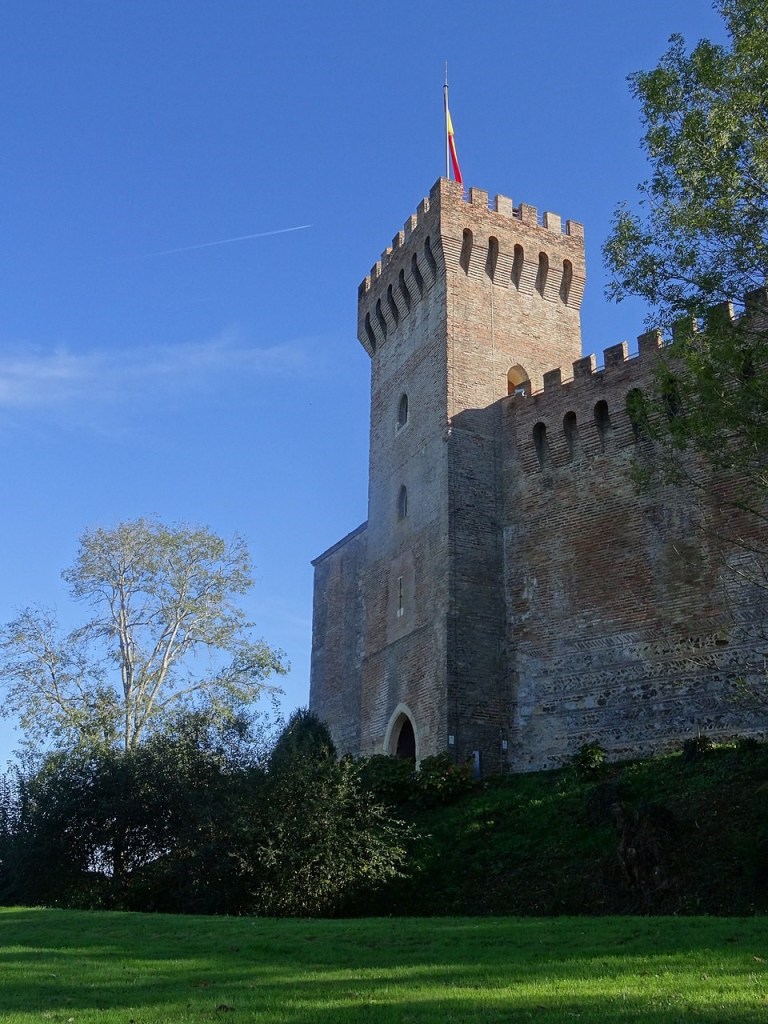
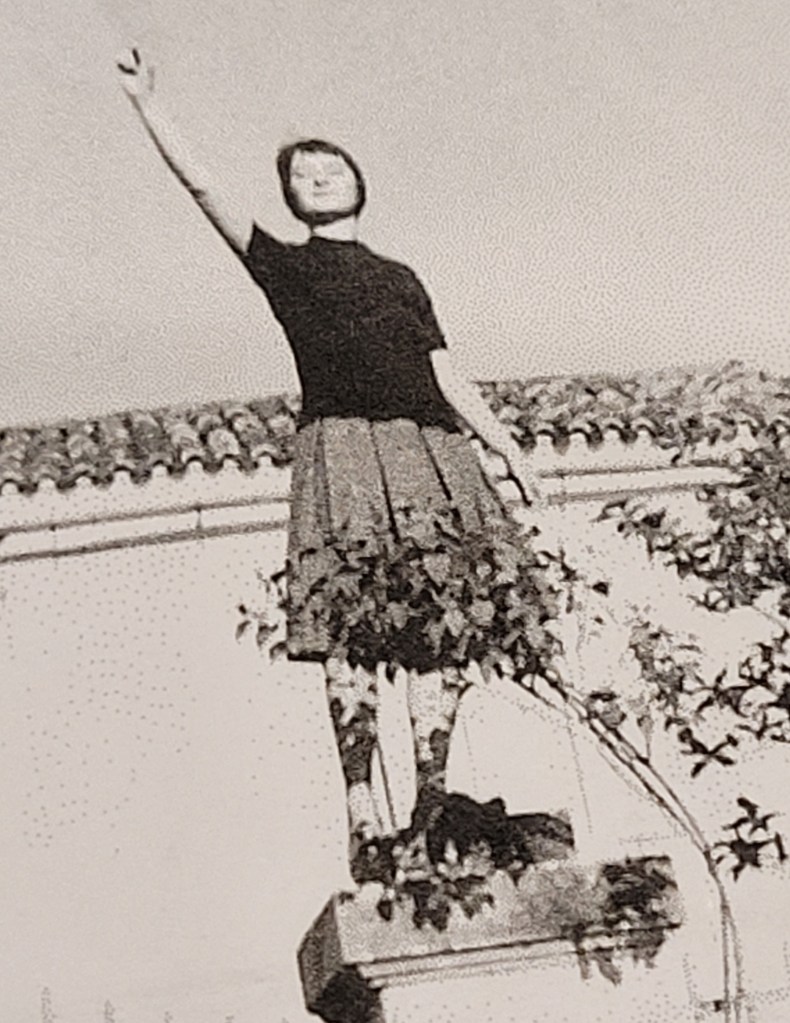
[‘Tien te dret’ in Occitan; photo by M-J. Damy]

 The first time I leave home (Trilingual)

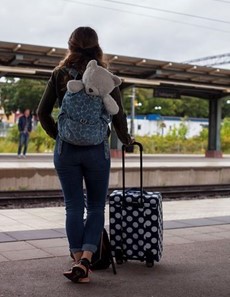
The first time I leave home
The year is 1955. My mother gives me a black and white suitcase
and gives me bread and salami for the trip. I'm taking the train
to England. It passes through Paris to Le Havre. I put the salami
in my suitcase because I'm not hungry. With my friends and a
teacher we are going to Bristol by night ferry. In Southampton,
we take a dusty old train to Bristol station. I spend a month with
a nice family. But in the evening I feel homesick when I open
my suitcase which smells of salami.

La première fois que je quitte la maison
Nous sommes en 1955. Ma mère m'offre une valise noire et
blanche et me donne du pain et du saucisson pour le voyage.
Je prends le train pour l’Angleterre. Il va au Havre par Paris.
Je range le saucisson dans ma valise car je n’ai pas faim. Avec
mes amies et une professeur nous allons à Bristol par ferry de
nuit. A Southampton, nous prenons un vieux train poussiéreux
pour nous rendre en gare de Bristol. Je passe un mois avec une
famille sympathique. Mais le soir j’ai le mal du pays en ouvrant
ma valise qui sent au saucisson.

La primera vez que salgo de casa
Es el año 1955. Mi madre me regala una maleta blanca y negra
y me da pan y salchichas para el viaje. Voy a tomar el tren
a Inglaterra. Pasa por París y Le Havre. Guardo la salchicha
en mi maleta porque no tengo hambre. Con mis amigos
y una profesora vamos a Bristol en ferry nocturno. En
Southampton, tomamos un viejo tren polvoriento hasta
la estación de Bristol. Paso un mes con una familia agradable.
Pero por la noche siento nostalgia cuando abro mi maleta
que huele a salchicha.

Requiem for a Voice

by Anne-Marie Smith

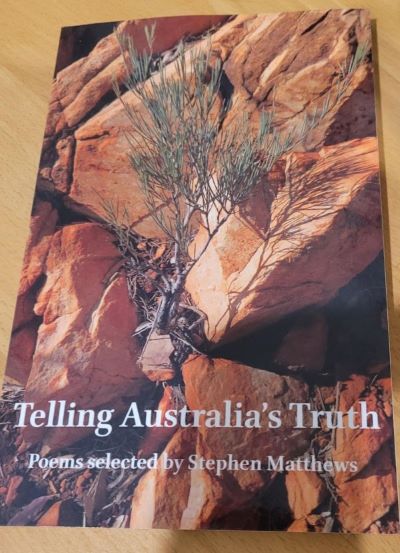
Feel free to contact:Telling Australia’s Truth by Stephen Matthews at:
https://www.ginninderrapress.com.au

 	[D’après François Villon’s Ballade
‘Frères humains qui après nous vivez’, 1489]


Sisters among whom I’ve enjoyed living,
Those of you whose words I have read and heard,
Women who ponder the choices we have,
My daughters (and those later born of them),
Sisters be aware, you are role models
Forget the crude jests and crass abuses
That mocked you and your personal beliefs
The Uluru call was a people’s cry
Own your power and claim: kulila*!
People, be humane: listen to the voice.

Australians, your First Peoples have spoken
Asking for their growth to be supported,
Calls for survival have remained unheard
Can’t we offer them the chance of progress?
Ignore the put-downs rebukes and the likes
Yesterday we closed and maintained silence,
We switched off the news, respecting elders
Let’s be heard again, speak for a fair go!
Grant the First Peoples what they ask: be just!
People, be humane: listen to the voice.

And you good reader, wishing to alleviate
The First People’s needs in healthier days,
You who plan ahead devising programs
For a better life, take a step: be kind!
People, be humane: listen to the voice.

*kulila: means ‘listen!’ in Pitjantjatjara language in the APY lands

Feel free to contact Telling Australia's Truth by Stephen Matthews:
https://www.ginninderrapress.com.au

International Mother Language Day / Journee Internationale de la langue Maternelle

International Mother Language Day | United Nations

The Mother Language is the first language we’ve known and
we identify with. It’s also called the First or Principal language.
Education in the mother language means that instruction is
made in that language, which is also taught as a subject. In
bilingual education two languages are used for instruction.

No need to be edgy; no tripping on jokes,
say it straight.
No need for a silent pause; no puzzling over context,
burst into laughter.
No need to be tongue-tied; no hesitation choosing a word,
just verbalise it.


Journée Internationale de la Langue Maternelle | Nations Unies

La Langue Maternelle est la première langue qu’on connaisse
et avec laquelle on s’identifie. Elle s’appelle aussi la Première
langue ou langue Principale. L’enseignement dans la langue
maternelle signifie que l’instruction se fait dans la langue
maternelle qui est aussi un sujet enseigné. Dans l’éducation
bilingue deux langues servent d’instruction.

Pas besoin d’être tendu ; on ne gâtera pas la plaisanterie,
disons ce que nous pensons !
Pas besoin de pause silencieuse ; ni de reflection sur le contexte,
éclatons de rire !
Pas besoin de tâter le terrain, d’ hésiter pour un choix de mot,
simplement prononçons-nous !

Yuwa, Uwa, Yes, Oui, Si, Da, Ja, Nai, Ya, Oi be, Āe, Ngawa*

Banksy and Yayi (Bilingual)

My Banksy exhibition Review:

I have come up from underground, 
A Teddy holds a Molotov cocktail
A girl, safety jacket of hope. 
Pulp Fiction’s Travolta 
clutches not a gun but a banana. 
Anti-immigration birds wave their signs:
'Go back to Africa 
and Keep off our Worms.'
Meantime the English Maid 
sweeps all under a wall. 


Yayi d’apres Banksy [sans stencil] :

Les chants d’Elysée n’ont Pas Ri. 
Les Misérables font la Causette. 
Elles Gavent Roche et tous les gamins. 
Napoléon envoilé d’une cape rouge 
ne passera pas les Alpes à cheval.
Et à Londres on voit 
Show me the Monet.

Banksy and Yayi

My Banksy exhibition Review:

I have come up from underground, 
A Teddy holds a Molotov cocktail
A girl, safety jacket of hope. 
Pulp Fiction’s Travolta 
clutches not a gun but a banana. 
Anti-immigration birds wave their signs:
'Go back to Africa 
and Keep off our Worms.'
Meantime the English Maid 
sweeps all under a wall. 


Yayi d’apres Banksy [sans stencil] :

Les chants d’Elysée n’ont Pas Ri. 
Les Misérables font la Causette. 
Elles Gavent Roche et tous les gamins. 
Napoléon envoilé d’une cape rouge 
ne passera pas les Alpes à cheval.
Et à Londres on voit 
Show me the Monet.