A la Française- Baguettes & Poached Egg in tomato Recipe

Featured

A la Française - Of  baguettes and recipe (poached eggs in tomato)

I want to tell you of my way of doing things, à-la-Française.

1. Lists : I love to make lists which I number.
2. Ink Pens : I love to write with fountain pens by hand, but when
typing, I like to use Baguet Script. Try it.
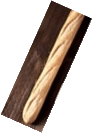
3. Baguettes : I take pleasure in eating on my way home the end of the
baguette (it’s called le bout) that I buy at bakeries. My family
doesn’t appreciate.
4. Café au lait : I enjoy soaking my bread in my café-au-lait, which is
not well-mannered . I tell my family ‘Only if you’re French can
you do this!’
5. Gants de toilette : In the bathroom I use glove-shaped facecloths. I
detest the squares you find in English or Australian bathrooms,
they look like dishcloths.
6. Poached Eggs in tomatoes. (I give you my favourite recipe)
- Find tomatoes at home, or pick some from your garden
- Cut two or three peeled tomatoes into small slices
- Heat olive oil (or butter) and sliced garlic in an ordinary frypan
- Place tomatoes in the frypan before the garlic browns.
- When the tomatoes start bubbling gently, break two eggs over
them
- It’s up to you to place a lid or not, because the eggs will be
covered by the tomatoes’ juice and therefore poached
- Serve with baguette which you soak in the eggs and tomatoes
or serve on sliced bread which soak in the egg and tomato
7. Bon appétit !


A la Française - Baguettes et Recette (œufs pochés à la tomate )

Je veux vous parler de choses que j’aime faire, à la Française.

1. Listes : J’adore faire des listes et surtout les numéroter
2. Stylo à encre : J’adore écrire au stylo encre à la main. Quand je tape
à la machine, j’aime le Baguet Script. Essayez -le!
3. Baguette : J’ai du plaisir à manger le bout de la baguette que j’achète
à la boulangerie. Ma famille n’aime pas ça, bien sûr
4. Café au lait : J’aime tremper mon pain dans mon café au lait, ce qui
n’est pas correct. Je dis ‘Vous ne pouvez tremper que si vous êtes
Française'
5. Gants de toilette : Dans la salle de bains, je me sers de gants de
toilette car je déteste les tissus carrés qu’on trouve en salle de bains
anglaises ou australiennes car ils ressemblent à des torchons
6. Œufs pochés à la tomate. (Je vous donne ma recette préférée).
- Prenez vos tomates de la maison ou mieux encore cueillez-les
dans votre jardin
- Coupez deux ou trois tomates épluchées en tranche.
- Faites chauffer de l’huile d’olive (ou du beurre) avec de l’ail
épluché dans une poêle.
- Avant que l’ail ne roussisse, placez les tomates dans la poêle.
- Quand les tomates bouillonnent légèrement dans la poêle cassez
deux œufs dessus.
- A vous de choisir si vous mettez un couvercle ou non, car les œufs
seront recouverts par le jus de tomate, donc pochés.
- Servez avec une baguette que vous trempez dans la sauce tomate
ou servez sur une tranche de pays pour absorber le bon goût.
7. Bon appétit !

I wasn’t expecting Spanish conjugations (Bilingual Fr)

Featured

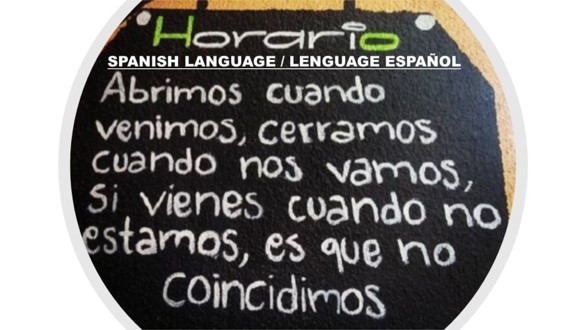
We open when we come,                  On ouvre quand on arrive,
We close when we leave, On ferme quand on part,
If you come when we aren’t here,
Si vous venez quand on n’est pas là,
It’s that we couldn't connect
C est qu’on n’a pu faire connexion

Spanish, a language that surprised me!

I’ve always loved languages. Being French, I’ve studied English, Latin, Italian, and now
Spanish. I hoped to sort it out because Occitan, my grandparents’ language I used to
hear as a child, was also latino. I thought I’d manage, and I did: Hola, mi amigo and all that.
I loved it, no problem.

The first surprise came with some words ending in -a: el problema (as in Italian) but also
el idioma ‘la langue’ and el dia, ‘the day’ were masculine nouns with a feminine ending.
Dia, also used in Occitan, sounded closer to [dio]. The second surprise was to hear Aquellos
to mean ‘those’ in Spanish which reminded me of the Occitan phrase ‘Aquelos Montagnos’ ,
‘these mountains’ from the famous Occitan hymn Se Canto / Se Canta !

I later had daily headaches learning tricky Spanish irregular verbs. I could use puedo to say
‘I can', but the infinitive was poder. Many verbs have had their vowels repeatedly switched
by Spanish speakers over centuries. Spanish irregular verbs worse than in French? That
was impossible. What a reprieve when I found I could say ‘to make possible’ using a
regular verb, imposibilitar.


L’Espagnol, une langue qui m’a surprise

J’ai toujours aimé les langues. Etant Française, j’ai 'étudié l’Anglais, le Latin, l’Italien
et l'Espagnol récemment. J’espérais m’en sortir puisque l’Occitan, la langue que
j’écoutais dans ma jeunesse, parlée par mes grands-parents, était aussi latino. Tout m’a
plu et j’ai bien commencé : Hola, mi amigo et tout ce qui s’ensuit. Pas trop de problème.

Première surprise, des mots qui finissaient en -a comme les mots féminins, el problema
(comme en Italien), el idioma, ‘le langage’ et el dia ‘le jour’ mais ils étaient masculins.
Dia s’approchait de l’Occitan et il se prononçait plus proche de [dio]. La seconde surprise
était d’entendre Aquellos, qui voulait dire ‘ceux-là’ en Espagnol et qui me rappelait la
phrase en Occitan 'Aquelos montagnos, ‘ces montagnes’, du célèbre hymne d’Occitanie
Se Canto / Se Canta.

Un mal de tête journalier se révéla face aux pénibles verbes irréguliers de l’Espagnol.
Je pouvais dire puedo pour ‘Je peux’ mais poder était son infinitif et comme beaucoup
d’autres verbes, il avait subi une inversion de voyelles par des personnes qui parlaient
l’espagnol sans arrêt pendant des siècles. Les verbes irréguliers espagnols seraient-ils
pires que ceux du Français? Impossible! Alors avec quiétude je découvris que pour
dire ‘rendre possible’ il existait un verbe régulier, imposibilitar.

La Cabane Espagnole: Friendship and Film on the Beach

Featured
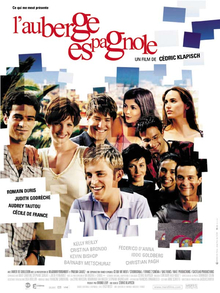
La cabane espagnole: friendship and film on the beach

Sofia loved to talk and told me her story.
When she lived in a quiet tropical seaside bay
Her folks had rejected her and her friend.
In town they’d set up an open house
And showed a film in the late afternoons.

Some youths attended and all had fun
Soon they’d brought some more friends.
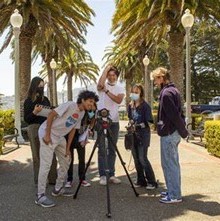
After viewing, they’d talk of film making.
Girls and boys learnt cinema techniques
Studying photo effects, angles and hues.

After Sofia ran out of cash and electricity
They all went outside on the beach front
The youths took to the stage and acted
A story inspired by one of their films.
Their title was ‘The Spanish Beach Hut’.

Later the two friends built a hut on the beach.
Students came from overseas, moved in and stayed
Until they decided who were their best friends.
The End


La Cabane Espagnole: amitiés et films à la plage

Sofia qui aimait parler me raconta son histoire.
Elle habitait dans la baie tranquille d’un village tropicale
Et sa famille l’avait repoussée ainsi que son amie.
En ville elles s’installèrent dans une maison
A porte ouverte avec séances de cinéma l’après-midi.

Des jeunes y venaient pour passer de bons moments
Et bientôt amenèrent quelques-uns de leurs amis et amies
Qui finirent la soirée en discutant de techniques de cinéma
Et de certains effets de photographie, d’angle et de lumière.

Lorsque Sofia n’eut plu de fonds pour l’électricité
Ils partirent tous à la plage ou ils présentèrent
Sur scène une histoire inspirée par un de leur films
Il choisirent comme titre ‘La Cabane Espagnole’.

Alors les deux amies construisirent une cabane sur la plage
Des étudiants vinrent de pays étrangers et restèrent
Jusqu’au jour où ils découvrirent qui étaient leurs meilleurs amis.
Fin


‘Tien te dret’ (Occitan )

Featured

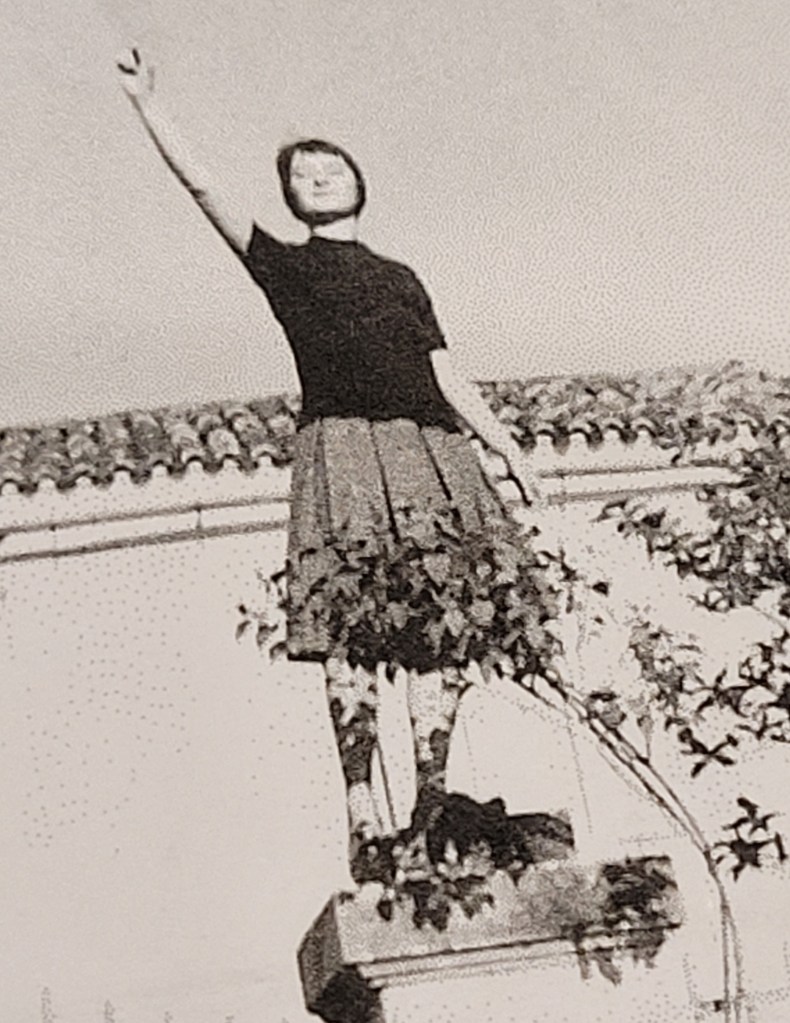
[‘Tien te dret’ in Occitan; photo by M-J. Damy]

Charlie Chaplin’s tears

Featured
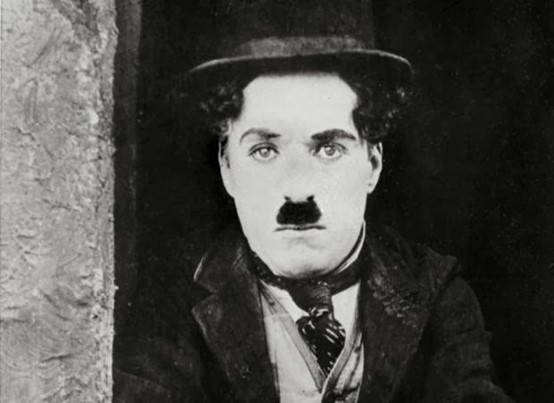
Charlie Chaplin’s sad face
                                  Charlie Chaplin's tears

           Charlie Chaplin made people laugh, yet he said
‘I always like walking in the rain so no one can see me 
crying’. I laughed watching him come into the bedroom 
while his wife brandishes a baseball bat. He must have 
cried often enough for this to coincide with rain. 
         Imagine people at home giggling after his films, 
while he saunters outside. He’d wave back to you but 
you wouldn’t see the big tear drop on his jacket that was 
already wet. You 'd walk home a hero and boast ‘Charlie 
Chaplin just waved to me’. Your family 'd keep laughing.
                           Les larmes de Charlie Chaplin

         Charlie Chaplin faisait rire les gens, mais il a dit 
‘J’aime marcher sous la pluie car personne ne peut voir 
mes larmes’. J’ai ri de le voir arriver dans sa chambre 
lorsque sa femme brandissait un grand bâton. Il a du 
pleurer souvent pour que ces pleurs coïncident à la pluie. 
          Imaginez les gens chez eux à rigoler après ses films 
pendant qu’il se promène dehors. Il vous saluerait mais 
vous ne verriez pas cette larme tomber sur sa veste déjà 
mouillée. Vous iriez chez vous fier leur dire ’Charlie 
Chaplin m’a fait bonjour’. Et votre famille continuerait 
à rire.