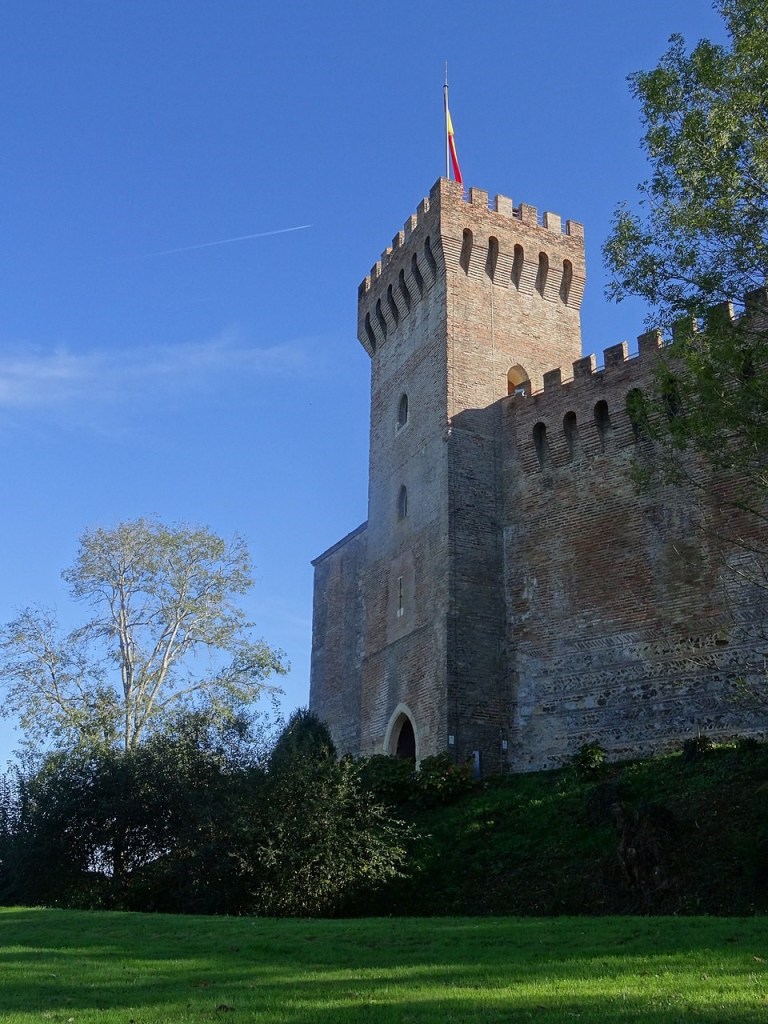
Se Canto – The Occitan hymn of Southern France

Featured

The ‘Se Canto/Se Canta‘ is a hymn in the Occitan language which

is used in the majority of Southern France.
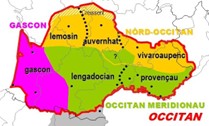
https://en.wikipedia.org/wiki/Occitan_language

This traditional song was written in the 14th century probably

by Gaston Phébus, Comte de Foix et Seigneur du Béarn. It

became popular and is used, with minor variants, across most

of Southern France as a regional hymn. It is sung in the Béarn

and Gascony areas by Nadau, who has also brought to life many

other songs in Occitan. He performed this at the Olympia in 2000.

Below is the version my grandparents would sing in the 1950s, in the

Dordogne. It’s sung in the Limousin to Toulouse, further East to the region

of Provence and South to the Pyrénées.

OCCITAN

Dejós ma fenèstra,
I a un aucelon, Tota la nueit canta,
Canta sa cançon

Chorus

Se canta, que cante,
Canta pas per ieu,
Canta per ma mia,
Qu’es al luènh de ieu.

Aquelas montanhas,
Que tan nautas son,
M’empachan de veire,
Mas amors ont son.

Baissatz-vos, montanhas,
Planas, auçatz-vos,
Per que pòsca veire,
Mas amors ont son.

Aquelas montanhas,
Tant s’abaissaràn,
Que mas amoretas,
Se raprocharàn.

ENGLISH

Outside my window,
There is a little bird
It sings all night
It sings its song

Chorus

 If it sings, let it sing,
It’s not singing for me,
It sings for my love
Who’s far away from me 

Those mountains
That are so high
Keep me from seeing
Where are my love.

Lay down, o mountains,
Rise up, o plains,
So I may see
Where are my love

Those mountains
Will lay down so low
That my dear love
Will come closer.

FRANÇAIS

Sous ma fenêtre
Il y a un petit oiseau,
Qui toute la nuit chante,
Chante sa chanson. 

Refrain

S’il chante, qu’il chante,
Il ne chante pas pour moi,
Il chante pour ma mie,
Qui est loin de moi. 

Ces montagnes,
Qui sont si hautes,
M’empêchent de voir,
Où sont mes amours. 

Abaissez-vous, montagnes,
Plaines, haussez-vous,
Pour que je puisse voir,
Où sont mes amours.

Ces montagnes,
Se rabaisseront,
Et mes amourettes,
Se rapprocheront.

‘Morlana’-Traditional Occitan song from Southern France

Occitan, spoken in Southern France

was my grandparents’ language.

I love to listen to songs revived by Nadau.

Read and Listen

Translated in English and French

https://lyricstranslate.com/fr/morlana-morlanne.html-0
© Nadau

OCCITAN  
© Nadau

Per Sent Laurenç a Morlana,
I avé lua sus los teits,
E la hésta a las platanas,
Qu'arribavi de la nueit.

Morlana cantava,
Jo qu'èri amoros,
Quimèra, engüera,
Lo ser qu'èra tant doç.

Qu'i trobèi ua gojateta,
Asseduda au canton,
Qu'èra din trop tristoneta,
Que sorti l'acordeon.

Que joguèi ua musiqueta
Qui m'avèn cantat los vielhs,
Que vedoi ua estaleta,
Qui se la cado deus uelhs.

Non sèi pas tot de la vita,
Mes que sèi que lo Bon Diu,
Qu'a inventat la musica,
T'à d'aquera larma, aquiu.

Adiu, donc, adiu Morlana,
Qu'as la lua sus los teits,
E la hèsta a las platanas,
Que me'n torni tà la nueit.
ENGLISH
© amsmith

Saint Laurent's Day at Morlana
With the moon on the roofs
The party under plane trees
I emerged from the night

Morlana was singing
I was in love,
Chimera, once more,
The evening was soft

There I found a young girl,
Sitting, afar in the corner,
Looking somewhat cheerless,
So I reached for the accordion.

I played a piece of music,
the same as the elders
used to sing to me,
I saw a star fall from her eyes

I know little of life,
But I know that our God
Did invent this music
So as to make a tear shine

Farewell, farewell Morlana,
The moon is over your roofs,
A party under the plane trees,
I’ll go back into my night.
FRANÇAIS
© Nadau

Pour la St Laurent à Morlanne
Y avait de la lune sur les toits,
Et la fête aux platanes,
Jarrivais de la nuit.

Morlanne chantait,
Jétais amoureux,
Chimère, encore,
Le soir était si doux.

Jy trouvais une jeune fille,
Assise là au coin,
Elle était un peu trop triste,
Jai sorti laccordéon.

Jai joué une musique
Que mavaient chanté les vieux
Jai vu une étoile
Qui est tombée de ses yeux.

Je ne sais pas tout de la vie,
Mais je sais que le Bon Dieu
A inventé la musique
Pour cette étoile là.

Adieu, donc, adieu Morlanne,
Tu as la lune sur les toits,
Et la fête aux platanes,
Je men reviens vers la nuit.