I would love to devise the ideal home based on some of my memories. My parents’ home in France had a cellar to keep wood, wine and canned vegetables. This was a very functional home for my mother who loved gardening and keeping preserves.
One of the houses where I lived for a very short time had an upper floor with a study which opened onto a balcony. I’d love this to have its windows protected by shutters, against cyclones, and the heat, as it was customary where I lived in for ten years in the cyclone belt of Western Australia.
I would like a home, like one I once lived in for a while in Papua New Guinea, to have an outdoor area that includes a long verandah enclosed for privacy where the children walked their bicycles through the gate. The surrounding breeze blocks also kept our dog safe from running away, as well as it allowed us to try and raise a pet turtle. Sad events can occur if ever the dog escaped onto the open and was run over on the road or if the turtle drowned in a pool of water.
More exciting times happened when I grew beautiful white frangipani flowers next to purple bougainvillea. A mango tree was often depleted by children on their way to school. I think pawpaw trees would do better, if the region was not subject to violent cyclonic winds.
Located in a in a friendly area, the premises allowed children to run in and out of the nearby houses, share meals and cold drinks or have sleepovers at one another’s.
When all was well, the children bouncing in and out of a home-made swing, climbing up and down the trees I’d recline and reflect in peace upstairs on the balcony which had a great view of distant hills.
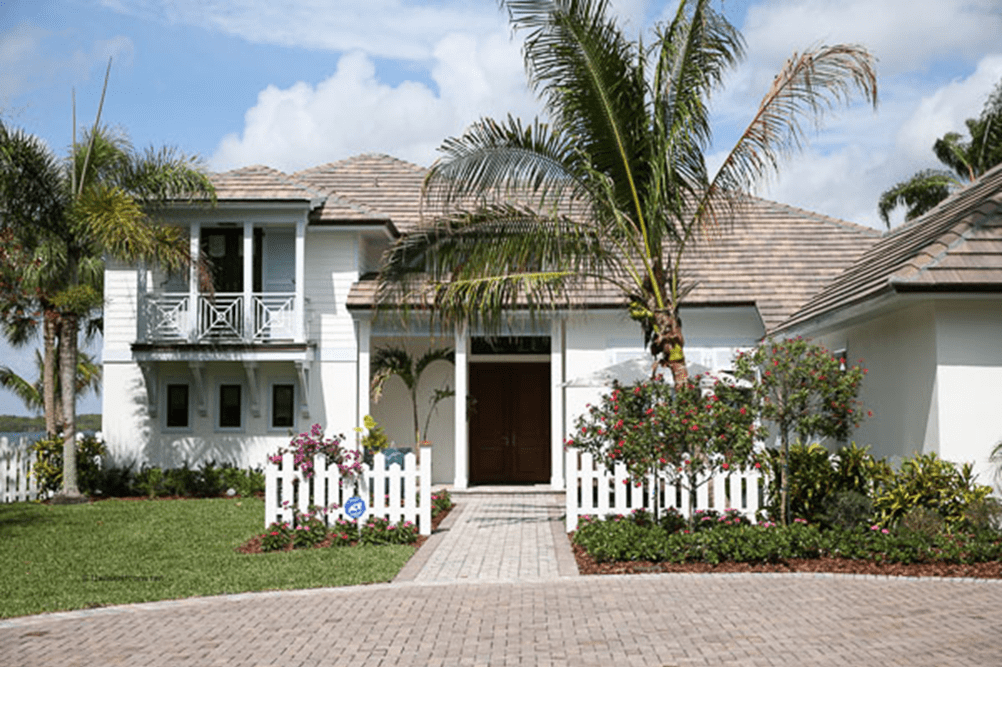
This is the imagined compound of my dream which has features of some of the houses I lived in, with a lot of extra space for comfort.
La maison de mes souvenirs.
Je voudrais raconter ma maison idéale en m’inspirant de celles dans lesquelles j’ai vécu. La maison de mes parents en France avait une cave et ma mère qui jardinait y gardait ses conserves, mon père son vin et du bois.
J’ai une fois pendant peu de temps vécu en Australie dans une maison qui avait un petit bureau qui ouvrait sur un balcon. J’aimerais que les fenêtres aient, comme dans la zone cyclonique de l’Australie Occidentale ou j’ai habité pendant dix ans, des volets qui protègent des ouragans, des vents et de la chaleur.
Je serais heureuse de trouver une maison avec un grand jardin, comme ou j’ai vécu quelque temps en Papouasie Nouvelle Guinée, et sur le côté une longue verandah qui avait un portail par lequel les enfants rangeaient leur vélo et entourée de blocks qui permettaient d’élever un chien, et même si possible une tortue. Malheureusement le chien pourrait s’échapper et se faire écraser sur la route ou la tortue rentrer dans un bol d’eau et se noyer, et ce serait très triste.
La vie était beaucoup plus agréable quand je faisais pousser des frangipanes à fleurs blanches avec des bougainvillées mauves. Un manguier bien qu’il soit agréable se fait prendre tous ses fruits par les enfants. Je préfèrerais des papayers pourvu qu’il n’y ait pas de vents cycloniques pour les décimer.
La maison étant située dans un quartier agréable, les enfants pourraient se rendre visite les uns aux autres, et trouver à manger ou à se rafraichir chez leurs amis, à monter aux arbres ou sur les balançoires et passer la nuit les uns chez les autres. Quand tout va bien, je peux m’allonger sans souci sur mon balcon et contempler la vue de distantes collines.
C’est ainsi que j’imagine la composition d’une demeure de mes rêves, avec des éléments de mon passé mais aussi un supplément d’espace et de confort.
They have advised not to stay quiet. My friend complained about my neighbour’s laziness. I asked him, ‘Was she idle or was it that she couldn’t find work?’ If I stayed quiet, I allowed my position as a non-Indigenous person to reinforce his views.
To deal with racism we must escape our comfort zone and reflect on our biases, often based on lack of knowledge. Once I thought all women from India were Hindus who wore saris.
I need to understand my neighbour’s cultural issues, often hidden or unspoken. ‘Racism stops with me’ encouraged me to speak. It’s helped me. Will it help others?
Trouver un nouvel horizon
On nous conseille de parler franchement. Un de mes amis a critiqué ma voisine en disant qu’elle ne voulait pas travailler. Je lui ai demandé, ‘Est-ce qu’elle ne voulait pas travailler ou serait-ce qu’elle ne pouvait pas trouver du travail’. Si je ne donnais pas de réplique à sa remarque je confirmerais l’avantage que j’ai en tant que personne non-Indigène et je renforcerais ce reproche.
Pour comprendre le racisme il faut renoncer à sa zone de confort et réfléchir sur nos préjugés, qui sont souvent dus à notre manque de connaissance. Il y a plusieurs années je pensais qu’en Inde toutes les femmes étaient Hindou et portaient des saris.
On a besoin de vérifier les conditions culturelles des personnes autour de nous car la réalité peut rester cachée ou tacite. A la suite du programme ‘Racism stops with me’, je n'ai eu plus peur de m'exprimer, ce qui m’a aidé. Cela va-t-il aider d’autres ?
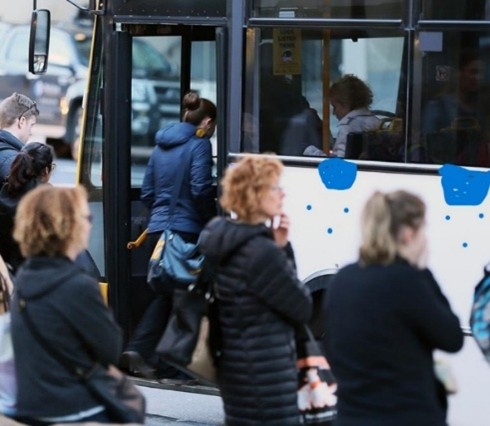
He’s standing on the kerb waiting for her. He looks to his left when he hears the regular pounding of someone’s feet approaching from the corner street. He turns around but doesn’t think she’ll arrive from the side street as they don't ever go there. It won’t be her, he shrugs. Yet he glances again, someone, with a hair bun just like hers, is running. He opens his mouth, but she’s raced past him and stepped off the pavement. Is she about to fall? No, instead she follows a man onto the bus. The blue bus becomes distant and blurred.
Une attente poignante
Debout sur le trottoir, il l’attend. Il regarde à gauche lorsqu’il entend venant de la petite rue de côté le son régulier de pieds qui frappent sur le trottoir. Il se retourne mais ne pense pas qu’elle vienne de cette ruelle car ils ne vont jamais là. Il hausse les épaules, ce ne sera pas elle. Mais il jette un autre coup d’œil, quelqu’un avec un petit chignon comme le sien, arrive en courant. Il ouvre la bouche mais elle passe très vite devant lui et descend du trottoir. Va-t-elle tomber ? Non, c’est plutôt qu’elle a suivi un homme dans l’autobus. L’autobus bleu devient distant et flou.
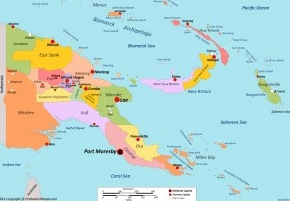
This week is the fiftieth anniversary of Independence in Papua New Guinea. Our family’s ten years in Port Moresby were extremely rewarding. We lived on the university campus from 1976 till 1986. The years after Independence were times of intense development. At the University, students told you they were proud of where they came from their [Ples] and their language [TokPles]. They were good enough to invite us to visit their region, no matter how far away they lived.
We met interesting people in town, and my best friend nicknamed me Mauswarra [the mouth that runs fast in Tok Pisin], in the same way as my family in France used to say I was Un moulin à paroles [a continuous word-windmill in French]. If I still lived in Port Moresby, I would now be called Bubu Mama [Grandma in Hiri Motu].
I am grateful for the warm welcome we received and how much we learned about a varied country with amazing landscapes of soaring mountains and seaside beaches. We had a Christmas lunch at a windy Ella Beach: lettuce leaves flew off, but we were able to eat the slices of cold turkey that remained on our plates. Two events at Idler’s Bay: a difficult one when our daughter was stung by a jelly fish; and a cheerful one when we attended David and Faith’s wedding. We also had a wonderful time at Gabba Gabba where the villagers gave us cool and large watermelons to eat, and their children played cricket with ours. We went to Yule Island on an outrigger canoe with eskis full of supermarket fruit and came back with fresh coconuts.
We were lucky to fly inland to Tapini and back safely in spite of the difficult airstrip; went to Bulolo and Wau to look at the remnants of gold mining and to the best market in the world at Goroka where I bought two of my favourite bilums [traditional string bags]. We also met with friendly people in stunning Madang and in the Island of Bougainville who always expressed the love of self-sufficiency. I cannot do justice to this country, and I regret not visiting other exciting places, like Milne Bay, the Sepik, the Western Highlands, East and West New Britain and Manus.
Papua New Guinea has in excess of 800 languages, Austronesian and Non-Austronesian which are able to do things that western linguists never thought possible. Through verb-stringing and other infixes languages focus on the manner of an action rather than on its timing, which is marked by adverbs. Besides liklik Tok Pisin and Hiri Motu bada (not really ‘much’!) I would have loved to learn languages from the Goilala people.
When we left UPNG students and staff organised a mumu, pig cooked in the ground with taro and vegetable wrapped in banana leaves as a farewell party.
On behalf of my family, it is my pleasure to wish all my friends and their wantoks [relatives], whom I cannot name here because I’d be sure to forget someone special, and in honour of those that have passed away, my absolute best for the 50th Independence Day Celebration on 16th September 2025.
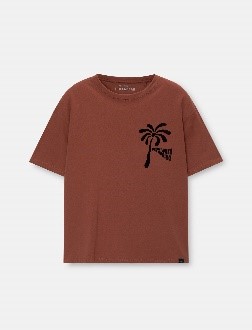
Have you ever owned a T-shirt that you'd call either brown, orange or red?
Naming a colour can be based on how your culture and language organise categories but linguists are still not clear on this issue. Your description can also depend on your perception or mood.
People who own dark cars will argue they have, even in daylight, shades of brown, grey or blue. As for the colours of red cars, some may choose to call darker reds ruby or burgundy while brighter reds may be labelled crimson or scarlet.
Speakers of languages that have different names of shades to the ones in the language we speak express colour distinction in a way that everyone will be able to understand. For example, if someone said a shirt has the hue of a burning fire or it reminds you of sunsets, you’ll know it has shades of red.
I personally make a distinction between green and blue that differs from my husband’s, but this isn’t for discussion here.
C’est de quelle couleur?
N'avez-vous jamais eu une T-shirt qui pourrait être soit de couleur marron, orange ou rouge ?
On donne des noms aux couleurs d’après la façon dont sa culture et sa langue organisent les catégories mais les linguistes n’ont toujours pas encore éclairci ce problème. Votre description peut aussi dépendre de votre perception ou de votre humeur.
Certaines personnes qui ont des voitures de couleur foncée vous diront qu’elles émettent, même en plein jour, des lueurs marron, grises ou bleues parfois. Dans le cas de voitures de couleur rouge, les gens choisissent d’appeler les rouges plus foncées soit fuchsia ou bordeaux tandis que les rouges plus brillants peuvent être nommer vermeil ou écarlate.
Une personne dont la langue classe les couleurs différemment des vôtres, n’aura aucune difficulté à exprimer à quelconque la teinte dont elle vous parle. Si elle vous dit qu’un objet est de la couleur d’un feu qui brûle ou que la teinte de cet objet vous rappelle un soleil couchant, vous saurez qu’il s’agit d’un rouge.
Quant à moi, je fais une distinction entre le bleu et le vert différente de celle de mon mari, mais je ne vais pas discuter cela maintenant.
A la Française - Of  baguettes and recipe (poached eggs in tomato)

    I want to tell you of my way of doing things, à-la-Française.

1.	Lists : I love to make lists which I number.
2.	Ink Pens : I love to write with  fountain pens  by hand, but when
          typing, I like to use Baguet Script. Try it.
3.     Baguettes : I take pleasure in eating on my way home the end of the
          baguette (it’s called le bout)  that I buy at bakeries. My family
          doesn’t  appreciate.
   4.	Café au lait : I enjoy soaking my bread in my café-au-lait, which is
          not well-mannered . I tell my family  ‘Only if you’re French can
          you do this!’
5.	Gants de toilette : In the bathroom I use glove-shaped facecloths.  I
          detest the squares you find in English or Australian  bathrooms,
          they look like dishcloths.
6.	Poached Eggs in tomatoes. (I give you my favourite recipe)
           -   Find tomatoes at home, or pick some from your garden
           -   Cut two or three peeled tomatoes into small slices
           -   Heat olive oil (or butter) and sliced  garlic in an ordinary frypan
	   -   Place tomatoes in the frypan  before the garlic browns.
           -   When the tomatoes start bubbling gently, break two eggs over
                 them
           -   It’s up to you to place a lid or not, because the eggs will be
                 covered  by the tomatoes’ juice and therefore poached
           -   Serve with baguette which you soak in the eggs and tomatoes
                 or serve on sliced bread which soak in the egg and tomato
7.	Bon appétit !


A la Française - Baguettes et Recette  (œufs pochés à la tomate )

 Je veux vous parler  de choses que j’aime faire, à la Française.

1.	Listes : J’adore  faire des listes et surtout les numéroter
2.	Stylo à encre : J’adore écrire au stylo encre à la main. Quand je tape
          à la machine,  j’aime le Baguet Script.  Essayez -le!
3.	Baguette : J’ai du plaisir à manger le bout de la baguette que j’achète
          à la boulangerie. Ma famille n’aime pas ça, bien sûr
4.	Café au lait :  J’aime tremper mon pain dans mon café au lait, ce qui
           n’est pas correct. Je dis ‘Vous ne pouvez tremper que si vous êtes
           Française'
5.     Gants de toilette : Dans la salle de bains, je me sers de gants de
          toilette car je déteste les tissus carrés qu’on trouve en salle de bains
           anglaises  ou australiennes car ils ressemblent à des torchons
 6.    Œufs pochés à la tomate.  (Je vous donne ma recette préférée).
       -   Prenez vos tomates de la maison ou mieux encore cueillez-les
               dans votre jardin
       -   Coupez deux ou trois tomates épluchées en tranche.
       -   Faites chauffer de l’huile d’olive (ou du beurre) avec de l’ail
               épluché dans une poêle.
       -   Avant que l’ail ne roussisse, placez les tomates dans la poêle.
       -   Quand les tomates bouillonnent légèrement dans la poêle cassez
              deux  œufs dessus.
       -   A vous de choisir si vous mettez un couvercle ou non, car les œufs
              seront recouverts par le jus de tomate, donc pochés.
       -   Servez avec une baguette que vous trempez dans la sauce tomate
              ou servez sur une tranche de pays pour absorber le bon goût.
 7.    Bon appétit !
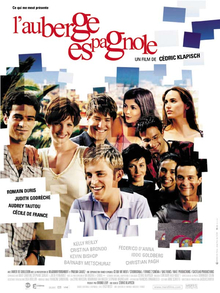
La cabane espagnole: friendship and film on the beach

Sofia loved to talk and told me her story.
When she lived in a quiet tropical seaside bay
Her folks had rejected her and her friend.
In town they’d set up an open house
And showed a film in the late afternoons.

Some youths attended and all had fun
Soon they’d brought some more friends.
After viewing, they’d talk of film making.
Girls and boys learnt cinema techniques
Studying photo effects, angles and hues.

After Sofia ran out of cash and electricity
They all went outside on the beach front
The youths took to the stage and acted
A story inspired by one of their films.
Their title was  ‘The Spanish Beach Hut’.

Later the two friends built a hut on the beach.
Students  came from overseas, moved in and stayed
Until they decided who were their best friends.
                                                                           The  End


La Cabane Espagnole: amitiés et films à la plage

Sofia qui aimait parler me raconta son histoire.
Elle habitait dans la baie tranquille d’un village tropicale
Et sa famille l’avait repoussée ainsi que son amie.
En ville elles s’installèrent dans une maison
A porte ouverte avec séances de cinéma l’après-midi.

Des jeunes y venaient pour passer de bons moments
Et bientôt amenèrent quelques-uns de leurs amis et amies
Qui finirent la soirée en discutant de techniques de cinéma
Et de certains effets de photographie, d’angle et de lumière.

Lorsque Sofia n’eut plu de fonds pour l’électricité
Ils partirent tous à la plage ou ils présentèrent
Sur scène une histoire inspirée par un de leur films
Il choisirent comme  titre ‘La Cabane Espagnole’.

Alors les deux amies construisirent une cabane sur la plage
Des étudiants vinrent de pays étrangers et restèrent
Jusqu’au jour où ils découvrirent qui étaient leurs meilleurs amis.
                                                                                                             Fin
Best wishes to you at this turning point. What did you do five years ago ? What will you do in five years’ time? I hope to follow the five senses of life. Wish me luck
Time for my eyes to look around? I scan my world and see the friends that are near me
Is my wish now to taste? I relish the food and enjoy eating what’s good for me
Am I ready to sense aroma? I spread fragrances and take in the scent around me
Do I have a feeling to touch things? I pat textures and feel the kind surfaces that I'm able to stroke
Do I have the need to hear sounds? I listen to noises, and heed the gentle murmurs surrounding me.
Happy New 2025 to all
Un High Five pour les Cinq Sens et Cinq Ans. Bonne Année 2025
Je vous envoie mes meilleurs vœux en ce tournant de vie Que faisiez-vous, il y a cinq ans ? Que feriez-vous dans cinq ans ? J’essaierai de suivre le principe des cinq sens Souhaitez-moi bonne chance
Est-ce le moment de regarder ? J'inspecte mon monde et je vois les amis qui m'entourent
Ressent-on un désir de goûter ? Je déguste avec plaisir et profite des bonnes choses à manger
Ai-je besoin d’arôme ? Je fais circuler du parfum et apprécie la senteur des alentours
Veux-je toucher ? Je tâte les textures et ressent la douceur des surfaces suaves
Suis-je décidée à écouter ? Je discerne les sons et les légers murmures autour de moi.
As soon as I left home, I grasped a life of change riding a motorbike and smoking cigarettes to counter my parents’ humdrum daily lifestyle.
A milestone came for me the year of moon landing, I took one giant step, went to Mwinilunga. In North Western Zambia, at the Zambezi source, new folk shared food with me.
No electricity. We burnt wood in the stove, kerosene in the lamps and had a few candles Often left stains of wax on students’ homework books.
At open air concerts, villagers came to sing, to booming drums we danced the Congolese Rumba. I even joined when eight months’ pregnant.
No newspapers in town. A radio and batteries. The sun shone over us its healthy radiant heat. At night, the stars sparkled.
Traces of defiance and of independence are still burning in me. I’ve danced myself away at cultural events, backed First Nations’ requests that their voices be heard.
Yet I’m still waiting to see sparkling stars enlighten the modern world I live in. Suburbia be damned!
Comme je voudrais encore vivre en marge de ce monde
Quand j’ai quitté mes parents j’ai vécu une vie différente Circulant en moto et fumant des cigarettes. Pour contre-carrer leur train-train habituel .
Une étape importante est arrivée pour moi l'année de l'alunissage, j'ai fait un pas géant, Partie pour la Zambie dans le Nord-Ouest Là, à Mwinilunga, à la source du Zambèze, de nouveaux amis partageaient leur nourriture avec moi.
Pas d’électricité. Chez nous, un four à bois, une lampe au kérosène, quelques bougies. Souvent on laissait des tâches de cire en corrigeant les cahiers des élèves.
Les concerts étaient en plein-air. les habitants venaient chanter, Nous dansions, au bruit de tambours sonores, la Rumba Congolaise à laquelle j’ai osé me joindre, bien qu’enceinte de huit mois.
Pas de journaux en ville. Une radio et des piles. Le soleil chaleureux chauffait avec radiance. La nuit, toutes les étoiles étincelaient.
Des traces d’indépendance et de défi brûlent encore en moi. J’ai dansé comme une folle Du temps de réunions interculturelles. J’ai soutenu les requêtes des Premières Nations qui voulaient qu’on écoute leurs voix et leurs paroles.
Mais j’attends encore voir un scintillement d’ étoiles éclairer le monde moderne que j’habite. Maudite soit la vie en banlieue !
The prickly shrubs of life

Why care with such vigour for loose and fluffy scraps,
The past webs of your life that have drifted beyond
Nurture thyself with care and new probes will open
Why wait to enjoy life, you shouldn’t hold-up time!

Success will become you, the feisty self-starter
Dance to musical timbres, your mood will brighten up
And your dreams will revive the pirouettes of your youth
Why wait to enjoy life, you shouldn’t hold-up time!

One night in your dotage you will evoke the days
When you chose to absorb the beauty of your world
Why wait to enjoy life,  you shouldn’t hold-up time!

Skip along the rhythms of the dramatic drums
Why wait to enjoy life,  you shouldn’t hold-up time!
Pick from today’s ramble the prickly shrubs of life.


Quand vous serez bien vieille
(Ronsard - Sonnets pour Hélène, 1578)

Quand vous serez bien vieille, au soir, à la chandelle,
Assise auprès du feu, dévidant et filant,
Direz, chantant mes vers, en vous émerveillant :
Ronsard me célébrait du temps que j’étais belle.

Lors, vous n’aurez servante oyant telle nouvelle,
Déjà sous le labeur à demi sommeillant,
Qui au bruit de mon nom ne s’aille réveillant,
Bénissant votre nom de louange immortelle.

Je serai sous la terre et fantôme sans os :
Par les ombres myrteux je prendrai mon repos :
Vous serez au foyer une vieille accroupie,

Regrettant mon amour et votre fier dédain.
Vivez, si m’en croyez, n’attendez à demain :
Cueillez dès aujourd’hui les roses de la vie.
















 Yayi's Paroles
You must be logged in to post a comment.