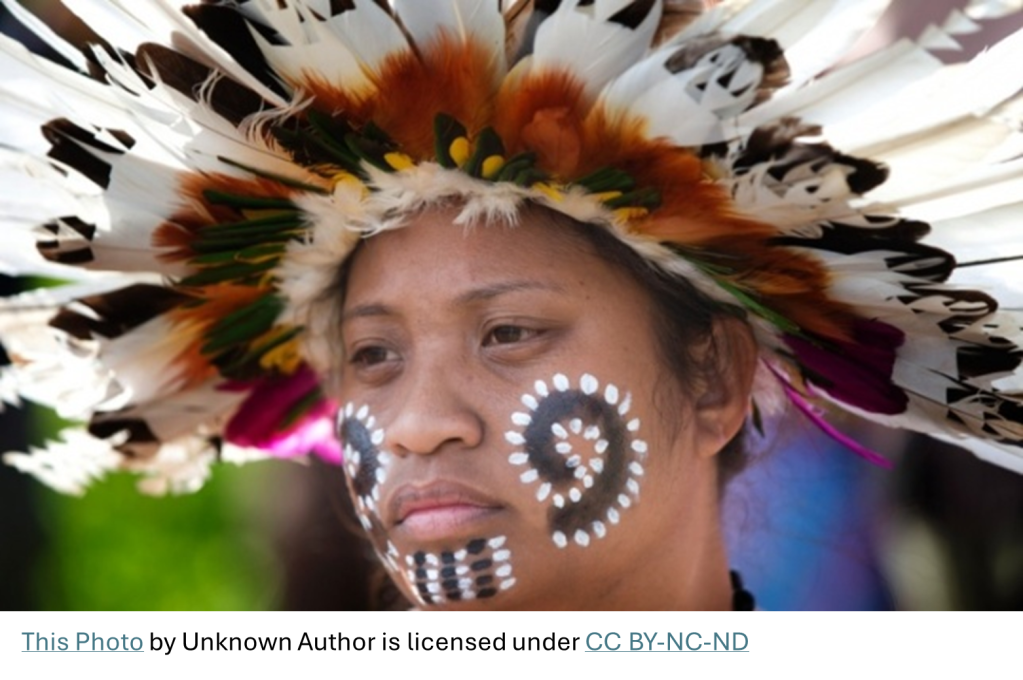
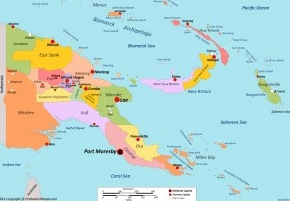
This week is the fiftieth anniversary of Independence in Papua New Guinea. Our family’s ten years in Port Moresby were extremely rewarding. We lived on the university campus from 1976 till 1986. The years after Independence were times of intense development. At the University, students told you they were proud of where they came from their [Ples] and their language [TokPles]. They were good enough to invite us to visit their region, no matter how far away they lived.
We met interesting people in town, and my best friend nicknamed me Mauswarra [the mouth that runs fast in Tok Pisin], in the same way as my family in France used to say I was Un moulin à paroles [a continuous word-windmill in French]. If I still lived in Port Moresby, I would now be called Bubu Mama [Grandma in Hiri Motu].
I am grateful for the warm welcome we received and how much we learned about a varied country with amazing landscapes of soaring mountains and seaside beaches. We had a Christmas lunch at a windy Ella Beach: lettuce leaves flew off, but we were able to eat the slices of cold turkey that remained on our plates. Two events at Idler’s Bay: a difficult one when our daughter was stung by a jelly fish; and a cheerful one when we attended David and Faith’s wedding. We also had a wonderful time at Gabba Gabba where the villagers gave us cool and large watermelons to eat, and their children played cricket with ours. We went to Yule Island on an outrigger canoe with eskis full of supermarket fruit and came back with fresh coconuts.
We were lucky to fly inland to Tapini and back safely in spite of the difficult airstrip; went to Bulolo and Wau to look at the remnants of gold mining and to the best market in the world at Goroka where I bought two of my favourite bilums [traditional string bags]. We also met with friendly people in stunning Madang and in the Island of Bougainville who always expressed the love of self-sufficiency. I cannot do justice to this country, and I regret not visiting other exciting places, like Milne Bay, the Sepik, the Western Highlands, East and West New Britain and Manus.
Papua New Guinea has in excess of 800 languages, Austronesian and Non-Austronesian which are able to do things that western linguists never thought possible. Through verb-stringing and other infixes languages focus on the manner of an action rather than on its timing, which is marked by adverbs. Besides liklik Tok Pisin and Hiri Motu bada (not really ‘much’!) I would have loved to learn languages from the Goilala people.
When we left UPNG students and staff organised a mumu, pig cooked in the ground with taro and vegetable wrapped in banana leaves as a farewell party.
On behalf of my family, it is my pleasure to wish all my friends and their wantoks [relatives], whom I cannot name here because I’d be sure to forget someone special, and in honour of those that have passed away, my absolute best for the 50th Independence Day Celebration on 16th September 2025.
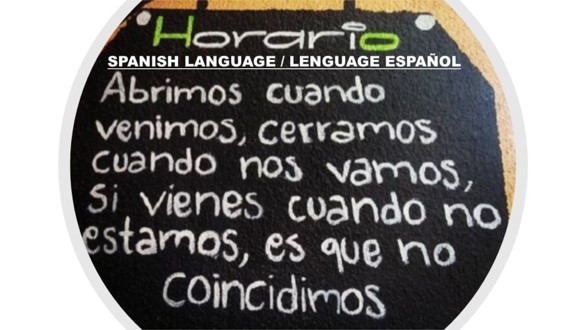
We open when we come,On ouvre quand on arrive, We close when we leave, On ferme quand on part, If you come when we aren’t here, Si vous venez quand on n’est pas là, It’s that we couldn't connectC est qu’on n’a pu faire connexion
Spanish, a language that surprised me!

I’ve always loved languages. Being French, I’ve studied English, Latin, Italian, and now
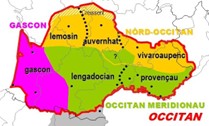
Spanish. I hoped to sort it out because Occitan, my grandparents’ language I used to
hear as a child, was also latino. I thought I’d manage, and I did: Hola, mi amigo and all that.
I loved it, no problem.

The first surprise came with  some words ending in -a: el problema (as in Italian) but also
el idioma  ‘la langue’ and el dia, ‘the day’ were masculine nouns with a feminine ending.
Dia, also used in Occitan, sounded closer to [dio]. The second surprise was to hear Aquellos
to mean ‘those’ in Spanish which reminded me of the Occitan phrase ‘Aquelos Montagnos’ ,
‘these mountains’  from the famous Occitan hymn Se Canto / Se Canta !

I later had daily headaches learning tricky Spanish irregular verbs. I could use puedo to say
‘I can', but the infinitive was poder. Many verbs have had their vowels repeatedly switched
by Spanish speakers over centuries. Spanish irregular verbs worse than in French?  That
was impossible.  What a reprieve when I found I could say ‘to make possible’ using a
regular verb, imposibilitar.


L’Espagnol, une langue qui m’a surprise

J’ai toujours aimé les langues.  Etant Française, j’ai 'étudié l’Anglais, le Latin, l’Italien
et l'Espagnol récemment. J’espérais m’en sortir puisque l’Occitan, la langue que
j’écoutais dans ma jeunesse, parlée par mes grands-parents, était aussi  latino. Tout m’a
plu et j’ai bien commencé : Hola, mi amigo et tout ce qui s’ensuit. Pas trop de problème.

Première surprise, des mots qui finissaient en -a comme les mots féminins, el problema
(comme en Italien), el idioma, ‘le langage’ et el dia ‘le jour’ mais ils étaient masculins.
Dia s’approchait de l’Occitan et il se prononçait plus proche de [dio]. La seconde surprise
était d’entendre Aquellos, qui voulait dire ‘ceux-là’ en Espagnol et qui  me rappelait la
phrase en Occitan 'Aquelos montagnos, ‘ces montagnes’, du célèbre hymne d’Occitanie
Se Canto / Se Canta.

Un mal de tête journalier se révéla face aux pénibles verbes irréguliers de l’Espagnol.
Je pouvais dire puedo  pour ‘Je peux’ mais poder était son infinitif et comme beaucoup
d’autres verbes, il avait subi une inversion de voyelles par des personnes qui parlaient
l’espagnol sans arrêt pendant des siècles. Les verbes irréguliers espagnols seraient-ils
pires que ceux du Français? Impossible!  Alors avec quiétude je découvris que pour
dire ‘rendre possible’ il existait un verbe régulier, imposibilitar.
Jacques Brel: Quand on n’a que l’amour. Leo Ferre: Paris Canaille Georges Brassens: L’ Auvergnat. Elle est a toi cette chanson
French Chansons /On Chante
I was supposed to read a book, Yet couldn’t even read the news I was better, but still quite weak. After covid, the damned shingles.
Eyes closed, I played the olden tunes of my adolescence in France Some said it must be nostalgia, I called it French songs on my phone.
Ils chantent eux, moi je fredonne, et je murmure une mélodie émettant l’écho du terroir, qui me parle d’un lointain chez moi.
Piaf et sa Môme lance les chanteurs dont les paroles, plus que les airs, sont restées, ancrées dans ma peau.
Aznavour s’y Voyait Déjà, Mais Jacques Brel n’avait Que l’Amour, Brassens nous donna Cette Chanson Jean Ferrat chanta sa Montagne, Leo Ferré Paris Canaille.
Et moi j’entonne Le Se Canto, l’hymne occitan de mon pays Qui est le mien. Well, used to be.
Quand on n’a que l’amour
À s’offrir en partage Au jour du grand voyage Qu’est notre grand amour Quand on n’a que l’amour Mon amour, toi et moi Pour qu’éclatent de joie Chaque heure et chaque jour … Quand on n’a que l’amour Pour parler aux canons Et rien qu’une chanson Pour convaincre un tambour Alors sans avoir rien Que la force d’aimer Nous aurons dans nos mains Amis le monde entier
Chanson pour l’Auvergnat
Elle est à toi cette chanson Toi l’Auvergnat qui, sans façon M’as donné quatre bouts de bois Quand dans ma vie il faisait froid Toi qui m’as donné du feu quand Les croquantes et les croquants Tous les gens bien intentionnés M’avaient fermé la porte au nez Ce n’était rien qu’un feu de bois Mais il m’avait chauffé le corps Et dans mon âme, il brûle encore À la manière d’un feu de joie Toi, l’Auvergnat quand tu mourras Quand le croque-mort t’emportera Qu’il te conduise à travers ciel Au père éternel …
Elle est à toi cette chanson Toi l’étranger qui, sans façon D’un air malheureux m’as souri Lorsque les gendarmes m’ont pris Toi qui n’as pas applaudi quand Les croquantes et les croquants Tous les gens bien intentionnés Riaient de me voir emmené Ce n’était rien qu’un peu de miel Mais il m’avait chauffé le corps Et dans mon âme, il brûle encore À la manière d’un grand soleil Toi, l’Étranger quand tu mourras Quand le croque-mort t’emportera Qu’il te conduise à travers ciel Au père éternel
When you reach 8 times Ten, you can at last smile and laugh, with no concerns or worries in spite of a sore foot, hip or head. It’s quite easy: lean slightly back and you end up standing quite straight.
Quatre Vingt Mots
Quand on a '4xVins', on peut enfin rire et sourire sans trop d’inquiétude, cela malgré son mal au pied, mal à la hanche ou à la tête. Il suffit de se pencher en arrière et on se tient droit!
International Mother Language Day | United Nations

The Mother Language is the first language we’ve known and
we identify with. It’s also called the First or Principal language.
Education in the mother language means that instruction is
made in that language, which is also taught as a subject. In
bilingual education two languages are used for instruction.

No need to be edgy; no tripping on jokes,
say it straight.
No need for a silent pause; no puzzling over context,
burst into laughter.
No need to be tongue-tied; no hesitation choosing a word,
just verbalise it.


Journée Internationale de la Langue Maternelle | Nations Unies

La Langue Maternelle est la première langue qu’on connaisse
et avec laquelle on s’identifie. Elle s’appelle aussi la Première
langue ou langue Principale. L’enseignement dans la langue
maternelle signifie que l’instruction se fait dans la langue
maternelle qui est aussi un sujet enseigné.  Dans l’éducation
bilingue deux langues servent d’instruction.

Pas besoin d’être tendu ; on ne gâtera pas la plaisanterie,
disons ce que nous pensons !
Pas besoin de pause silencieuse ; ni de reflection sur le contexte,
éclatons de rire !
Pas besoin de tâter le terrain, d’ hésiter pour un choix de mot,
simplement prononçons-nous !
      Today there will  be music
      in many countries
      and some Australian cities

     but May Day is not celebrated at all
      in Adelaide where I moved to.
     I’m nostalgic as in France it was always
      a public holiday for Labour Day.
        On my way home I would be welcome
        by the most subtle of spring scents,
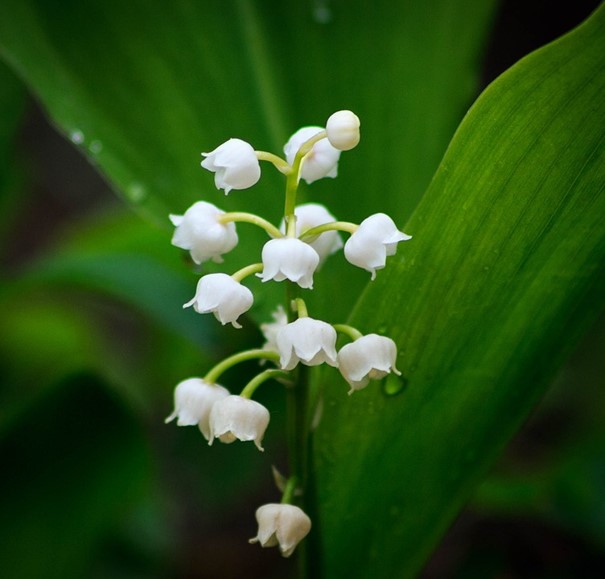
        the lily of the valley with white radiant
        translucent bell shapes resting
        on bright green stems.
        On the First of May anyone

                     giving  you a sprig of lily of the valley
                     would wish you good luck.
                     I’ll miss the scent and singing  for workers.
Shaping a Future of Rights:Freedom-of-expression for all human rights
Maria Ressa, a Philippines’ journalist, Nobel Peace Prize recipient for … ‘efforts to safeguard freedom of expression, which is a precondition for democracy and lasting peace.’
Freedom of Expression as a Driver for all Human Rights – 30th Anniversary
In 2021 for the first time the Nobel Peace Prize was awarded to 2 journalists, Dmitry Muratov and Maria Ressa, Co-founder and CEO of Rappler who also received the UNESCO/Guillermo Cano World Press Freedom Prize.
‘Without truth, you can’t have trust. Without trust, we have no shared reality, no democracy, and it becomes impossible to deal with our world’s existential problems: climate, coronavirus, the battle for truth.
Awarded to her for ‘efforts to safeguard freedom of expression,
which is a precondition for democracy and lasting peace.’
La Liberte d’expression fait base aux Droits de l’Homme – 30 IEME ANNEE:
En 2021 pour la première fois le Prix Nobel de la Paix fut présenté à 2 Journalistes, Dmitry Muratov and Maria Ressa, la Co-fondratice et Directrice de Rappler qui reçut aussi le Prix mondial de la Liberté de la Presse Cano.
‘Sans les faits, il n’y a pas de vérité. Sans la vérité , il n’y a pas de confiance. Sans confiance, il n’y a pas d’ échange de réalité, de démocratie, et il n’est plus possible de résoudre les problèmes existentiels dans le monde : le climat, le coronavirus, le conflit sur la vérité.’
Prix pesente a elle pour ‘l’effort à sauvegarder la liberté de la parole,
qui est une précondition à la démocratie et au maintien de la paix.’
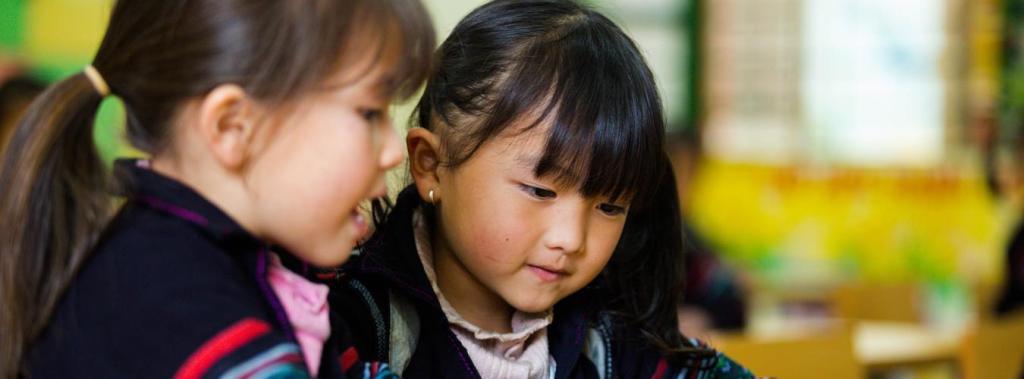
Students learning in their language and Vietnamese Photo UNICEF Hoang Le Vu
Mother Tongue : 21 Feb International Mother Language Day
Although I feel relaxed among friends I become edgy whenever I can’t find an immediate appropriate English idiom in response to a statement that I’ve liked or to a story that’s made me laugh. In French I might formulate a pun, a rhyme, or even a punchline.
Instead I just stand tongue-tied which for me is awkward, and I’m unable to share my view the way I would wish. I believe the spontaneous repartee you’d give in your mother tongue is the element most missing to bilingual speakers. I’m glad to hear that 21 February is International Mother Language Day.
Langue Maternelle : 21 Fev Journée internationale de la langue maternelle
Bien que décontractée avec mes amis, je deviens moins à l’aise si je ne peux trouver la phrase idiomatique instantanée en Anglais en réponse à un récit qui m’a plu ou à une histoire qui m’a fait rire. En Français je formulerais un jeu de mots, une rime avec même le point final.
Mais sans trouver le mot juste je deviens muette, ce qui pour moi est gênant, et je ne peux exprimer mon point de vue comme je voudrais. Je pense que la riposte spontanée que l’on donne dans sa langue maternelle est l’élément qui manque le plus aux personnes bilingues. Je suis heureuse que le 21 Février soit la Journée internationale de la langue maternelle.









 but May Day is not celebrated at all
in Adelaide where I moved to.
I’m nostalgic as in France it was always
a public holiday for Labour Day.
but May Day is not celebrated at all
in Adelaide where I moved to.
I’m nostalgic as in France it was always
a public holiday for Labour Day.




 Yayi's Paroles
You must be logged in to post a comment.