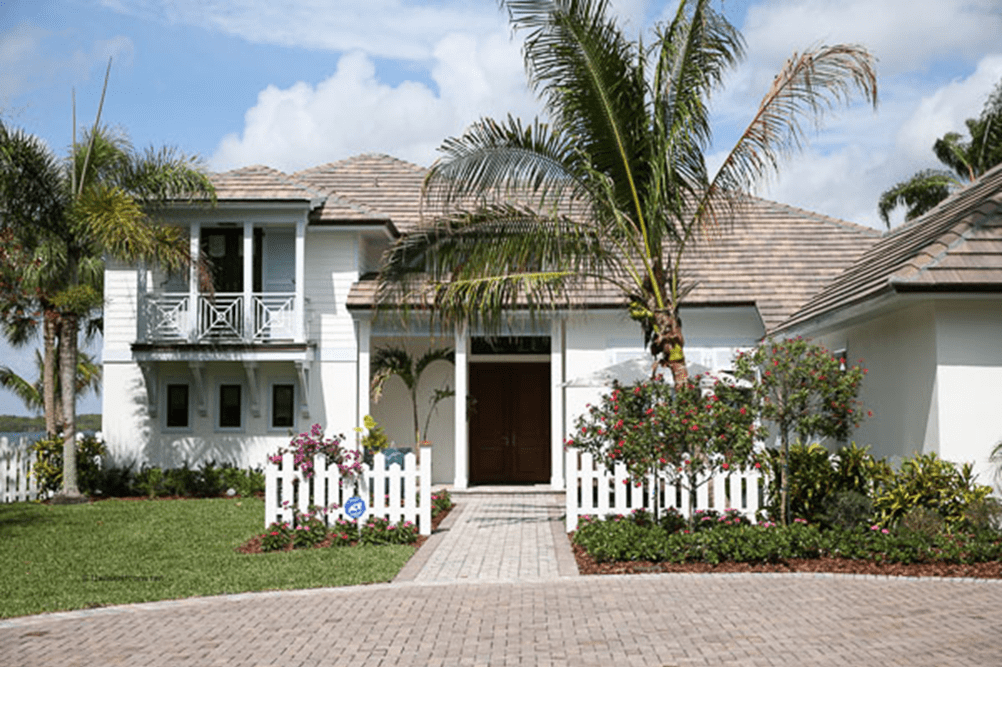
I would love to devise the ideal home based on some of my memories. My parents’ home in France had a cellar to keep wood, wine and canned vegetables. This was a very functional home for my mother who loved gardening and keeping preserves.
One of the houses where I lived for a very short time had an upper floor with a study which opened onto a balcony. I’d love this to have its windows protected by shutters, against cyclones, and the heat, as it was customary where I lived in for ten years in the cyclone belt of Western Australia.
I would like a home, like one I once lived in for a while in Papua New Guinea, to have an outdoor area that includes a long verandah enclosed for privacy where the children walked their bicycles through the gate. The surrounding breeze blocks also kept our dog safe from running away, as well as it allowed us to try and raise a pet turtle. Sad events can occur if ever the dog escaped onto the open and was run over on the road or if the turtle drowned in a pool of water.
More exciting times happened when I grew beautiful white frangipani flowers next to purple bougainvillea. A mango tree was often depleted by children on their way to school. I think pawpaw trees would do better, if the region was not subject to violent cyclonic winds.
Located in a in a friendly area, the premises allowed children to run in and out of the nearby houses, share meals and cold drinks or have sleepovers at one another’s.
When all was well, the children bouncing in and out of a home-made swing, climbing up and down the trees I’d recline and reflect in peace upstairs on the balcony which had a great view of distant hills.
This is the imagined compound of my dream which has features of some of the houses I lived in, with a lot of extra space for comfort.
La maison de mes souvenirs.
Je voudrais raconter ma maison idéale en m’inspirant de celles dans lesquelles j’ai vécu. La maison de mes parents en France avait une cave et ma mère qui jardinait y gardait ses conserves, mon père son vin et du bois.
J’ai une fois pendant peu de temps vécu en Australie dans une maison qui avait un petit bureau qui ouvrait sur un balcon. J’aimerais que les fenêtres aient, comme dans la zone cyclonique de l’Australie Occidentale ou j’ai habité pendant dix ans, des volets qui protègent des ouragans, des vents et de la chaleur.
Je serais heureuse de trouver une maison avec un grand jardin, comme ou j’ai vécu quelque temps en Papouasie Nouvelle Guinée, et sur le côté une longue verandah qui avait un portail par lequel les enfants rangeaient leur vélo et entourée de blocks qui permettaient d’élever un chien, et même si possible une tortue. Malheureusement le chien pourrait s’échapper et se faire écraser sur la route ou la tortue rentrer dans un bol d’eau et se noyer, et ce serait très triste.
La vie était beaucoup plus agréable quand je faisais pousser des frangipanes à fleurs blanches avec des bougainvillées mauves. Un manguier bien qu’il soit agréable se fait prendre tous ses fruits par les enfants. Je préfèrerais des papayers pourvu qu’il n’y ait pas de vents cycloniques pour les décimer.
La maison étant située dans un quartier agréable, les enfants pourraient se rendre visite les uns aux autres, et trouver à manger ou à se rafraichir chez leurs amis, à monter aux arbres ou sur les balançoires et passer la nuit les uns chez les autres. Quand tout va bien, je peux m’allonger sans souci sur mon balcon et contempler la vue de distantes collines.
C’est ainsi que j’imagine la composition d’une demeure de mes rêves, avec des éléments de mon passé mais aussi un supplément d’espace et de confort.
They have advised not to stay quiet. My friend complained about my neighbour’s laziness. I asked him, ‘Was she idle or was it that she couldn’t find work?’ If I stayed quiet, I allowed my position as a non-Indigenous person to reinforce his views.
To deal with racism we must escape our comfort zone and reflect on our biases, often based on lack of knowledge. Once I thought all women from India were Hindus who wore saris.
I need to understand my neighbour’s cultural issues, often hidden or unspoken. ‘Racism stops with me’ encouraged me to speak. It’s helped me. Will it help others?
Trouver un nouvel horizon
On nous conseille de parler franchement. Un de mes amis a critiqué ma voisine en disant qu’elle ne voulait pas travailler. Je lui ai demandé, ‘Est-ce qu’elle ne voulait pas travailler ou serait-ce qu’elle ne pouvait pas trouver du travail’. Si je ne donnais pas de réplique à sa remarque je confirmerais l’avantage que j’ai en tant que personne non-Indigène et je renforcerais ce reproche.
Pour comprendre le racisme il faut renoncer à sa zone de confort et réfléchir sur nos préjugés, qui sont souvent dus à notre manque de connaissance. Il y a plusieurs années je pensais qu’en Inde toutes les femmes étaient Hindou et portaient des saris.
On a besoin de vérifier les conditions culturelles des personnes autour de nous car la réalité peut rester cachée ou tacite. A la suite du programme ‘Racism stops with me’, je n'ai eu plus peur de m'exprimer, ce qui m’a aidé. Cela va-t-il aider d’autres ?
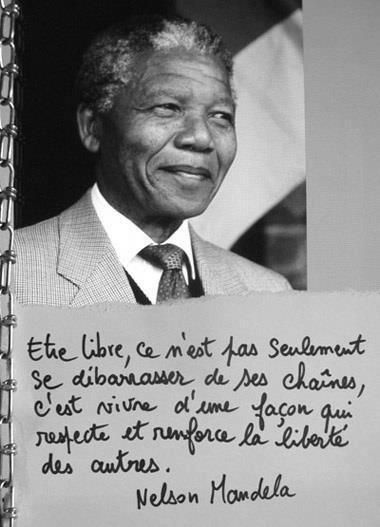
                    “For to be free is not merely to cast off one's chains, but to live
                          in a way that respects and reinforces others' freedom.”
                         Nelson Mandela, Long Walk to Freedom, 1994.
                                                  [Pinterest Pic]
Looking for Freedom: Embracing change and identity


Freedom came to me
the day I moved from home,
my folk living in a gendarmerie.

I withdrew from France,
I left, and rejected
all my parents had intended for me.

Straight across to England I faced its frozen winds.
With luck I happened to bump into a young man
who wanted to travel, so we went overseas.

To Africa where Zambia became Independent.
Years of pleasure in the teaching
of the young and motivated learners!

Following old traditions that seemed new to me,
I adapted, out in the bush, used a hot water bottle
for my newborn who needed an incubator.

Then in the Pacific, Papua New Guinea
also gained its Independence. My family surrounded
by varied Indigenous folks who spoke multiple languages.

Travels and friendships were soon to end.
Integrated I’d thought, but we were to migrate.
Australia. How would it modernise our lifestyle?

There, ‘shock and awe’, we glared. Who’d fill the gap,
to bring in the Aborigines, who possessed less resources
than our friends in Africa or the Pacific?

I’d need to free myself again. I didn’t want to become
more French than before. Still I remained wondering
how long it’d take for Aboriginal culture
to become ‘respected and reinforced’, here.


Liberté : Accueillir un renouveau d’identité


La liberté, je l’ai cherchée.
Je décidai, un jour, de quitter la maison,
mon père gendarme, je partis sans les clés.

J’abandonnai la France, rejetai mon passé
tout ce que mes parents pour moi auraient voulu.
Je laissai ma famille et traversai la Manche.

Les vents Anglo-Saxons me refroidirent.
Enfin, je rencontrai un jeune homme qui voulait
rallumer sa vie en voyageant à l’étranger.

En Afrique, la Zambie prit son indépendance.
Des années de plaisir à enseigner
des étudiants jeunes et très motivés !

Des traditions anciennes, quoique nouvelles pour moi.
Je m’adaptai. Un jour en pleine brousse, mon bébé
n’eut pour couveuse qu’une simple bouillotte toute chaude.

Plus tard dans le Pacifique, La Papouasie Nouvelle Guinée
eut, elle aussi, son Indépendance. Ma famille fut alors entourée
de personnes Indigènes dont les langues offraient multiples variétés.

Soudain les voyages et les rencontres amicales se terminèrent,
je me croyais intégrée mais l’heure de notre rapatriement arriva.
Emigrants en Australie, aurons-nous une vie plus modernisée ?

‘Le choc et l’admiration’ deviennent ‘Rapide Dominance’.
Comment garnir accès pour les Aborigènes
qui avaient moins de ressources que nos amis
d’Afrique ou du Pacifique ?

Aurais-je donc le temps de me relibérer
Ou deviendrais-je plus Française qu’avant ?
Mais combien de temps pour que la culture
Aborigène soit ‘respectée et renforcée’, ici ?
HAPPY ‘26 WISHES IN 26 LANGUAGES from Anne-Marie For practical reasons, I chose to use the Latin alphabet. I send my warm wishes (shall I say, I hope) for everyone to enjoy a peaceful life in 2026. As we all know, cultures and calendars show differences from one another. In fact, my ‘western’ concept of wishing Happy New Year can be conveyed with different phrases around the world. I’ve tried to transcribe the greetings’ literal translations, but please let me know of any corrections or alternatives.
1 Arabic sanah jadīdah sa’ida[Happy New Year] 2 Basque Urte berri on[Happy New Year] 3 Chinese Cantonese gùng héi faat chōi[Wishing you prosperity, wealth] /Mandarin gōngxǐ fācái [Happiness and Prosperity] Chinese New Year17 Feb 4 Ci Lunda Shikenu mwani[Welcome, Are you good?] 5 Finnish Hyvää uutta vuotta[Good New Year] 6 FrenchBonne Année/Occitan: Bona annada [Good Year] 7 GermanFrohes neues Jahr [Happy New Year] 8 GreekEftychisméno to néo étos [Happy New Year] 9 Hebrew Shana Tova u-Metukah[Good Sweet Year] Jewish New Year 12 Sept 10 Hindi Nav Varsh Mangalmay Ho[May the New Year be Auspicious)] 11 Hiri MotuTenkyu long bung tumora [Thank you for Tomorrow] 12 Irish GaelicAthbhliain faoi mhaise duit[Prosperous New Year] 13 ItalianFelice anno nuovo [Happy New Year] 14 Kaurna Niina Marni[Hello/Are you good] 15 Indonesian Selamat tahun baru [Greetings for the New Year] 16 MaoriNgā mihi o te tau hou[Greetings/Thanks for the New Year] 17 Ndebele Umnyaka omuhle[Beautiful Year] 18 PolishSzczęśliwego Nowego Roku [Happy New Year] Used for Christmas and the New Year Season 19 RomanianUn An Nou Fericit [A New Year happy] 20 Scots Lang may yer lum reek[Long may your chimney smoke] 21 Spanish Feliz año nuevo [Happy New Year] 22 SwedishGott nytt år[Good New Year] 23 Tok PisinHapi Niu Yia [Happy New Year] 24 Vietnamese Chúc mừng năm mới [Congratulations on the year new] 25 WangkatjaPalya [Hi, Good]/Ngaanyatjarra Pitjantjatjara Yankunytjatjara Palya nyinama[Stay good, sitting down] Courtesy NPY Women's Council 26 Yindjibarndi: Wanthiwa[Welcome, Are you good?]
All errors are mine. Please feel free to correct them, write a comment, or like.
En Français Pour des raisons de facilité, j’ai choisi d’utiliser l’alphabet Romain.
Je souhaite (ou plutôt j’espère) que chacun puisse vivre une année 2026 paisible. Nous savons que les cultures et les calendriers présentent des différences. En effet, ma conception ‘occidentale’ des vœux de bonne année peut être exprimée de différentes manières à travers le monde. J’ai tenté de transcrire la traduction littérale des vœux, mais n'hésitez pas à me faire part de toute correction ou suggestion. Je me porte responsable de toute erreur. N’hésitez pas à me faire part de vos corrections et suggestions. Faites aussi un commentaire ou un "Like’.
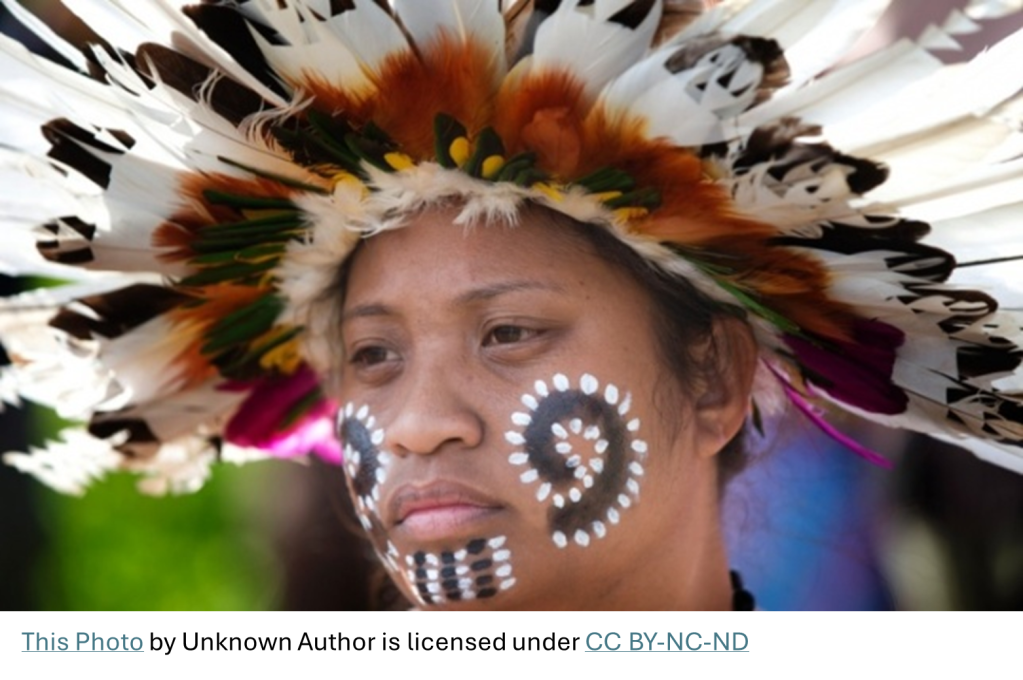
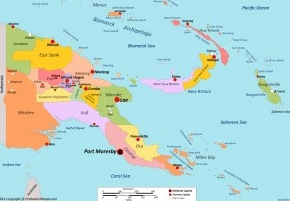
This week is the fiftieth anniversary of Independence in Papua New Guinea. Our family’s ten years in Port Moresby were extremely rewarding. We lived on the university campus from 1976 till 1986. The years after Independence were times of intense development. At the University, students told you they were proud of where they came from their [Ples] and their language [TokPles]. They were good enough to invite us to visit their region, no matter how far away they lived.
We met interesting people in town, and my best friend nicknamed me Mauswarra [the mouth that runs fast in Tok Pisin], in the same way as my family in France used to say I was Un moulin à paroles [a continuous word-windmill in French]. If I still lived in Port Moresby, I would now be called Bubu Mama [Grandma in Hiri Motu].
I am grateful for the warm welcome we received and how much we learned about a varied country with amazing landscapes of soaring mountains and seaside beaches. We had a Christmas lunch at a windy Ella Beach: lettuce leaves flew off, but we were able to eat the slices of cold turkey that remained on our plates. Two events at Idler’s Bay: a difficult one when our daughter was stung by a jelly fish; and a cheerful one when we attended David and Faith’s wedding. We also had a wonderful time at Gabba Gabba where the villagers gave us cool and large watermelons to eat, and their children played cricket with ours. We went to Yule Island on an outrigger canoe with eskis full of supermarket fruit and came back with fresh coconuts.
We were lucky to fly inland to Tapini and back safely in spite of the difficult airstrip; went to Bulolo and Wau to look at the remnants of gold mining and to the best market in the world at Goroka where I bought two of my favourite bilums [traditional string bags]. We also met with friendly people in stunning Madang and in the Island of Bougainville who always expressed the love of self-sufficiency. I cannot do justice to this country, and I regret not visiting other exciting places, like Milne Bay, the Sepik, the Western Highlands, East and West New Britain and Manus.
Papua New Guinea has in excess of 800 languages, Austronesian and Non-Austronesian which are able to do things that western linguists never thought possible. Through verb-stringing and other infixes languages focus on the manner of an action rather than on its timing, which is marked by adverbs. Besides liklik Tok Pisin and Hiri Motu bada (not really ‘much’!) I would have loved to learn languages from the Goilala people.
When we left UPNG students and staff organised a mumu, pig cooked in the ground with taro and vegetable wrapped in banana leaves as a farewell party.
On behalf of my family, it is my pleasure to wish all my friends and their wantoks [relatives], whom I cannot name here because I’d be sure to forget someone special, and in honour of those that have passed away, my absolute best for the 50th Independence Day Celebration on 16th September 2025.
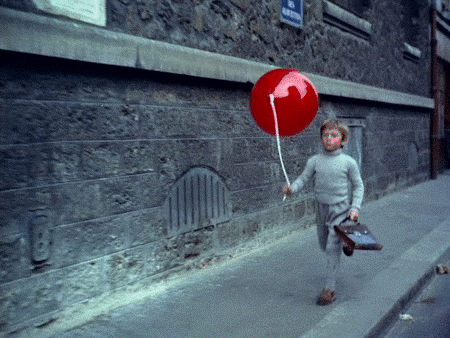
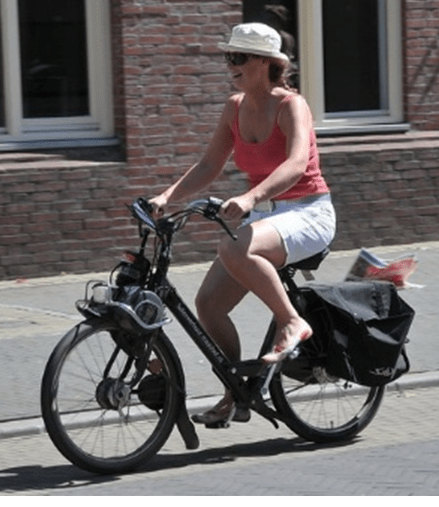
I want to talk of a two-wheel transport method, but it’s not the bicycle behind which my father used to scream ‘Look ahead of you’ but the vehicle I’ve loved for most of my life, the Vélosolex (which, I regret, doesn’t exist anymore in France).
Warning: Do not be confused by imitations.
A How to ride a Vélosolex: 1 Note the motor is over the front wheel behind the handlebar. 2a Sit and ride the solex like a bike, then press the black vertical stick gently onto the motor to make it start. 2b Or run alongside the bicycle releasing the black vertical stick on to the front wheel and jump fast onto the saddle. (Warning: that is not a safe technique, you could fall). 3 Once you hold on to the handlebar there is no accelerator as in motorbikes, cars or some bicycles, so you accelerate by pressing on with the right handlebar, depending on whether you want to or not.
B Advantages of the Vélosolex: 1 You are neither as slow nor as fast as other two wheelers, you’ll find your own rhythm. 2 You are not a motor cyclist either who revs past people outside shops or café customers on street pavements to make noise or contaminate the atmosphere. 3 You can go up parallel to a queue of vehicles. Watch out that no one opens their car doors. 4 Thanks to your solex, you can attend your university lectures on time.
Le Vélosolex, une icône de France
Je veux parler d’un mode de transport à deux roues, mais ce n’est pas la petite bicyclette derrière laquelle mon père criait ‘Regarde devant toi’ mais le véhicule que j’ai le plus aimé toute ma vie, le Vélosolex (qui, je regrette, n’existe plus).
Attention : Ne vous laissez pas tromper par des imitations.
A Comment rouler en Vélosolex : 1 D’abord trouver le moteur au-dessus de la roue avant, derrière le guidon. 2a S’asseoir sur le solex comme à vélo et pousser le bâtant noir du moteur légèrement sur la roue avant. Le moteur se branchera. 2b Ou partir en courant le long du solex, pousser le bâtant noir du moteur à la main, et monter très vite sur la selle. (Attention : cette méthode est dangereuse, vous pouvez tomber). 3 Quand on tient le guidon, il n’y a pas de levier de vitesse comme sur les motos, voitures ou même certains vélos, donc on accélère en appuyant avec la manette de la main droite, si on le veut.
B Les avantages du Vélosolex : 1 On n’est ni aussi lent ni aussi rapide que les cyclistes, on trouve son rythme soi-même. 2 On n’est pas non plus un motard qui change de vitesse, en dépassant les magasins et les gens au café, sur le bord de la rue pour faire du bruit et contaminer l’atmosphère. 3 On peut, s’il y a une file de voitures remonter parallèle à tous les véhicules. Attention qu’elles n’ouvrent pas leurs portières ! 4 Grace à votre solex vous pouvez arriver à l’université pour vos cours à l' heure.
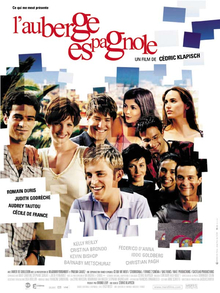
La cabane espagnole: friendship and film on the beach

Sofia loved to talk and told me her story.
When she lived in a quiet tropical seaside bay
Her folks had rejected her and her friend.
In town they’d set up an open house
And showed a film in the late afternoons.

Some youths attended and all had fun
Soon they’d brought some more friends.
After viewing, they’d talk of film making.
Girls and boys learnt cinema techniques
Studying photo effects, angles and hues.

After Sofia ran out of cash and electricity
They all went outside on the beach front
The youths took to the stage and acted
A story inspired by one of their films.
Their title was  ‘The Spanish Beach Hut’.

Later the two friends built a hut on the beach.
Students  came from overseas, moved in and stayed
Until they decided who were their best friends.
                                                                           The  End


La Cabane Espagnole: amitiés et films à la plage

Sofia qui aimait parler me raconta son histoire.
Elle habitait dans la baie tranquille d’un village tropicale
Et sa famille l’avait repoussée ainsi que son amie.
En ville elles s’installèrent dans une maison
A porte ouverte avec séances de cinéma l’après-midi.

Des jeunes y venaient pour passer de bons moments
Et bientôt amenèrent quelques-uns de leurs amis et amies
Qui finirent la soirée en discutant de techniques de cinéma
Et de certains effets de photographie, d’angle et de lumière.

Lorsque Sofia n’eut plu de fonds pour l’électricité
Ils partirent tous à la plage ou ils présentèrent
Sur scène une histoire inspirée par un de leur films
Il choisirent comme  titre ‘La Cabane Espagnole’.

Alors les deux amies construisirent une cabane sur la plage
Des étudiants vinrent de pays étrangers et restèrent
Jusqu’au jour où ils découvrirent qui étaient leurs meilleurs amis.
                                                                                                             Fin
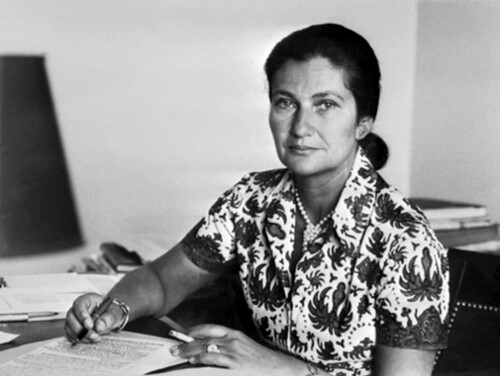
Who would still confuse Simone Veil (1927-2017) with Simone Weil, a humanist and mystic philosopher who died young in England (1909-1943)? Both women with similar names are from France, my country of origin.
It is Simone Veil I want to discuss. She was a French politician as well as a holocaust survivor. While studying for her Baccalauréat in April 1944, she was arrested by the Gestapo together with her whole family in Nice.
Her father and brother were deported to Lithuania. Never seen again, they were listed as executed. With her mother and two sisters she went to Auschwitz and later went on the ‘death march’ to Brobeck and Bergen-Belsen. There her mother died of Typhus while Simone who said she was below eighteen was enlisted to do forced labour. The three sisters managed to be released separately from 1945.
On her return Simone studied law and politics and later became the French Minister for Health. I was thirty years old when in 1975 the 'Veil Act' to legalise abortion was passed. I heard her dedicated speeches in the National Assembly that affirmed a woman’s right to bring pregnancy to interruption. She was convincing and managed to rally all the male representatives of the National Assembly.
This was significant for me who had witnessed through some good friends of mine the difficulties women had to survive because of numerous illegal abortions in the 1960s in France. Since then Simone Veil received the nickname of ‘La Merveille’ [La Mère Veil - The Marvellous Mother] from women and feminists who respect and revere her.
Indefatigable as a politician, she became the first woman to join the European Parliament and received a wide range of high-level awards eventually receiving the Légion d’Honneur in 2012. She was re-interred with her husband in the Pantheon in 2018.
Later a Prize, awarded on International Women’s Day, was instituted in her name to honour people who fight for women’s causes. Living overseas, I am lucky to have had access to ‘A Life,’ her 2009 memoir and to the 2022 film ‘Simone Veil A woman of the century.’
Simone Veil, femme qui m’a inspiré
Qui encore continue à confondre Simone Veil (1917-2017) avec Simone Weil, une philosophe humaniste et mystique qui mourut jeune en Angleterre (1909–1943) ? Deux femmes aux noms semblables venant de France, mon pays d’origine.
C’est de Simone Veil, dont je veux parler, une femme politique Française qui avait survécut l’holocauste. Elle préparait son Baccalauréat quand elle fut arrêtée avec toute sa famille par la Gestapo en Avril 1944 à Nice.
Son père et son frère, déportés en Lituanie n’ont jamais été revus et furent déclarés exterminés. Avec sa mère et ses sœurs elle partit pour Auschwitz et suivit les 'marches de la mort' à Brobeck, puis Bergen-Belsen où sa mère mourut du Typhus. Simone disant qu’elle avait moins de dix-huit ans fut retenue pour faire des travaux forcés. Les trois sœurs furent libérées séparément à partir de l’année 1945.
A son retour Simone fit ses études de droit et de politique, et plus tard devint Ministre de la Santé. J’avais 30 ans lorsque en 1975, la 'Loi Veil' légalisa l’avortement. J’ai entendu les discours de Simone Veil qui affirmait l’autonomie de la femme et son droit à une interruption volontaire de grossesse et qui réussirent à persuader tous les représentants masculins de l’assemblée nationale à faire passer cette loi.
C'était un moment important pour moi qui avait été témoin, par l'intermédiaire de quelques-unes de mes amies, des difficultés que les femmes avaient à survivre à cause des nombreux avortements illicites dans les années 1960 en France. Depuis cette année-là Simone Veil a reçu le surnom de ‘La Merveille’ [ la Mère Veil] par les femmes et les féministes qui l’ont révérée et profondément respectée.
Une politicienne infatigable elle devint la première femme élue au Parlement Européen et reçut un grand nombre de prix et La Légion d’Honneur lui fut remise en 2012. Récemment elle fut re-enterrée avec son mari au Panthéon.
Depuis un prix, présenté pour la Journée Internationale de la Femme, fut institué en son nom en honneur des personnes qui améliorent la cause de femmes. Bien que je vive à l’étranger, j’ai pu avoir accès, en Australie, à son mémoire: ‘Une Vie (2009) et au film de 2022 ‘Simone Veil - Une femme du siècle.’
Having a good time is hard. I cannot do it on my own. I need folk around me, a good number is about ten. I like to mix with people I’ve met before, who are from a range of ages. It doesn't mean I will talk to them all at once. It’s more dynamic if we sit down, eat and drink together.
All of a sudden the calmest person in the room makes a joke about what you wear and how strange your voice is. After this, no end of jokes sparkle making us laugh. Somebody declares finding the venue was a real nightmare. Then others complain I delayed them because I went early to their sister’s house hoping to get a lift. It was, they say, the wrong time and the wrong place. Then I burst out laughing and we all have a giggle. My friends take some photos of me scratching my head.
It’s best if I’m able to make fun of me. It is at that stage I realise I’m having a good time at last.
Comment bien s’amuser
Il est difficile de bien s’amuser. Mais je ne sais pas faire ça toute seule. J’ai besoin de monde autour de moi, environ dix est un bon nombre. Il s’agit de personnes d’âge différent que je connais déjà. Il est évident qu'on ne se parlera pas tous en même temps. Pour la dynamique de ce groupe, le plus simple est de s’asseoir, de manger et boire ensemble.
Soudain la personne la plus calme du groupe fait une plaisanterie sur tes habits et dit que tu parles de façon bizarre. A ce moment là, toute la salle éclate de rire. Quelqu’un assure que le chemin qu’on a pris pour venir à cet endroit donnait l’impression qu’on était parti au bout du monde. D’autres se plaignent que je les ai retardés car je m’étais trompée de point de départ. J’’étais arrivée chez sa sœur très tôt. J'étais là, me dit-on, à un mauvais moment et à la mauvaise adresse. Tout le groupe se met à rire, moi aussi. Quelqu’un prend ma photo pendant que je me gratte la tête.
Tout va bien si je réussis à me moquer de moi. C’est là que je me rends compte que je m'amuse.
As soon as I left home, I grasped a life of change riding a motorbike and smoking cigarettes to counter my parents’ humdrum daily lifestyle.
A milestone came for me the year of moon landing, I took one giant step, went to Mwinilunga. In North Western Zambia, at the Zambezi source, new folk shared food with me.
No electricity. We burnt wood in the stove, kerosene in the lamps and had a few candles Often left stains of wax on students’ homework books.
At open air concerts, villagers came to sing, to booming drums we danced the Congolese Rumba. I even joined when eight months’ pregnant.
No newspapers in town. A radio and batteries. The sun shone over us its healthy radiant heat. At night, the stars sparkled.
Traces of defiance and of independence are still burning in me. I’ve danced myself away at cultural events, backed First Nations’ requests that their voices be heard.
Yet I’m still waiting to see sparkling stars enlighten the modern world I live in. Suburbia be damned!
Comme je voudrais encore vivre en marge de ce monde
Quand j’ai quitté mes parents j’ai vécu une vie différente Circulant en moto et fumant des cigarettes. Pour contre-carrer leur train-train habituel .
Une étape importante est arrivée pour moi l'année de l'alunissage, j'ai fait un pas géant, Partie pour la Zambie dans le Nord-Ouest Là, à Mwinilunga, à la source du Zambèze, de nouveaux amis partageaient leur nourriture avec moi.
Pas d’électricité. Chez nous, un four à bois, une lampe au kérosène, quelques bougies. Souvent on laissait des tâches de cire en corrigeant les cahiers des élèves.
Les concerts étaient en plein-air. les habitants venaient chanter, Nous dansions, au bruit de tambours sonores, la Rumba Congolaise à laquelle j’ai osé me joindre, bien qu’enceinte de huit mois.
Pas de journaux en ville. Une radio et des piles. Le soleil chaleureux chauffait avec radiance. La nuit, toutes les étoiles étincelaient.
Des traces d’indépendance et de défi brûlent encore en moi. J’ai dansé comme une folle Du temps de réunions interculturelles. J’ai soutenu les requêtes des Premières Nations qui voulaient qu’on écoute leurs voix et leurs paroles.
Mais j’attends encore voir un scintillement d’ étoiles éclairer le monde moderne que j’habite. Maudite soit la vie en banlieue !












 Yayi's Paroles
You must be logged in to post a comment.