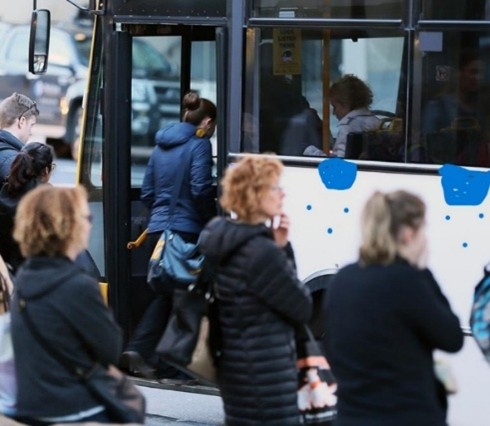
He’s standing on the kerb waiting for her. He looks to his left when he hears the regular pounding of someone’s feet approaching from the corner street. He turns around but doesn’t think she’ll arrive from the side street as they don't ever go there. It won’t be her, he shrugs. Yet he glances again, someone, with a hair bun just like hers, is running. He opens his mouth, but she’s raced past him and stepped off the pavement. Is she about to fall? No, instead she follows a man onto the bus. The blue bus becomes distant and blurred.
Une attente poignante
Debout sur le trottoir, il l’attend. Il regarde à gauche lorsqu’il entend venant de la petite rue de côté le son régulier de pieds qui frappent sur le trottoir. Il se retourne mais ne pense pas qu’elle vienne de cette ruelle car ils ne vont jamais là. Il hausse les épaules, ce ne sera pas elle. Mais il jette un autre coup d’œil, quelqu’un avec un petit chignon comme le sien, arrive en courant. Il ouvre la bouche mais elle passe très vite devant lui et descend du trottoir. Va-t-elle tomber ? Non, c’est plutôt qu’elle a suivi un homme dans l’autobus. L’autobus bleu devient distant et flou.
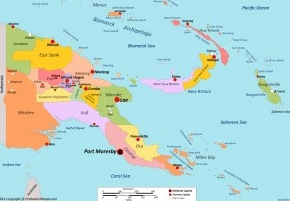
This week is the fiftieth anniversary of Independence in Papua New Guinea. Our family’s ten years in Port Moresby were extremely rewarding. We lived on the university campus from 1976 till 1986. The years after Independence were times of intense development. At the University, students told you they were proud of where they came from their [Ples] and their language [TokPles]. They were good enough to invite us to visit their region, no matter how far away they lived.
We met interesting people in town, and my best friend nicknamed me Mauswarra [the mouth that runs fast in Tok Pisin], in the same way as my family in France used to say I was Un moulin à paroles [a continuous word-windmill in French]. If I still lived in Port Moresby, I would now be called Bubu Mama [Grandma in Hiri Motu].
I am grateful for the warm welcome we received and how much we learned about a varied country with amazing landscapes of soaring mountains and seaside beaches. We had a Christmas lunch at a windy Ella Beach: lettuce leaves flew off, but we were able to eat the slices of cold turkey that remained on our plates. Two events at Idler’s Bay: a difficult one when our daughter was stung by a jelly fish; and a cheerful one when we attended David and Faith’s wedding. We also had a wonderful time at Gabba Gabba where the villagers gave us cool and large watermelons to eat, and their children played cricket with ours. We went to Yule Island on an outrigger canoe with eskis full of supermarket fruit and came back with fresh coconuts.
We were lucky to fly inland to Tapini and back safely in spite of the difficult airstrip; went to Bulolo and Wau to look at the remnants of gold mining and to the best market in the world at Goroka where I bought two of my favourite bilums [traditional string bags]. We also met with friendly people in stunning Madang and in the Island of Bougainville who always expressed the love of self-sufficiency. I cannot do justice to this country, and I regret not visiting other exciting places, like Milne Bay, the Sepik, the Western Highlands, East and West New Britain and Manus.
Papua New Guinea has in excess of 800 languages, Austronesian and Non-Austronesian which are able to do things that western linguists never thought possible. Through verb-stringing and other infixes languages focus on the manner of an action rather than on its timing, which is marked by adverbs. Besides liklik Tok Pisin and Hiri Motu bada (not really ‘much’!) I would have loved to learn languages from the Goilala people.
When we left UPNG students and staff organised a mumu, pig cooked in the ground with taro and vegetable wrapped in banana leaves as a farewell party.
On behalf of my family, it is my pleasure to wish all my friends and their wantoks [relatives], whom I cannot name here because I’d be sure to forget someone special, and in honour of those that have passed away, my absolute best for the 50th Independence Day Celebration on 16th September 2025.
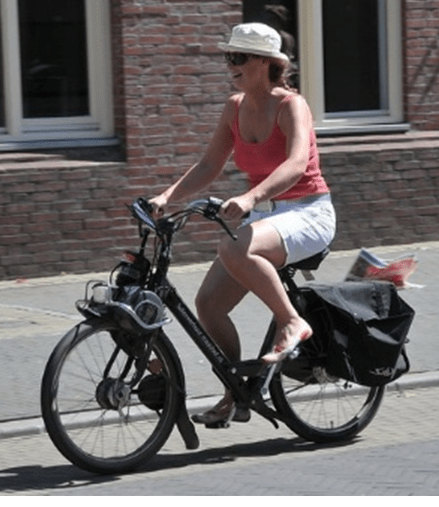
I want to talk of a two-wheel transport method, but it’s not the bicycle behind which my father used to scream ‘Look ahead of you’ but the vehicle I’ve loved for most of my life, the Vélosolex (which, I regret, doesn’t exist anymore in France).
Warning: Do not be confused by imitations.
A How to ride a Vélosolex: 1 Note the motor is over the front wheel behind the handlebar. 2a Sit and ride the solex like a bike, then press the black vertical stick gently onto the motor to make it start. 2b Or run alongside the bicycle releasing the black vertical stick on to the front wheel and jump fast onto the saddle. (Warning: that is not a safe technique, you could fall). 3 Once you hold on to the handlebar there is no accelerator as in motorbikes, cars or some bicycles, so you accelerate by pressing on with the right handlebar, depending on whether you want to or not.
B Advantages of the Vélosolex: 1 You are neither as slow nor as fast as other two wheelers, you’ll find your own rhythm. 2 You are not a motor cyclist either who revs past people outside shops or café customers on street pavements to make noise or contaminate the atmosphere. 3 You can go up parallel to a queue of vehicles. Watch out that no one opens their car doors. 4 Thanks to your solex, you can attend your university lectures on time.
Le Vélosolex, une icône de France
Je veux parler d’un mode de transport à deux roues, mais ce n’est pas la petite bicyclette derrière laquelle mon père criait ‘Regarde devant toi’ mais le véhicule que j’ai le plus aimé toute ma vie, le Vélosolex (qui, je regrette, n’existe plus).
Attention : Ne vous laissez pas tromper par des imitations.
A Comment rouler en Vélosolex : 1 D’abord trouver le moteur au-dessus de la roue avant, derrière le guidon. 2a S’asseoir sur le solex comme à vélo et pousser le bâtant noir du moteur légèrement sur la roue avant. Le moteur se branchera. 2b Ou partir en courant le long du solex, pousser le bâtant noir du moteur à la main, et monter très vite sur la selle. (Attention : cette méthode est dangereuse, vous pouvez tomber). 3 Quand on tient le guidon, il n’y a pas de levier de vitesse comme sur les motos, voitures ou même certains vélos, donc on accélère en appuyant avec la manette de la main droite, si on le veut.
B Les avantages du Vélosolex : 1 On n’est ni aussi lent ni aussi rapide que les cyclistes, on trouve son rythme soi-même. 2 On n’est pas non plus un motard qui change de vitesse, en dépassant les magasins et les gens au café, sur le bord de la rue pour faire du bruit et contaminer l’atmosphère. 3 On peut, s’il y a une file de voitures remonter parallèle à tous les véhicules. Attention qu’elles n’ouvrent pas leurs portières ! 4 Grace à votre solex vous pouvez arriver à l’université pour vos cours à l' heure.
Have you ever owned a T-shirt that you'd call either brown, orange or red?
Naming a colour can be based on how your culture and language organise categories but linguists are still not clear on this issue. Your description can also depend on your perception or mood.
People who own dark cars will argue they have, even in daylight, shades of brown, grey or blue. As for the colours of red cars, some may choose to call darker reds ruby or burgundy while brighter reds may be labelled crimson or scarlet.
Speakers of languages that have different names of shades to the ones in the language we speak express colour distinction in a way that everyone will be able to understand. For example, if someone said a shirt has the hue of a burning fire or it reminds you of sunsets, you’ll know it has shades of red.
I personally make a distinction between green and blue that differs from my husband’s, but this isn’t for discussion here.
C’est de quelle couleur?
N'avez-vous jamais eu une T-shirt qui pourrait être soit de couleur marron, orange ou rouge ?
On donne des noms aux couleurs d’après la façon dont sa culture et sa langue organisent les catégories mais les linguistes n’ont toujours pas encore éclairci ce problème. Votre description peut aussi dépendre de votre perception ou de votre humeur.
Certaines personnes qui ont des voitures de couleur foncée vous diront qu’elles émettent, même en plein jour, des lueurs marron, grises ou bleues parfois. Dans le cas de voitures de couleur rouge, les gens choisissent d’appeler les rouges plus foncées soit fuchsia ou bordeaux tandis que les rouges plus brillants peuvent être nommer vermeil ou écarlate.
Une personne dont la langue classe les couleurs différemment des vôtres, n’aura aucune difficulté à exprimer à quelconque la teinte dont elle vous parle. Si elle vous dit qu’un objet est de la couleur d’un feu qui brûle ou que la teinte de cet objet vous rappelle un soleil couchant, vous saurez qu’il s’agit d’un rouge.
Quant à moi, je fais une distinction entre le bleu et le vert différente de celle de mon mari, mais je ne vais pas discuter cela maintenant.
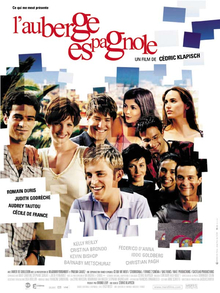
La cabane espagnole: friendship and film on the beach

Sofia loved to talk and told me her story.
When she lived in a quiet tropical seaside bay
Her folks had rejected her and her friend.
In town they’d set up an open house
And showed a film in the late afternoons.

Some youths attended and all had fun
Soon they’d brought some more friends.
After viewing, they’d talk of film making.
Girls and boys learnt cinema techniques
Studying photo effects, angles and hues.

After Sofia ran out of cash and electricity
They all went outside on the beach front
The youths took to the stage and acted
A story inspired by one of their films.
Their title was  ‘The Spanish Beach Hut’.

Later the two friends built a hut on the beach.
Students  came from overseas, moved in and stayed
Until they decided who were their best friends.
                                                                           The  End


La Cabane Espagnole: amitiés et films à la plage

Sofia qui aimait parler me raconta son histoire.
Elle habitait dans la baie tranquille d’un village tropicale
Et sa famille l’avait repoussée ainsi que son amie.
En ville elles s’installèrent dans une maison
A porte ouverte avec séances de cinéma l’après-midi.

Des jeunes y venaient pour passer de bons moments
Et bientôt amenèrent quelques-uns de leurs amis et amies
Qui finirent la soirée en discutant de techniques de cinéma
Et de certains effets de photographie, d’angle et de lumière.

Lorsque Sofia n’eut plu de fonds pour l’électricité
Ils partirent tous à la plage ou ils présentèrent
Sur scène une histoire inspirée par un de leur films
Il choisirent comme  titre ‘La Cabane Espagnole’.

Alors les deux amies construisirent une cabane sur la plage
Des étudiants vinrent de pays étrangers et restèrent
Jusqu’au jour où ils découvrirent qui étaient leurs meilleurs amis.
                                                                                                             Fin
Having a good time is hard. I cannot do it on my own. I need folk around me, a good number is about ten. I like to mix with people I’ve met before, who are from a range of ages. It doesn't mean I will talk to them all at once. It’s more dynamic if we sit down, eat and drink together.
All of a sudden the calmest person in the room makes a joke about what you wear and how strange your voice is. After this, no end of jokes sparkle making us laugh. Somebody declares finding the venue was a real nightmare. Then others complain I delayed them because I went early to their sister’s house hoping to get a lift. It was, they say, the wrong time and the wrong place. Then I burst out laughing and we all have a giggle. My friends take some photos of me scratching my head.
It’s best if I’m able to make fun of me. It is at that stage I realise I’m having a good time at last.
Comment bien s’amuser
Il est difficile de bien s’amuser. Mais je ne sais pas faire ça toute seule. J’ai besoin de monde autour de moi, environ dix est un bon nombre. Il s’agit de personnes d’âge différent que je connais déjà. Il est évident qu'on ne se parlera pas tous en même temps. Pour la dynamique de ce groupe, le plus simple est de s’asseoir, de manger et boire ensemble.
Soudain la personne la plus calme du groupe fait une plaisanterie sur tes habits et dit que tu parles de façon bizarre. A ce moment là, toute la salle éclate de rire. Quelqu’un assure que le chemin qu’on a pris pour venir à cet endroit donnait l’impression qu’on était parti au bout du monde. D’autres se plaignent que je les ai retardés car je m’étais trompée de point de départ. J’’étais arrivée chez sa sœur très tôt. J'étais là, me dit-on, à un mauvais moment et à la mauvaise adresse. Tout le groupe se met à rire, moi aussi. Quelqu’un prend ma photo pendant que je me gratte la tête.
Tout va bien si je réussis à me moquer de moi. C’est là que je me rends compte que je m'amuse.
Best wishes to you at this turning point. What did you do five years ago ? What will you do in five years’ time? I hope to follow the five senses of life. Wish me luck
Time for my eyes to look around? I scan my world and see the friends that are near me
Is my wish now to taste? I relish the food and enjoy eating what’s good for me
Am I ready to sense aroma? I spread fragrances and take in the scent around me
Do I have a feeling to touch things? I pat textures and feel the kind surfaces that I'm able to stroke
Do I have the need to hear sounds? I listen to noises, and heed the gentle murmurs surrounding me.
Happy New 2025 to all
Un High Five pour les Cinq Sens et Cinq Ans. Bonne Année 2025
Je vous envoie mes meilleurs vœux en ce tournant de vie Que faisiez-vous, il y a cinq ans ? Que feriez-vous dans cinq ans ? J’essaierai de suivre le principe des cinq sens Souhaitez-moi bonne chance
Est-ce le moment de regarder ? J'inspecte mon monde et je vois les amis qui m'entourent
Ressent-on un désir de goûter ? Je déguste avec plaisir et profite des bonnes choses à manger
Ai-je besoin d’arôme ? Je fais circuler du parfum et apprécie la senteur des alentours
Veux-je toucher ? Je tâte les textures et ressent la douceur des surfaces suaves
Suis-je décidée à écouter ? Je discerne les sons et les légers murmures autour de moi.
( Thanks to Salvatore Adamo, Joe Dassin, Yves Duteil – Lyrics below)
A tune and a few words.
I hum a song or two.
I remember Tombe la neige
At the trail end of the nineteen sixties.
Adamo sings  of a lover’s distress
Emotions buried by steady snowfalls.

Next I  follow dreams and wishes  of those
who mastered obstacles
They reveal  their dynamic life
and a rhythm to sink all pessimism.
My voice attracted by Dassin’s
Taps to the refrain : Aux Champs Elysées.


I leap into action
with the energy and passion
of the adults and the parents
who relish their new lives
and will revel in inclusivity.
Prendre un enfant par la main
Walking with a child near you,
and holding their hands as a way
of 'giving them the confidence to walk'
Going with Duteil to find snow
And maybe the gift of optimism.
Salvatore Adamo – Tombe la neige Tombe la neige Tombe la neige Tu ne viendras pas ce soir Tombe la neige Et mon cœur s’habille de noir Ce soyeux cortège Tout en larmes blanches L’oiseau sur la branche Pleure le sortilège Tu ne viendras pas ce soir Me crie mon désespoir Mais tombe la neige
Tombe la neige Tu ne viendras pas ce soir Tombe la neige Tout est blanc de désespoir Triste certitude Le froid et l’absence Cet odieux silence Blanche solitude Tu ne viendras pas ce soir Me crie mon désespoir Mais tombe la neige Impassible manège
Joe Dassin – Aux Champs Elysées Je m’baladais sur l’avenue Le cœur ouvert à l’inconnu J’avais envie de dire bonjour À n’importe qui N’importe qui et ce fut toi Je t’ai dit n’importe quoi Il suffisait de te parler Pour t’apprivoiser
Aux Champs-Élysées Aux Champs-Élysées Au soleil, sous la pluie À midi ou à minuit Il y a tout c’que vous voulez Aux Champs-Élysées
Tu m’as dit “J’ai rendez-vous Dans un sous-sol, avec des fous” Qui vivent la guitare à la main Du soir au matin” Alors, je t’ai accompagnée On a chanté, on a dansé Et l’on n’a même pas pensé À s’embrasser
Yves Duteil – Prendre un enfant par la main Prendre un enfant par la main Pour l’emmener vers demain Pour lui donner la confiance en son pas Prendre un enfant pour un roi
Prendre un enfant dans ses bras Et pour la première fois Sécher ses larmes en étouffant de joie Prendre un enfant dans ses bras
Prendre un enfant par le cœur Pour soulager ses malheurs Tout doucement, sans parler, sans pudeur Prendre un enfant sur son cœur
Prendre un enfant dans ses bras Mais pour la première fois Verser des larmes en étouffant sa joie Prendre un enfant contre soi
Prendre un enfant par la main Et lui chanter des refrains Pour qu’il s’endorme à la tombée du jour Prendre un enfant par l’amour
Prendre un enfant comme il vient Et consoler ses chagrins Vivre sa vie des années, puis soudain Prendre un enfant par la main
En regardant tout au bout du chemin Prendre un enfant pour le sien
As soon as I left home, I grasped a life of change riding a motorbike and smoking cigarettes to counter my parents’ humdrum daily lifestyle.
A milestone came for me the year of moon landing, I took one giant step, went to Mwinilunga. In North Western Zambia, at the Zambezi source, new folk shared food with me.
No electricity. We burnt wood in the stove, kerosene in the lamps and had a few candles Often left stains of wax on students’ homework books.
At open air concerts, villagers came to sing, to booming drums we danced the Congolese Rumba. I even joined when eight months’ pregnant.
No newspapers in town. A radio and batteries. The sun shone over us its healthy radiant heat. At night, the stars sparkled.
Traces of defiance and of independence are still burning in me. I’ve danced myself away at cultural events, backed First Nations’ requests that their voices be heard.
Yet I’m still waiting to see sparkling stars enlighten the modern world I live in. Suburbia be damned!
Comme je voudrais encore vivre en marge de ce monde
Quand j’ai quitté mes parents j’ai vécu une vie différente Circulant en moto et fumant des cigarettes. Pour contre-carrer leur train-train habituel .
Une étape importante est arrivée pour moi l'année de l'alunissage, j'ai fait un pas géant, Partie pour la Zambie dans le Nord-Ouest Là, à Mwinilunga, à la source du Zambèze, de nouveaux amis partageaient leur nourriture avec moi.
Pas d’électricité. Chez nous, un four à bois, une lampe au kérosène, quelques bougies. Souvent on laissait des tâches de cire en corrigeant les cahiers des élèves.
Les concerts étaient en plein-air. les habitants venaient chanter, Nous dansions, au bruit de tambours sonores, la Rumba Congolaise à laquelle j’ai osé me joindre, bien qu’enceinte de huit mois.
Pas de journaux en ville. Une radio et des piles. Le soleil chaleureux chauffait avec radiance. La nuit, toutes les étoiles étincelaient.
Des traces d’indépendance et de défi brûlent encore en moi. J’ai dansé comme une folle Du temps de réunions interculturelles. J’ai soutenu les requêtes des Premières Nations qui voulaient qu’on écoute leurs voix et leurs paroles.
Mais j’attends encore voir un scintillement d’ étoiles éclairer le monde moderne que j’habite. Maudite soit la vie en banlieue !
I have an imaginary house in my dreams. It is a pleasant house with many rooms. It is in a city where I once lived but not in the same street. There I speak to all the neighbours who seem to know my family well. This morning when I woke up in that house I wanted to go to the bathroom. I was surprised to find the door opened. I also could smell coffee. As I opened my eyes I was in my present day real lounge. I saw my husband and said ‘ I was looking for the bathroom.’ As I turned around to go to my real bathroom I heard him say ‘Sleepwalked again?’
Somnambule
J'ai une maison imaginaire dans mes rêves. C'est une maison agréable avec de nombreuses pièces. Elle est dans une ville où j'ai vécu, mais pas dans la même rue. Je parle à tous les voisins qui semblent bien connaître ma famille. Ce matin quand je me suis réveillée dans cette maison-là, je voulais aller à la salle de bains. J’ai été surprise de trouver la porte ouverte. J’ai aussi senti l' odeur du café. Ouvrant les yeux j’ai découvert que j'étais dans le salon de ma vraie maison. Voyant mon mari je lui dis ‘Je cherchais la salle de bains.’ Je faisais demi-tour sur ma vraie salle de bains quand il a dit 'Encore somnambule ?’

















 Yayi's Paroles
You must be logged in to post a comment.