JEAN-MARIE TJIBAOU: Legacy to Kanaky - New Caledonia
When I was in Papua New Guinea at the University in the 1980s, I was given the opportunity to translate from French a speech at a Pacific forum for:
Jean-Marie Tjibaou (1936-1989):
- Charismatic independence leader for New Caledonia - Ex- priest, educated politician whose arguments used logic * - Fought for awareness of Kanak identity and independence - President of FLNKS, the party overseeing Kanak independence - Designed the Kanak flag, recently seen jointly with the tricolore - Devised and signed the tripartite Matignon Accords (Paris 1988) - Independence announced for 1998. Independentists killed - Was assassinated by an extremist of his own side in 1989.
Jean-Marie Tjibaou (son, Emmanuel, currently a member of the French National Assembly for New Caledonia) coined the phrase “PACIFIC MY NUHOM” [Pacific, My New Home], to show the links between his country and the Melanesian countries of the Pacific (Papua New Guinea, Solomon Islands and Vanuatu). He spoke with passion, persuasion of the similarities in their histories, languages, and customs.
Further he was also able to resolve two demanding situations:
1. The PNG leadership was unable to support him because Bernard Narakobi who held a philosophy of Melanesia did not come to power in PNG. Yet thanks to the Non-Aligned Movement of newly independent Vanuatu, Tjibaou was supported at the United Nations Assembly in 1986 with a vote confirming: ‘the inalienable right of the people of New Caledonia to self-determination’
2. François Mitterand (of the Socialist Party) became President but was not able to support him early on. Yet Tjibaou succeeded to negotiate with his Prime Minister Michel Rocard ‘Les Accords de Matignon’ in 1988 when he led the pro-independence delegation while Jacques Lafleur, a ‘Caldoche’ or New Caledonian of European origin led an anti-independence delegation. They shook hands. The photo of the ‘handshake’ shocked some of his younger extremists (this may have led to his assassination).
Jean-Marie Tjibaou’s name was given to a newly designed Cultural Centre (see above) inaugurated in Noumea (1998) to add value to the Kanak Culture, a project he had initiated at the time of the Matignon Accords. It is an Agency for the development of the Kanak Culture and is led by his widow Marie-Claude Tjibaou.
Further the two men involved with Rocard in the handshake were awarded in 2010 (this was posthumous for J M Tjibaou) ‘La Colombe de la Paix,’ an annual prize via Germany supported by UNESCO.
*Quote: We want the right to Independence in our country. It is not more racist than to speak of having French citizenship.
JEAN-MARIE TJIBAOU: sonhéritage pour Kanaky-Nouvelle Calédonie
Lorsque j’étais en Papouasie Nouvelle Guinée, à l’université, dans les années 1980, j’ai eu l’occasion extraordinaire de traduire à un forum sur le Pacifique le discours de :
Jean-Marie Tjibaou (1936-1989)
- leader indépendantiste charismatique de la Nouvelle-Calédonie - prêtre défroqué, politicien éduqué, de parole raisonnée* - lutta pour faire reconnaitre : identité kanak et indépendance. - président du FLNKS, parti pour l'Indépendance - dessina le drapeau pour 'Kanaky', récemment joint au tricolore - négocia (Paris) en tripartie, signa les Accords de Matignon 1988 - prévu l’Independence pour 1998, mais Indépendantistes tués - a été assassiné par un extrémiste de son propre camp en 1989.
Jean-Marie Tjibaou (dont le fils, Emmanuel, représente 'Kanaky' en ce moment comme membre de l’Assemblée Nationale en France) a inventé une phrase inclusive: ‘PACIFIC MY NUHOM’ [Pacific My New Home]. Il a démontré les liens de son pays avec les pays Mélanésiens du Pacifique ( Papouasie Nouvelle Guinée, Les Iles Solomon et Vanuatu) et a parlé avec passion et logique des similitudes d’histoire, de langues et coutumes.
Plus tard il réussira à résoudre deux autres situations difficiles.
1 Les leaders de PNG ne pouvaient l’aider car Bernard Narakobi malgré une philosophie de Mélanésie n’a pas pris le pouvoir. Mais Tjibaou réussit à se joindre au ‘Mouvement Non-aligné’ de Vanuatu, nouvellement indépendant et de faire agréer et voter aux Nations Unies en 1986 : ‘le droit inaliénable des peuples de la Nouvelle Calédonie à l’auto-détermination’.
2 François Mitterand du parti Socialiste devint President en 1981 mais ne l’a pas soutenu dès le début. Tjibaou réussit néanmoins à négocier grâce au Premier Ministre Rocard les Accords de Matignon en 1988 : il mena une délégation indépendantiste jointe avec la délégation anti-indépendantiste du député NC Jacques Lafleur. Ils se sont serrés la main et la photo de cette ‘poignée de main’ a choqué des jeunes extrémistes de son mouvement (ce qui a pu être la cause de son assassinat).
Jean-Marie Tjibaou avait donné son nom au Centre Culturel (ci- dessus) inauguré en 1998 à Nouméa pour valoriser la culture kanake qu'il ’avait projeté au moment des Accords de Matignon. Cette Agence pour le Développement de la Culture Kanak est tenue par sa veuve Marie-Claude Tjibaou.
Plus récemment les deux hommes de la ‘poignée de main’ ont reçu en 2010 (à titre posthume pour J M Tjibaou) la ‘Colombe de la Paix’, prix annuel de l'Allemagne soutenue par l'UNESCO.
* Citation Nous voulons le droit d’avoir l’Indépendance de notre pays. Ce n’est pas plus raciste que de parler d’une citoyenneté Française.
They have advised not to stay quiet. My friend complained about my neighbour’s laziness. I asked him, ‘Was she idle or was it that she couldn’t find work?’ If I stayed quiet, I allowed my position as a non-Indigenous person to reinforce his views.
To deal with racism we must escape our comfort zone and reflect on our biases, often based on lack of knowledge. Once I thought all women from India were Hindus who wore saris.
I need to understand my neighbour’s cultural issues, often hidden or unspoken. ‘Racism stops with me’ encouraged me to speak. It’s helped me. Will it help others?
Trouver un nouvel horizon
On nous conseille de parler franchement. Un de mes amis a critiqué ma voisine en disant qu’elle ne voulait pas travailler. Je lui ai demandé, ‘Est-ce qu’elle ne voulait pas travailler ou serait-ce qu’elle ne pouvait pas trouver du travail’. Si je ne donnais pas de réplique à sa remarque je confirmerais l’avantage que j’ai en tant que personne non-Indigène et je renforcerais ce reproche.
Pour comprendre le racisme il faut renoncer à sa zone de confort et réfléchir sur nos préjugés, qui sont souvent dus à notre manque de connaissance. Il y a plusieurs années je pensais qu’en Inde toutes les femmes étaient Hindou et portaient des saris.
On a besoin de vérifier les conditions culturelles des personnes autour de nous car la réalité peut rester cachée ou tacite. A la suite du programme ‘Racism stops with me’, je n'ai eu plus peur de m'exprimer, ce qui m’a aidé. Cela va-t-il aider d’autres ?
Introduction (from Part 1) I discuss information I gathered from a book called The Bilingual Brain which highlighted many of my own experiences as a bilingual speaker (French and English). It also confirmed my observations as a parent of two bilingual children. Feel free to read: Albert Costa. The Bilingual Brain. Penguin Books, 2017.
1 Bilingual people can be speakers of two languages regardless - whether they learnt a language from birth - how frequently they speak the language - how proficient they are in that particular language
2 Bilingual Adults as Jugglers
A Juggling - Costa says that bilingual adults are like jugglers. But I suggest their juggling remains invisible. - When bilingual persons (Spanish speakers) talk with English adults, for whom English is the First language, it is rare that they slip into the bilingual’s own language (Spanish) although the bilingual person's brain has not turned off their own language. It is there, though they don’t use it. It remains invisible. - However, it is well known that monolinguals as well as bilinguals can introduce words of another language like in the phrase ‘el check-in’ in a conversation but this is often because these are commonly used phrases internationally.
B Code switching - So, the adult bilinguals juggle but they also switch. In informal situations, like around a table with family and friends, people allow themselves to change to the most relevant speaking style or 'code'. - In our own language, we can all ‘code switch’ using different words, phrases and intonation, in more or less formal circumstances and with people we are more or less familiar with. - That's what we do when we change how we speak at work to a colleague to how we speak to a manager. We 'code switch'. The degree of familiarity and of the environment determine how we speak at home with the family compared to when we talk to a manager or even colleagues in our workplace.
For bilinguals, code-switching happens across two languages when adults feel free to insert a word or phrase of the other language. Bilinguals always follow the grammatical rules of the main language involved.
a ‘Donde están las keys’ (Spanish conversation) [Where are the keys?] Agreement a: the plural verb ‘estan’ agrees with plural noun ‘keys’.
b 'Donde esta la clé?’ (Spanish conversation) [Where is the key?] Agreement b: the singular verb ‘esta’ agrees with singular noun‘key.’
Note : On a personal level, I have surprised myself, saying the following: c ‘Where are my lunettes ?’ (English conversation) [Where are my glasses ?] Agreement c: the plural verb ‘are’ agrees with plural noun ‘lunettes’.
Albert Costa makes the point that when code / language switching, bilinguals follow all the rules of grammar of the dominant language in the conversation.
3 Advantages to brain
A Multitasking - Bilinguals can adjust and code switch in their use of languages, to adapt to their interlocutor and their environment. - Bilingual adults can efficiently classify items under different criteria, and this was seen to also apply to bilingual children [see Part 1]. - Bilinguals showed when tested for attentional capacity that they are better at avoiding conflict and blocking out irrelevant information.
B Better cognitive responses Costa also discusses the lessening of cognitive decline for bilingual Seniors, a theme also covered by a more recent book: Viorica Marian, The Power of Language: Multilingualism, Self, and Society, 2023.
4 Disadvantages of bilingualism
A Lack of speed in some speech circumstances - It may take a little longer for bilinguals to express a thought. - Bilingual children can take slightly longer to start speaking any language, and this should not be of concern to parents.
B More brain effort needed, increasing use of 'the grey matter' - The more dominant the first language, the more the bilingual adults need to block it, and the bigger is the delay or difficulty for them to speak another language. - That is not simply because they cannot remember a word, but because the stronger language keeps interfering. To control this, the brain needs to exercise extra vigour. - Costa says if bilinguals learn other languages, they juggle three or more balls. (This must mean the brain has to work more to exercise this control.)
Conclusion: In conclusion, I refer you again to Viorica Marian for a quotation: ‘Bilingual children as young as seven months can better adjust to environmental changes, while bilingual seniors can experience less cognitive decline.’ Viorica Marian & Anthony Shook, National Institute of Health in the US, 2012.
Adultes bilingues : le bienfait de jongler avec les langues

Adultes (Part 2) [Enfants : voir Part 1, 18Nov25]
Adultes bilingues : le bienfait de jongler avec les langues
Introduction (comme Part 1) : Je discute le livre 'Le Cerveau Bilingue' qui m’a impressionné car il démontrait des expériences qui me sont habituelles en tant que bilingue moi-même (Français & Anglais). La section sur les enfants m’a rappelé des observations de mes deux enfants bilingues. N’hésitez pas à lire : Albert Costa. The Bilingual Brain. Penguin Books, 2017.
1 On est bilingue lorsqu’on est une personne - qui apprend deux langues à la naissance ; - qui parle fréquemment une langue qu’on a étudié ; - qui parle à son propre niveau de compétence dans cette langue.
2 Les adultes bilingues sont comme des jongleurs A Jongleurs - Costa dit que les adultes bilingues sont comme des jongleurs, mais je pense qu’en fait ils jonglent de façon invisible. - Lorsque des adultes bilingues (de langue Espagnol) s’adressent à des adultes pour qui l’Anglais est la Première langue, il est rare qu’ils se mettent à parler avec des mots de leur langue d’origine, bien que leur cerveau n’ait pas éteint leur langue (Espagnol). Elle est là et pourtant ils ne l’utilisent pas. Elle reste invisible. - Cependant nous savons que nous tous, que l'on soit monolingue ou bilingue puisse de temps en temps introduire des mots ou des phrases d’une autre langue comme ‘el-check-in' ou ‘le check-in’, car ce sont des expressions couramment utilisées de façon internationale.
B Alternance de code dans la même langue - Les adultes bilingues jonglent donc avec les langues, mais ils peuvent aussi 'alterner ou changer les codes linguistiques'. - Ce ‘changement de code’ se produit dans les situations informelles, autour d'une table, en famille ou entre amis : chacun choisit un mode de communication adéquate. - Nous faisons tous ainsi dans notre propre langue. Nous changeons de mots, de phrases et d’intonation selon la personne avec qui nous parlons. Le degré de familiarité dépend de notre interlocuteur (ou aussi de l'environnement), que ce soit un directeur, des collègues ou un membre de notre famille. - Chez les personnes bilingues, cette alternance de code/langue se produit lorsque les adultes se sentent libres d'insérer un mot ou une expression de l'autre langue. Les bilingues respectent toujours les conventions de la langue principale utilisée dans la conversation.
a : ‘Donde están las keys’ Conversation en Espagnol [Où sont les clés ?] Accord a: le verbe pluriel ‘estan’ s’accorde avec le nom pluriel ‘keys’.
b: ‘Donde esta la key?’ Conversation en Espagnol [Où est la clé ?] Accord b: le verbe singulier ‘esta’ s’accorde avec le non singulier ‘key’.
Note : Je me surprends souvent à faire ça moi-même, quand je parle ainsi: c : ‘Where are my lunettes ?’ Conversation en Anglais [Où sont mes lunettes ?] Accord c: le verbe pluriel ‘sont’ s’accorde avec la phrase plurielle 'lunettes’.
Costa remarque que l’accord grammatical est toujours maintenu avec la langue dominante de la conversation.
3 Avantages pour le cerveau bilingue
A Tâches multiples et simultanées - Les adultes bilingues peuvent changer de code linguistique pour s’adapter à leur interlocuteur et leur environnement. - Les bilingues peuvent avec efficacité classifier des objets d’après des critères différents, ce qui s’appliquait aux enfants bilingues [voir : première partie]. - Les adultes bilingues ont montré, lorsqu’ils ont été testés pour leur capacité attentionnelle, qu’ils pouvaient éviter certains conflits, en bloquant des détails non-pertinents.
B Moins de diminution de Réponses Cognitives Costa discute aussi le déclin des réponses cognitives chez les ‘Seniors’. Ce thème est couvert dans un livre plus récent : Viorica Marian The Power of Language: Multilingualism, Self, and Society, 2023.
4 Désavantages du bilinguisme
A Moins de rapidité d’expression dans certaines situations - Les adultes bilingues mettent quelquefois plus longtemps pour exprimer leurs pensées. - Les enfants bilingues peuvent mettre un peu plus longtemps à commencer à parler. Ceci ne devrait pas inquiéter les parents.
B Plus d’effort nécessaire qui affecte 'la matière grise' - Plus la langue maternelle est dominante, plus les adultes bilingues ont besoin de la bloquer, donc plus long sera le délai ou la difficulté pour eux de parler dans une autre langue. - Ce n’est pas simplement qu’on ne se rappelle pas un mot, mais c'est dû à l’interférence de langue la plus forte. Pour contrôler cela, le cerveau a besoin de travailler avec vigueur. - Costa nous dit que lorsque les adultes bilingues apprennent de nouvelles langues, ils jonglent avec trois balles ou plus (ce qui veut dire qu’ils doivent travailler encore plus fort ! )
Conclusion : Pour conclure je fais de nouveau une référence à Viorica Marian avec cette citation : ‘Les enfants bilingues dès l’âge de sept mois savent mieux s’adapter aux changements de leurs environnements, tandis que les adultes bilingues et seniorspeuventexpérimentermoins de déclin cognitif.’ Viorica Marian & Anthony Shook, National Institute of Health in the US, 2012
Bilingual Babies and children’s brain- The Bilingual Brain (Part I):

         I have gathered information from a book called 'The Bilingual Brain' which impressed me because it highlighted many of my own experiences as a bilingual speaker of French and English. It also confirmed my observations as a parent of two bilingual children. On a personal level, I have witnessed my daughter switch language at the juncture that Chomsky argues sees a grammatical change in sentences: ‘I want to / lire un livre [read a book].
Feel free to read Albert Costa. The Bilingual Brain. Penguin Books, 2017.
Below I highlight some of the examples I selected from his book.

1     Bilingual people can be speakers of two languages regardless
     • whether they learnt a language from birth
     • how frequently they speak the language they have acquired
     • how proficient they are in that particular language

2    Bilingual Babies
     -      Babies take note of differences
     The note babies make of differences is measured by an electronic pacifier which registers the
with which it is being sucked. For example e.g. in a sequence ‘ba ba ba pa ba ba ba’ babies are shown to
take interest by sucking more vigorously at the time they hear the newly introduced phoneme ‘pa’.

    -       Babies learn about sounds systems
        Between six and eighteen months we know they recognise words they hear regularly. Bilingual
babies by about eight months of age can work out that distinction between two languages although they
don’t yet know much language at all. An example of this distinction is noticeable in the way English and Spanish group their consonants, as in the use of ‘-str’ which is called a consonant cluster.
         In English, words can start with ‘str- (strong, strange, etc)
         In Spanish, they do not. The letters s, t, and r ‘str’ don’t exist in the same syllable, as no words end
          in -st or begin with str-.
Instead, s and t are divided by a syllable in the Spanish word ‘astronaut’ (as–tro-nau-ta) or by a
word boundary los trenes, [the trains].

Bilingual Spanish/English babies come to differentiate how the sound of the consonant cluster ‘str’ is
used in both languages and are aware that:
     •     in a word like ‘strong’, -str is joined as one sound in English
     •     in a phrase like ‘los trenes’ [the trains] they make separate words in Spanish.
Costa tells us this is how babies come to learn the sound systems of the languages they hear, as we all do according to Chomsky.

3     Bilingual children
      - Perceiving the others’ points of view
Bilingual children, 4–6 years of age, were more empathetic when selecting items or making decisions because they were likely to think of alternative perspectives when relating with people around them.
It showed, they could grasp more easily than non-bilingual children that ‘others’ could hold different viewpoints. This is possibly due to their own sense of diversity.

       The example below comes from a study where children were shown two grids - Grid One and Two.
      The children knew that they could see Grid One, which was labelled as Theirs and it showed 3 cars (Large, Medium, and Small).
      They also knew that although they were able to see Grid Two which belonged to a man called 'the director', he could only see his own grid, Grid Two, which showed only 2 cars (Large and Medium) but he was not able to see 'Theirs', Grid One.
   In that study, for our information only, the small car is referred to as a ‘distractor.’

       For the experiment bilingual and monolingual children were told that the director asked them to give him the smaller car.
      Bilingual children gave him the ‘medium’ one more often (80% of the time) because they realised that the director didn’t have a small car (the ‘distractor’) in his grid or his vision.
     Monolingual children on the other hand gave him the medium car less often (50% of the time) and the small car more often, as if they didn't realise the director had not seen the smallest car.

Costa says that bilingual children in this experiment showed they were more able to ‘put themselves in other people’s shoes.’

      - Multitasking
        Bilingual children, 5–6 years of age, when asked to sort out cards by a first criterion, colour, and then by a second criterion, shapes, were found to work faster than monolinguals, when classifying them by the second criterion (shapes).
       Thy showed a capacity for flexibility of perceptions seen in the previous example. They tended to switch from colour to shapes more readily.

NOTE: Study on the Bilingual Brain (Part II): 'Of Bilingual Adults' - To appear in my next blog
Bébés et enfants et leurs cerveaux bilingues : The Bilingual Brain (Part I) :
J’ai réuni des éléments d’ un livre qui s’appelle 'Le Cerveau Bilingue'. Ceci m’a impressionné car il démontrait des habitudes qui me sont habituelles en tant que bilingue moi-même (Français/Anglais). La section sur les enfants m’a rappelé multiples observations de mes deux enfants bilingues. J'ai eu l'occasion d'observer ma fille qui changeait de langues en disant ‘I want to / lire un livre’ exactement à l’endroit qui, d’après Chomsky, marque un changement grammatical de la phrase.
N’hésitez pas à lire : Albert Costa. The Bilingual Brain. Penguin Books, 2017. Ci-dessous, je discute des exemples que j’ai sélectionnés dans ce livre.
1 On est bilingue lorsqu’on est une personne a) qui apprend 2 langues à la naissance ; b) qui parle fréquemment une langue qu’on a étudié ; c) qui parle à son niveau de compétence dans cette langue.
2 Les bébés bilingues - Les bébés font attention aux différences La façon avec laquelle Les bébés font attention aux différences est mesurée à l’aide d’une sucette électronique qui enregistre le rythme avec lequel le bébé la suce. Par example dans une séquence ‘ba ba ba pa ba ba ba’ les bébés montrent de l’intérêt en suçant plus fort lorsqu’ils entendent 'pa', le nouveau phonème introduit. Entre 6 et 18 mois ils reconnaissent des mots qu’ils entendent de façon régulière. Dès 8 mois ils comprennent la distinction entre 2 langues bien qu’ils n’aient que très peu de langage.
- Les bébés apprennent le système phonétique des langues Un example de cette distinction, que feront les bébés, existe entre l’Anglais et l’Espagnol. On entend comment une langues regroupe les consonnes en grappe, mais pas l’autre dans ‘-str’. En Anglais, des mots peuvent commencer par ‘-str’ (strong, strange,) [fort, étrange]. En Espagnol, ce n’est pas possible. Les lettres s, t, and r ‘str’ n’existent pas dans la même syllabe, car aucun mot ne finit en -st ou commence en str-. Les phonèmess ettsont séparés par une syllabe dans le mot Espagnol:‘ as-tro-nau-ta’[l’astronaute] ou par une séparation entre 2 mots comme quand on dit en Espagnol: lastrenes [les trains].
Costa dit que c’est ainsi que les bébés apprennent le système phonologique des langues qu’ils entendent, et c'est ce que nous faisons tous d'après Chomsky.
3 Les Enfants Bilingues - Ces enfants reconnaissent du point de vue des autres Les enfants bilingues de 4–6 ans sont moins egocentriques et choisissent des alternatives rapidement parce qu’il est possible qu’ils voient le point de vue de ‘l’autre’. Il est possible que ce soit dû aux éléments de diversité de leur environnement. Voici un des exemples de la recherche : On montre deux grilles à des enfants. Grille Un s'appelle 'leur grille' et contient 3 voitures (une grande, moyenne et petite). En même temps ils peuvent voir la grille d’un homme, Le Directeur, Grille Deux, mais elle ne montre que 2 voitures (la grande et la moyenne). Le Directeur, on leur explique, lui ne peut voir qu’une grille La Grille Deux. Les enfants voient qu’elle ne contient que deux voitures (une grande et une moyenne). Pour cette expérience la petite voiture s’appelle 'le distracteur'.
En commençant l’expérience on a dit aux enfants que le Directeur leur demande de lui donner la plus petite voiture. Les enfants bilingues lui donnèrent la voiture moyenne plus souvent, 80% de fois, parce qu’ils se sont rendu compte qu’il n’avait pas de petite voiture, ni dans sa grille, ni dans sa vision ('le distracteur'). Mais les enfants monolingues ne lui donnèrent la voiture moyenne moins souvent, 50% de fois. Il semble qu'ils ont agi comme s’ils pensaient que Le Directeur avait vu la petite voiture de la Grille Un, ce qui n’est pas le cas.
Costa conclut que les enfants bilingues ont plus de facilité à 'se mettre à la place d'autrui'.
- Ces enfants mènent plusieurs tâches de front avec aise Des enfants bilingues de 5 à 6 ans ont d’abord trié des cartes par un premier critère, la couleur des dessins et puis par un deuxième critère, la forme des dessins sur les cartes. Les enfants bilingues ont rempli cette deuxième tâche plus rapidement que les enfants monolingues. Ils ont démontré une tendance à changer plus rapidement d’un critère à l’autre (couleur /forme).
Leur capacité de perception flexible, déjà vue dans l’exemple précédent montre qu’ils sont capables de changer leurs points de vue avec facilité.
NB : Etude du cerveau bilingue (2eme partie) : Les Adultes Bilingues : Voir mon prochain blog.
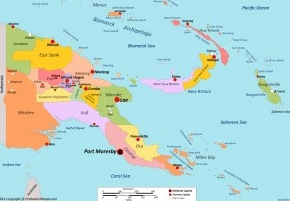
This week is the fiftieth anniversary of Independence in Papua New Guinea. Our family’s ten years in Port Moresby were extremely rewarding. We lived on the university campus from 1976 till 1986. The years after Independence were times of intense development. At the University, students told you they were proud of where they came from their [Ples] and their language [TokPles]. They were good enough to invite us to visit their region, no matter how far away they lived.
We met interesting people in town, and my best friend nicknamed me Mauswarra [the mouth that runs fast in Tok Pisin], in the same way as my family in France used to say I was Un moulin à paroles [a continuous word-windmill in French]. If I still lived in Port Moresby, I would now be called Bubu Mama [Grandma in Hiri Motu].
I am grateful for the warm welcome we received and how much we learned about a varied country with amazing landscapes of soaring mountains and seaside beaches. We had a Christmas lunch at a windy Ella Beach: lettuce leaves flew off, but we were able to eat the slices of cold turkey that remained on our plates. Two events at Idler’s Bay: a difficult one when our daughter was stung by a jelly fish; and a cheerful one when we attended David and Faith’s wedding. We also had a wonderful time at Gabba Gabba where the villagers gave us cool and large watermelons to eat, and their children played cricket with ours. We went to Yule Island on an outrigger canoe with eskis full of supermarket fruit and came back with fresh coconuts.
We were lucky to fly inland to Tapini and back safely in spite of the difficult airstrip; went to Bulolo and Wau to look at the remnants of gold mining and to the best market in the world at Goroka where I bought two of my favourite bilums [traditional string bags]. We also met with friendly people in stunning Madang and in the Island of Bougainville who always expressed the love of self-sufficiency. I cannot do justice to this country, and I regret not visiting other exciting places, like Milne Bay, the Sepik, the Western Highlands, East and West New Britain and Manus.
Papua New Guinea has in excess of 800 languages, Austronesian and Non-Austronesian which are able to do things that western linguists never thought possible. Through verb-stringing and other infixes languages focus on the manner of an action rather than on its timing, which is marked by adverbs. Besides liklik Tok Pisin and Hiri Motu bada (not really ‘much’!) I would have loved to learn languages from the Goilala people.
When we left UPNG students and staff organised a mumu, pig cooked in the ground with taro and vegetable wrapped in banana leaves as a farewell party.
On behalf of my family, it is my pleasure to wish all my friends and their wantoks [relatives], whom I cannot name here because I’d be sure to forget someone special, and in honour of those that have passed away, my absolute best for the 50th Independence Day Celebration on 16th September 2025.
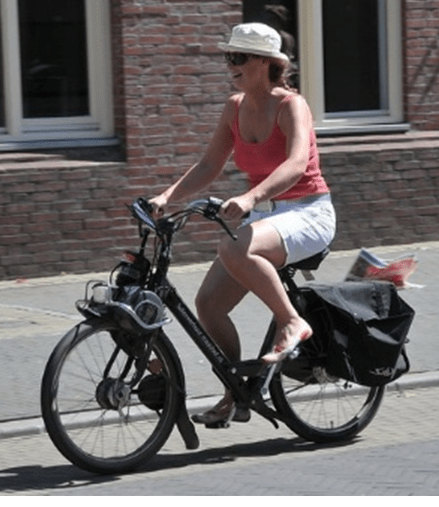
I want to talk of a two-wheel transport method, but it’s not the bicycle behind which my father used to scream ‘Look ahead of you’ but the vehicle I’ve loved for most of my life, the Vélosolex (which, I regret, doesn’t exist anymore in France).
Warning: Do not be confused by imitations.
A How to ride a Vélosolex: 1 Note the motor is over the front wheel behind the handlebar. 2a Sit and ride the solex like a bike, then press the black vertical stick gently onto the motor to make it start. 2b Or run alongside the bicycle releasing the black vertical stick on to the front wheel and jump fast onto the saddle. (Warning: that is not a safe technique, you could fall). 3 Once you hold on to the handlebar there is no accelerator as in motorbikes, cars or some bicycles, so you accelerate by pressing on with the right handlebar, depending on whether you want to or not.
B Advantages of the Vélosolex: 1 You are neither as slow nor as fast as other two wheelers, you’ll find your own rhythm. 2 You are not a motor cyclist either who revs past people outside shops or café customers on street pavements to make noise or contaminate the atmosphere. 3 You can go up parallel to a queue of vehicles. Watch out that no one opens their car doors. 4 Thanks to your solex, you can attend your university lectures on time.
Le Vélosolex, une icône de France
Je veux parler d’un mode de transport à deux roues, mais ce n’est pas la petite bicyclette derrière laquelle mon père criait ‘Regarde devant toi’ mais le véhicule que j’ai le plus aimé toute ma vie, le Vélosolex (qui, je regrette, n’existe plus).
Attention : Ne vous laissez pas tromper par des imitations.
A Comment rouler en Vélosolex : 1 D’abord trouver le moteur au-dessus de la roue avant, derrière le guidon. 2a S’asseoir sur le solex comme à vélo et pousser le bâtant noir du moteur légèrement sur la roue avant. Le moteur se branchera. 2b Ou partir en courant le long du solex, pousser le bâtant noir du moteur à la main, et monter très vite sur la selle. (Attention : cette méthode est dangereuse, vous pouvez tomber). 3 Quand on tient le guidon, il n’y a pas de levier de vitesse comme sur les motos, voitures ou même certains vélos, donc on accélère en appuyant avec la manette de la main droite, si on le veut.
B Les avantages du Vélosolex : 1 On n’est ni aussi lent ni aussi rapide que les cyclistes, on trouve son rythme soi-même. 2 On n’est pas non plus un motard qui change de vitesse, en dépassant les magasins et les gens au café, sur le bord de la rue pour faire du bruit et contaminer l’atmosphère. 3 On peut, s’il y a une file de voitures remonter parallèle à tous les véhicules. Attention qu’elles n’ouvrent pas leurs portières ! 4 Grace à votre solex vous pouvez arriver à l’université pour vos cours à l' heure.
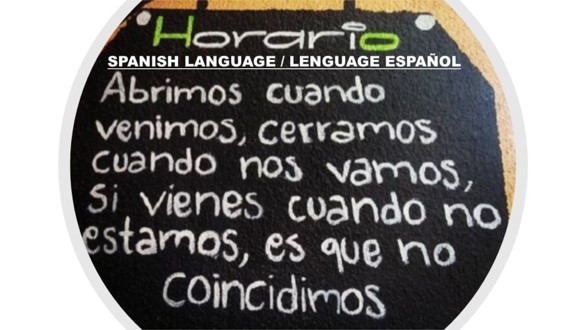
We open when we come,On ouvre quand on arrive, We close when we leave, On ferme quand on part, If you come when we aren’t here, Si vous venez quand on n’est pas là, It’s that we couldn't connectC est qu’on n’a pu faire connexion
Spanish, a language that surprised me!

I’ve always loved languages. Being French, I’ve studied English, Latin, Italian, and now
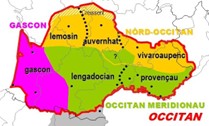
Spanish. I hoped to sort it out because Occitan, my grandparents’ language I used to
hear as a child, was also latino. I thought I’d manage, and I did: Hola, mi amigo and all that.
I loved it, no problem.

The first surprise came with  some words ending in -a: el problema (as in Italian) but also
el idioma  ‘la langue’ and el dia, ‘the day’ were masculine nouns with a feminine ending.
Dia, also used in Occitan, sounded closer to [dio]. The second surprise was to hear Aquellos
to mean ‘those’ in Spanish which reminded me of the Occitan phrase ‘Aquelos Montagnos’ ,
‘these mountains’  from the famous Occitan hymn Se Canto / Se Canta !

I later had daily headaches learning tricky Spanish irregular verbs. I could use puedo to say
‘I can', but the infinitive was poder. Many verbs have had their vowels repeatedly switched
by Spanish speakers over centuries. Spanish irregular verbs worse than in French?  That
was impossible.  What a reprieve when I found I could say ‘to make possible’ using a
regular verb, imposibilitar.


L’Espagnol, une langue qui m’a surprise

J’ai toujours aimé les langues.  Etant Française, j’ai 'étudié l’Anglais, le Latin, l’Italien
et l'Espagnol récemment. J’espérais m’en sortir puisque l’Occitan, la langue que
j’écoutais dans ma jeunesse, parlée par mes grands-parents, était aussi  latino. Tout m’a
plu et j’ai bien commencé : Hola, mi amigo et tout ce qui s’ensuit. Pas trop de problème.

Première surprise, des mots qui finissaient en -a comme les mots féminins, el problema
(comme en Italien), el idioma, ‘le langage’ et el dia ‘le jour’ mais ils étaient masculins.
Dia s’approchait de l’Occitan et il se prononçait plus proche de [dio]. La seconde surprise
était d’entendre Aquellos, qui voulait dire ‘ceux-là’ en Espagnol et qui  me rappelait la
phrase en Occitan 'Aquelos montagnos, ‘ces montagnes’, du célèbre hymne d’Occitanie
Se Canto / Se Canta.

Un mal de tête journalier se révéla face aux pénibles verbes irréguliers de l’Espagnol.
Je pouvais dire puedo  pour ‘Je peux’ mais poder était son infinitif et comme beaucoup
d’autres verbes, il avait subi une inversion de voyelles par des personnes qui parlaient
l’espagnol sans arrêt pendant des siècles. Les verbes irréguliers espagnols seraient-ils
pires que ceux du Français? Impossible!  Alors avec quiétude je découvris que pour
dire ‘rendre possible’ il existait un verbe régulier, imposibilitar.
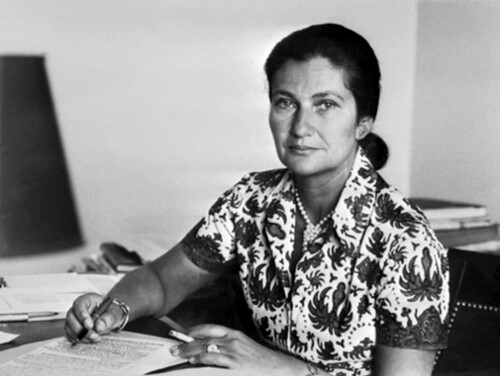
Who would still confuse Simone Veil (1927-2017) with Simone Weil, a humanist and mystic philosopher who died young in England (1909-1943)? Both women with similar names are from France, my country of origin.
It is Simone Veil I want to discuss. She was a French politician as well as a holocaust survivor. While studying for her Baccalauréat in April 1944, she was arrested by the Gestapo together with her whole family in Nice.
Her father and brother were deported to Lithuania. Never seen again, they were listed as executed. With her mother and two sisters she went to Auschwitz and later went on the ‘death march’ to Brobeck and Bergen-Belsen. There her mother died of Typhus while Simone who said she was below eighteen was enlisted to do forced labour. The three sisters managed to be released separately from 1945.
On her return Simone studied law and politics and later became the French Minister for Health. I was thirty years old when in 1975 the 'Veil Act' to legalise abortion was passed. I heard her dedicated speeches in the National Assembly that affirmed a woman’s right to bring pregnancy to interruption. She was convincing and managed to rally all the male representatives of the National Assembly.
This was significant for me who had witnessed through some good friends of mine the difficulties women had to survive because of numerous illegal abortions in the 1960s in France. Since then Simone Veil received the nickname of ‘La Merveille’ [La Mère Veil - The Marvellous Mother] from women and feminists who respect and revere her.
Indefatigable as a politician, she became the first woman to join the European Parliament and received a wide range of high-level awards eventually receiving the Légion d’Honneur in 2012. She was re-interred with her husband in the Pantheon in 2018.
Later a Prize, awarded on International Women’s Day, was instituted in her name to honour people who fight for women’s causes. Living overseas, I am lucky to have had access to ‘A Life,’ her 2009 memoir and to the 2022 film ‘Simone Veil A woman of the century.’
Simone Veil, femme qui m’a inspiré
Qui encore continue à confondre Simone Veil (1917-2017) avec Simone Weil, une philosophe humaniste et mystique qui mourut jeune en Angleterre (1909–1943) ? Deux femmes aux noms semblables venant de France, mon pays d’origine.
C’est de Simone Veil, dont je veux parler, une femme politique Française qui avait survécut l’holocauste. Elle préparait son Baccalauréat quand elle fut arrêtée avec toute sa famille par la Gestapo en Avril 1944 à Nice.
Son père et son frère, déportés en Lituanie n’ont jamais été revus et furent déclarés exterminés. Avec sa mère et ses sœurs elle partit pour Auschwitz et suivit les 'marches de la mort' à Brobeck, puis Bergen-Belsen où sa mère mourut du Typhus. Simone disant qu’elle avait moins de dix-huit ans fut retenue pour faire des travaux forcés. Les trois sœurs furent libérées séparément à partir de l’année 1945.
A son retour Simone fit ses études de droit et de politique, et plus tard devint Ministre de la Santé. J’avais 30 ans lorsque en 1975, la 'Loi Veil' légalisa l’avortement. J’ai entendu les discours de Simone Veil qui affirmait l’autonomie de la femme et son droit à une interruption volontaire de grossesse et qui réussirent à persuader tous les représentants masculins de l’assemblée nationale à faire passer cette loi.
C'était un moment important pour moi qui avait été témoin, par l'intermédiaire de quelques-unes de mes amies, des difficultés que les femmes avaient à survivre à cause des nombreux avortements illicites dans les années 1960 en France. Depuis cette année-là Simone Veil a reçu le surnom de ‘La Merveille’ [ la Mère Veil] par les femmes et les féministes qui l’ont révérée et profondément respectée.
Une politicienne infatigable elle devint la première femme élue au Parlement Européen et reçut un grand nombre de prix et La Légion d’Honneur lui fut remise en 2012. Récemment elle fut re-enterrée avec son mari au Panthéon.
Depuis un prix, présenté pour la Journée Internationale de la Femme, fut institué en son nom en honneur des personnes qui améliorent la cause de femmes. Bien que je vive à l’étranger, j’ai pu avoir accès, en Australie, à son mémoire: ‘Une Vie (2009) et au film de 2022 ‘Simone Veil - Une femme du siècle.’















 Yayi's Paroles
You must be logged in to post a comment.